OOH Adtech
Vistar Media study finds motion and 3D significantly improve DOOH campaign performance
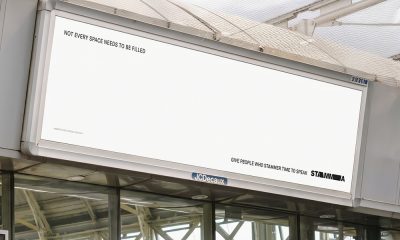
The research has been conducted in partnership with Omnicom Media and JCDecaux


Vistar Media, in partnership with Omnicom Media and JCDecaux, has released a new research report titled Science in Motion, exploring the real-world impact of motion and 3D creative formats in digital out-of-home (DOOH) advertising.
The study, conducted in the Netherlands with 7,513 respondents across multiple age groups, examined how different DOOH creative formats influence brand recall and awareness. Participants were shown footage of everyday outdoor environments containing DOOH ads without being instructed to focus specifically on the advertising. After viewing, respondents completed surveys measuring brand recall, awareness and message retention.
The research tested four creative formats, static, subtle motion, full-motion and 3D, across multiple real-world brands and industries, comparing results against a control group.
According to the findings, while the digital screen environment itself remains highly effective for advertising, the inclusion of motion significantly boosts campaign performance. The study found that adding motion creates an average 33% uplift in ad recall and a 50% increase in brand awareness compared to static creatives.
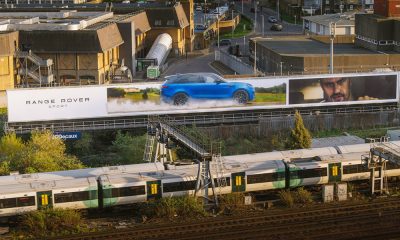
One of the report’s key findings was the strong performance of 3D creatives. The format emerged as the most effective for building Top-of-Mind Awareness (TOMA), delivering a 10% uplift compared to the control group. According to the report, 3D creatives were 67% more effective in driving brand awareness than executions without motion.
The research also highlighted that static creatives continue to perform strongly within DOOH environments. Static ads recorded a 38% uplift in aided ad recall, demonstrating that screen quality and location themselves contribute significantly to campaign effectiveness.
The study further revealed that subtle motion can be nearly as effective as complex animations. Simple movements such as rotating logos or lightly animated products were found to generate strong brand anchoring without requiring high-production video assets.
Full-motion creatives performed particularly well in spontaneous ad recall, achieving an 18% uplift compared to the control group, while also delivering strong improvements in aided recall and brand awareness.
Generational differences also emerged from the findings. While audiences aged 18–34 responded most strongly overall to motion formats, 3D creatives showed exceptional performance among older demographics. For audiences aged 50–65, 3D was identified as the most effective format for building brand awareness and spontaneous recall.
Commenting on the findings, Martine Hammink, VP, Creative Studio & Creative Solutions at Vistar Media, said, “This research confirms what many in the industry have long suspected: motion and 3D are powerful tools for designers and advertisers. However, we must also be realistic. Sometimes motion is not permitted due to local regulations, and at other times there is a lack of time or budget for complex animations.”
She added that the report aims to help brands and creative teams make more informed decisions depending on campaign objectives, production limitations and audience context.
The report also noted that local government regulations in many markets restrict motion-based creatives on roadside billboards for safety reasons, particularly on highways. However, the findings suggest that static DOOH creatives remain highly effective despite these limitations.
Vistar Media stated that the study provides advertisers and planners with a practical framework to align creative formats with campaign KPIs. According to the report, static creatives work effectively for broad recall, subtle motion supports efficient awareness-building, full-motion drives rapid attention and recognition, while 3D creatives perform strongest for long-term brand memorability and emotional resonance.
The research additionally referenced campaign examples where 3D executions improved message comprehension and product clarity, particularly in product-focused advertising environments.
With DOOH continuing to evolve globally, the study reinforces how creative format strategy is becoming increasingly important alongside programmatic targeting and audience delivery capabilities.









Daily Newsletter
Subscribe to receive the latest OOH
industry updates

Traya Health uses a 7-ft hair-filled cube to start a conversation on hair fall

Aashirvaad Salt Active takes heart-health message to Delhi streets

adfest unveils new logo designed by Santosh Padhi of Into Creative

Sunder Balasubramanian concludes four-year tenure as Myntra CMO

“Media in Gujarat is becoming very expensive”

Puma becomes PVMA for PV Sindhu

HOCCO’s Aamchi campaign brings mango tree to Ahmedabad

Blinkit in association with Kinetic India goes all Bollywood

Acclaimed Actor Manoj Joshi to deliver an inspirational address at OAC 2024

Zepto’s Fast 10 Minute Delivery Saves the Day for Game Night in Ahmedabad!

‘Let’s create an empathetic space for women’

‘It won’t just be a man’s world anymore’

‘We’re actively exploring acquisitions and working to increase our inventory’

A habit of success at Prakash Arts

‘OOH is an important channel to connect with corporate audiences’

Video Editor
Job Description: Editing videos of editorial interviews, in-house events, video podcasts, promotional videos and others based on team brief Planning...
Content Editor-Writer
Job Description: Editing daily news copies and magazine articles Writing industry research and interview based articles and client focused content...

Sales Manager (Amritsar, J&K, Chandigarh, Mumbai, Vadodara, Udaipur, U.P.)
Orango has been involved in creating, building, reviving and growing brands. Orango builds powerful connections with their customers & people...

Sales Executive
Established B2B Media and Events Group VJ Media Works is looking for sales executives
Digital Marketing/Social Media Executives
Established B2B Media and Events Group VJ Media Works is looking for the following: Digital Marketing/Social Media Executives Location: Mumbai/Bangalore...

Sales Manager – AdZ (Digital Advertising)
Estontec Group’s fast-growing adtech brand AdZ is hiring a Sales Manager to drive digital media sales and client growth. This...
Onboarding Specialist
Join Estontec Group’s transit media brand BrandonWheelz as an Onboarding Specialist, managing campaign execution, vendor coordination, and media planning across...

Operation Manager
Company Description: BajuGali an Advertisement Company is a leading firm specializing in advertising and marketing services. We provide innovative solutions...

BackLite UK upgrades Landscape Gallery portfolio
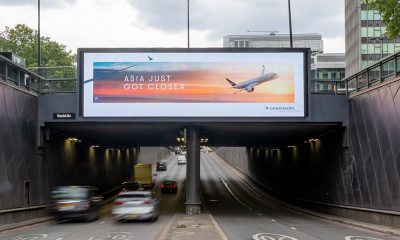
The Landscape Gallery is a portfolio of eight high-quality, high-resolution LED technology large-format digital screens positioned in prime London gateways...
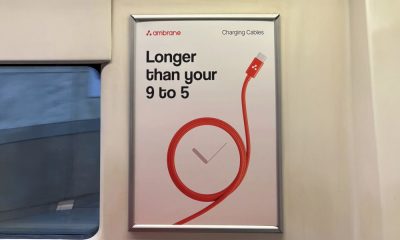

Ambrane brings a playful twist to metro OOH for its charging cables
Ambrane has taken its charging cable campaign inside the metro, using witty, relatable copy to turn everyday commuter moments into...
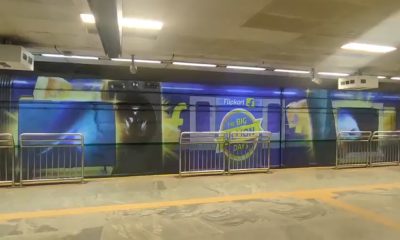

Flipkart brings Big Billion Days to life at Bengaluru’s Metro
As Big Billion Days 2026 approaches, Flipkart is taking its festive sale into the daily commute with a metro-led OOH...
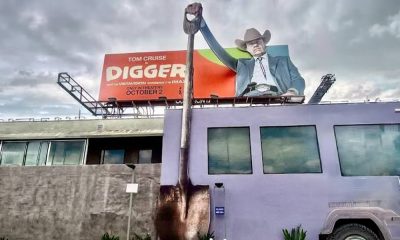

Digger takes a big swing at LA with larger-than-life 3D OOH
Tom Cruise’s upcoming film Digger turns a conventional billboard into a physical extension of its campaign, with a giant shovel...
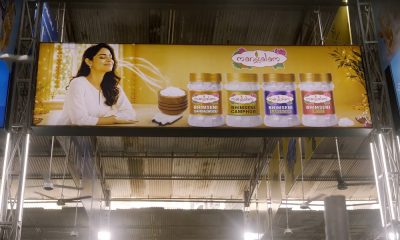

Mangalam brings #BreatheBhimseni experience at Lalbaugcha Raja
The installation transforms a part of the Lalbaugcha Raja queue into an immersive passage inspired by the purity and freshness...
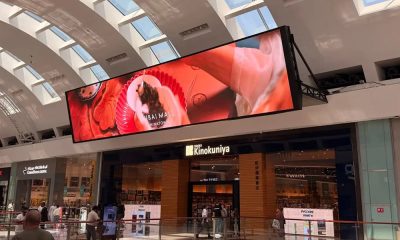

Dubai Mall expands its DOOH network with 1,100 sqm of LED displays
Emaar Properties has reportedly deployed approximately 1,100 sq m of LED displays across indoor and outdoor areas of Dubai Mall,...


Broadsign bags contract with Context Networks for screen network in 14 US states
Through the collaboration, Context Networks is connecting eligible CPMN™ inventory to the Broadsign Platform, the company’s complete, reliable Ad Server...
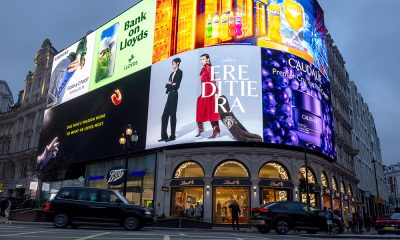

Landsec and Ocean Outdoor build on the cultural resonance of Piccadilly Lights
Changes to the screen's format come into effect from January 2027, 10 years after Piccadilly Lights relaunched following a nine-month...
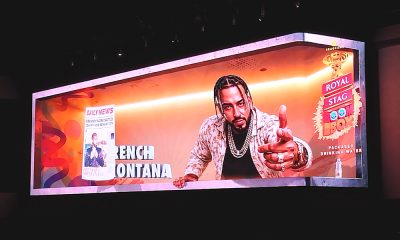

Royal Stag Boombox goes larger-than-life with anamorphic LED in Hyderabad
The campaign is conceptualised and executed by Coral Media
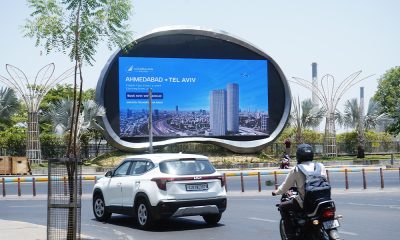

Times OOH Unveils ‘The Riviera’ in Ahmedabad
The screen is located at Sabarmati Riverfront on Ashram Road