Insights
‘Maintaining healthy pricing discipline requires collective responsibility’
In this series of conversation with industry players, we throw the spotlight on an issue that has long been a point of contention- Reverse Bidding. The first piece in this series features insights shared by Shekhar Narayanaswami, CEO of Times OOH, and the Chairman of the Indian Outdoor Advertising Association (IOAA).

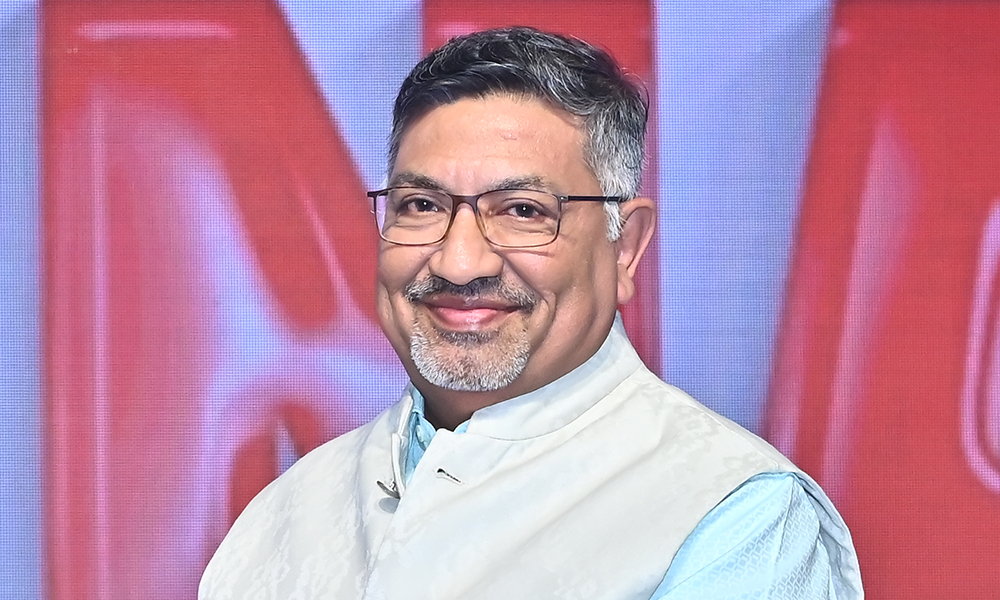
As CEO of Times OOH and Chairman of IOAA, I do believe reverse auctioning has created significant pressure on the OOH industry, especially in non-exclusive media segments. The impact is not uniform. Premium, captive environments such as airports or landmark transit assets continue to retain stronger pricing power because of their exclusivity and audience quality.
However, in city media and roadside formats, reverse auctioning often leads to aggressive price competition, where the focus shifts almost entirely to the lowest bid. Over time, this impacts margins and reduces the ability of operators to protect the true value of their inventory.
OOH is not a standardised commodity. Every location delivers a different audience profile, dwell time, and brand impact. Evaluating inventory primarily through price can overlook the contextual value the medium offers to advertisers.
Impact on premium inventory valuation and pricing discipline
Premium OOH assets are built through long-term investment in infrastructure, compliance, technology, and audience delivery. When buying decisions are driven primarily by lowest cost, it creates pressure on the industry’s ability to continue investing at the same pace.
Going forward, maintaining healthy pricing discipline will require collective responsibility across the ecosystem — media owners, agencies, and advertisers alike — to recognise and protect the long-term value of quality inventory.
Transparency in how inventory is quoted is important
I respect the role of procurement in bringing transparency and accountability to media buying. Those are important principles for any industry. However, challenges arise when procurement frameworks evaluate highly differentiated inventory primarily on cost parameters alone.
A media owner investing in measurement systems, technology, safety, and audience quality should ideally be evaluated differently from inventory that may not offer the same standards. When those distinctions are not fully accounted for, it creates pricing pressure across the category.
Another important aspect is ensuring alignment between agencies and media owners on pricing. Rate cards reflect years of investment and market understanding, and maintaining transparency in how inventory is quoted is important for a sustainable ecosystem.
Effect on innovation, infrastructure investment, and campaign quality
Sustained pricing pressure inevitably impacts reinvestment. At Times OOH, even during the pandemic recovery phase, we continued investing in technology, infrastructure, and asset quality because we believed the long-term future of the medium depended on it.
But when pricing becomes the dominant consideration, the industry naturally shifts from innovation and upgrades toward basic maintenance. Over time, this can affect campaign quality, audience experience, and ultimately advertiser outcomes as well.
India’s OOH industry is currently at an important growth stage, particularly with the rise of transit media and digital OOH. Preserving the industry’s ability to innovate will be critical for long-term growth.
Moving towards standardised audience measurement
Historically, OOH was often evaluated more through visibility and relationships than through standardised audience measurement. As a result, cost metrics became the easiest comparison tool for buyers.
The challenge today is that pricing conversations often move faster than measurement conversations. In many cases, the absence of widely adopted audience and effectiveness metrics creates a gap that price alone ends up filling.
At IOAA, initiatives around measurement standards, third-party validation, and tools like Roadstar are important steps toward helping the industry move toward more value-based evaluation frameworks.
The future of value-based buying in the medium
I believe the future of OOH will increasingly move toward value-based buying, driven by stronger measurement systems, better audience data, and the growth of digital and programmatic OOH.
But achieving that future will require collaboration across the ecosystem. Media owners must continue investing in quality and accountability, agencies must integrate value metrics more deeply into planning, and advertisers should increasingly evaluate OOH through effectiveness rather than cost alone.
The Indian OOH industry has a strong opportunity ahead. Protecting the long-term value of the medium while improving transparency and measurement will be key to ensuring sustainable growth for all stakeholders.





Daily Newsletter
Subscribe to receive the latest OOH
industry updates

Giving an animated twist to signage

MSRDC invites bids for LED/Digital hoarding at Taloja Flyover

Lucknow Metro opens advertising tender for 8 stations

Hocco reloads OOH with Bullet Ice Cream

M4G Talkies Season 2: Praval Singh on The Zoho way of building brands

Puma becomes PVMA for PV Sindhu

HOCCO’s Aamchi campaign brings mango tree to Ahmedabad

Blinkit in association with Kinetic India goes all Bollywood

Acclaimed Actor Manoj Joshi to deliver an inspirational address at OAC 2024

Zepto’s Fast 10 Minute Delivery Saves the Day for Game Night in Ahmedabad!

‘Let’s create an empathetic space for women’

‘It won’t just be a man’s world anymore’

‘We’re actively exploring acquisitions and working to increase our inventory’

A habit of success at Prakash Arts

‘OOH is an important channel to connect with corporate audiences’


Sales Manager (Amritsar, J&K, Chandigarh, Mumbai, Vadodara, Udaipur, U.P.)
Orango has been involved in creating, building, reviving and growing brands. Orango builds powerful connections with their customers & people...

Sales Executive
Established B2B Media and Events Group VJ Media Works is looking for sales executives
Digital Marketing/Social Media Executives
Established B2B Media and Events Group VJ Media Works is looking for the following: Digital Marketing/Social Media Executives Location: Mumbai/Bangalore...


Sales Manager – AdZ (Digital Advertising)
Estontec Group’s fast-growing adtech brand AdZ is hiring a Sales Manager to drive digital media sales and client growth. This...
Onboarding Specialist
Join Estontec Group’s transit media brand BrandonWheelz as an Onboarding Specialist, managing campaign execution, vendor coordination, and media planning across...


Operation Manager
Company Description: BajuGali an Advertisement Company is a leading firm specializing in advertising and marketing services. We provide innovative solutions...


Senior Copy Editor
No of openings: 1 Experience/ qualifications: 3-4 years in any media/news publication Graduate Degree in any discipline, degree in Journalism...


Sales Specialist at BajuGali (OOH Advertising Company)
At BajuGali, we are a marketing and advertising agency that specializes in transforming creative visions into reality for brands and...


Dolmio brings its iconic Puppet Family back to the streets
After four decades, Dolmio’s much-loved puppet family returns in a larger-than-life OOH comeback, turning a familiar piece of brand nostalgia...
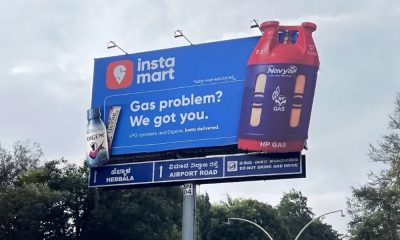

LPG or acidity? Instamart’s billboard has both ‘gas problems’ covered
Conceptualised in-house and executed in Bengaluru, Instamart’s latest outdoor campaign brings an LPG cylinder and Digene together to promote its...
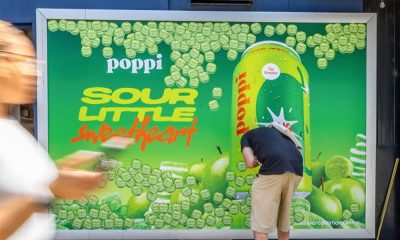

Poppi turns NYC billboard into a Peel + Win experience for Sour Apple launch
Poppi takes its limited-edition Sour Apple flavour to the streets of New York with an interactive billboard that turns product...


K18 takes hair shedding to the streets with giant tumblehair stunt
Created with Uncommon Creative Studio in New York City, the campaign uses a giant hairball to promote K18’s new FutureIQ...


Star Health Insurance launches unique OOH campaign
The campaign is conceptualised by Talented agency and executed by Coral Media
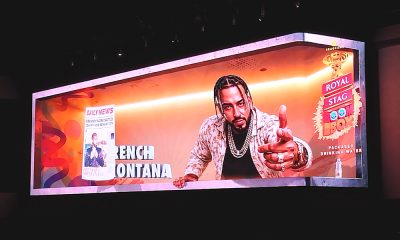

Royal Stag Boombox goes larger-than-life with anamorphic LED in Hyderabad
The campaign is conceptualised and executed by Coral Media
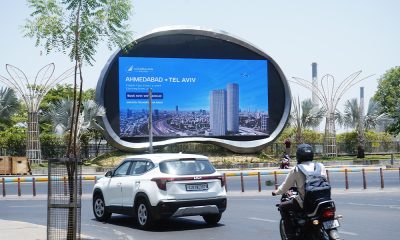

Times OOH Unveils ‘The Riviera’ in Ahmedabad
The screen is located at Sabarmati Riverfront on Ashram Road
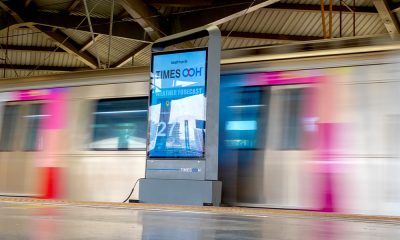

Times OOH upgrades the Media Experience on Mumbai Metro Line 1
The move to 75-inch displays gives brand creatives significantly greater visual impact, while the enhanced brightness ensures vivid, true-to-life imagery...

Broadsign released 2026 programmatic DOOH trends report
Drawing on full-year 2025 and Q1 2026 internal transaction data, the report, surfaces useful signals about what today’s buyers value...
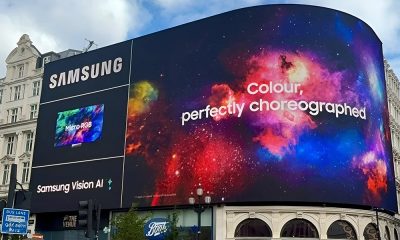

Samsung lights up global landmarks with Micro RGB OOH campaign
The consumer electronics giant has rolled out a large-scale global OOH campaign across some of the world's most iconic digital...