
Insights
“Impressions don’t guarantee visibility. Attention is what really matters.”
Mangesh Shinde, Co-founder of OSMO, shares insights on how attention, placement quality, and data-led tools are reshaping OOH measurement and planning.

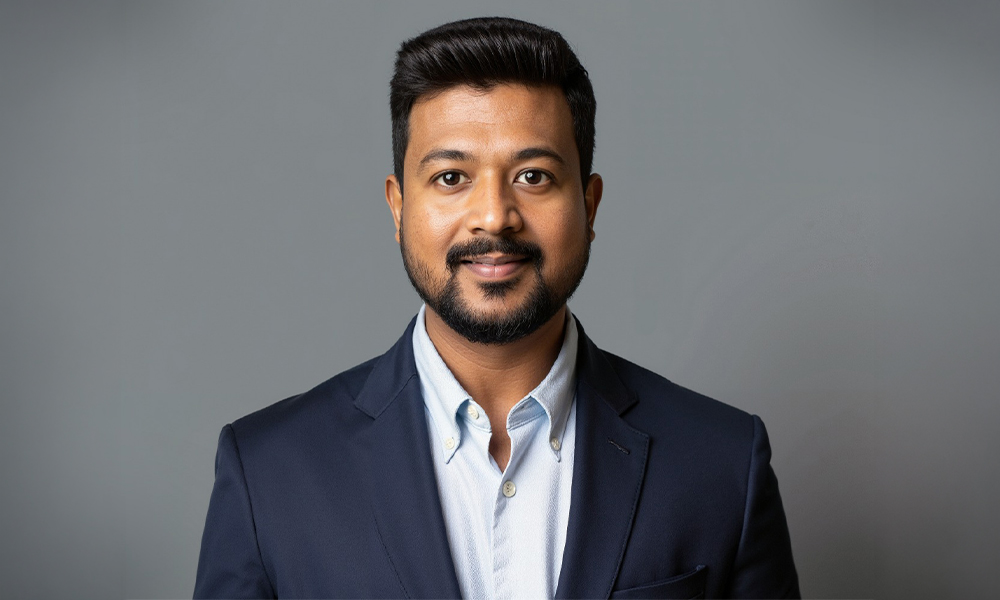
As the OOH industry continues to evolve, measurement remains one of its most debated challenges. While impressions have traditionally been used to evaluate campaigns, there is a growing need to understand whether those impressions actually translate into visibility.
According to Mangesh Shinde, Co-founder of OSMO, the gap begins at the planning stage itself. “Most of the industry focuses on people and places, who the audience is and where they go. But the most important aspect is the placement path,” he says. “A billboard in the same location can perform very differently depending on its angle, obstruction, and viewing distance.”
This is where a more detailed evaluation of sites becomes critical. Through its platform, LOC8, OSMO analyses OOH environments using video mapping and machine learning, studying factors such as visibility duration, perceptual size, and position within a viewer’s field of vision. “We analyse all these data points and create what we call a visual certainty score. There’s no gut behind it, the evidence is supported by video,” Mangesh explains.
The platform is built to support both planning and performance tracking. “It acts like both pre-planning and post-planning,” he says. “Before a campaign, we identify which routes and sites deliver the highest impact. Once the campaign goes live, we track impressions, dwell time, and traffic variations on a daily basis.”
However, at an industry level, measurement continues to be fragmented. “We are a ₹6,000–₹8,000 crore industry and highly fragmented. Bringing everyone onto a single mindset is the biggest challenge,” Mangesh notes. This has resulted in multiple approaches to measurement, with different agencies developing their own systems.
At the same time, how OOH is used varies across categories. Real estate, for instance, relies heavily on location-driven planning. “For real estate, location is everything—they target very specific micro-markets, so site selection becomes critical,” he says. In contrast, FMCG brands focus on cost-efficient reach, while fashion and lifestyle brands prioritise high-impact visibility.
In digital OOH environments, exposure is further influenced by dwell time. “We’ve seen dwell time vary from as low as 8 seconds to as high as 70–80 seconds. That directly affects how much of your audience is actually reached,” Mangesh explains.
As brands look for more clarity and accountability, the conversation is gradually expanding beyond impressions. “Impressions don’t guarantee visibility,” he says. “Attention is what really matters.”
Read the detailed story in the May edition of Outdoor Asia magazine.









Daily Newsletter
Subscribe to receive the latest OOH
industry updates

Xtreme Media installs Earth Series LED displays for Ronak Advertising at Vashi toll plaza

Sitemax Media LLP joins Gujarat Talks OOH as Associate Sponsor

WOW Advertisement adds eight digital OOH screens across Ahmedabad and Surat

Garmin Nederland turns a billboard into a climbing experience with ‘Play Harder’

Sour Patch Kids takes a playful swipe at Oreo

Puma becomes PVMA for PV Sindhu

HOCCO’s Aamchi campaign brings mango tree to Ahmedabad

District uses Samay Raina’s signature shirt to announce his live show

Blinkit in association with Kinetic India goes all Bollywood

Acclaimed Actor Manoj Joshi to deliver an inspirational address at OAC 2024

‘Let’s create an empathetic space for women’

‘It won’t just be a man’s world anymore’

‘We’re actively exploring acquisitions and working to increase our inventory’

A habit of success at Prakash Arts

‘OOH is an important channel to connect with corporate audiences’

Video Editor
Job Description: Editing videos of editorial interviews, in-house events, video podcasts, promotional videos and others based on team brief Planning...
Content Editor-Writer
Job Description: Editing daily news copies and magazine articles Writing industry research and interview based articles and client focused content...


Sales Manager (Amritsar, J&K, Chandigarh, Mumbai, Vadodara, Udaipur, U.P.)
Orango has been involved in creating, building, reviving and growing brands. Orango builds powerful connections with their customers & people...

Sales Executive
Established B2B Media and Events Group VJ Media Works is looking for sales executives
Digital Marketing/Social Media Executives
Established B2B Media and Events Group VJ Media Works is looking for the following: Digital Marketing/Social Media Executives Location: Mumbai/Bangalore...


Sales Manager – AdZ (Digital Advertising)
Estontec Group’s fast-growing adtech brand AdZ is hiring a Sales Manager to drive digital media sales and client growth. This...
Onboarding Specialist
Join Estontec Group’s transit media brand BrandonWheelz as an Onboarding Specialist, managing campaign execution, vendor coordination, and media planning across...


Operation Manager
Company Description: BajuGali an Advertisement Company is a leading firm specializing in advertising and marketing services. We provide innovative solutions...
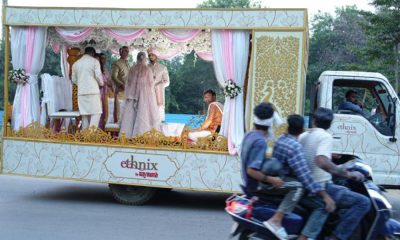

Ethnix by Raymond brings a wedding to Gurgaon’s streets with ‘Mandap on Wheels’
The activation taps into the wedding season, a key occasion for ethnic wear, by placing the brand within a live...
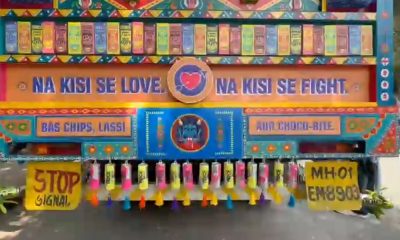

Noice turns a truck into a maximalist moving OOH experience
The campaign is executed by MOMS Outdoor
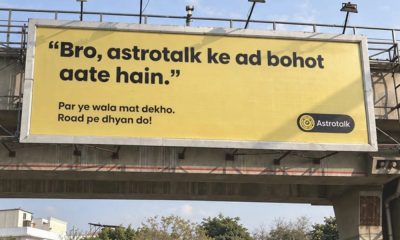

Astrotalk turns its most common roast into an OOH campaign
With a tongue-in-cheek message calling out the frequency of its own advertisements, Astrotalk uses a billboard to turn consumer chatter...
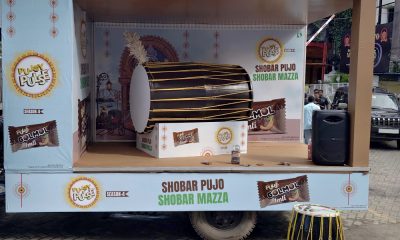

DS Group takes ‘Pujoy Pulse’ across West Bengal with outdoor activations
From branded canters travelling across 22 towns and interactive pandal installations to complimentary pandal-hopping cabs and a 500-drone spectacle over...


Pentonic creates a Durga idol with 13,000 recycled plastic pens
Linc Limited’s Pentonic presents a first-of-its-kind Durga installation by artist Chandra Nath Saha (Tilak), giving recycled plastic an extraordinary new...
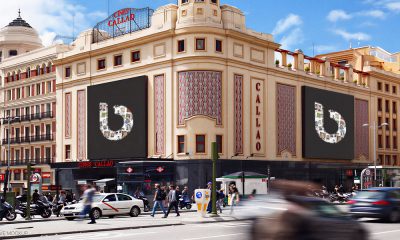

billups celebrates its anniversary by putting its people on billboard
The campaign is participating in fifteen locations across Asia, Europe and North America, including Belgrade, Amsterdam, Brussels, Berlin, Chicago. Portland,...
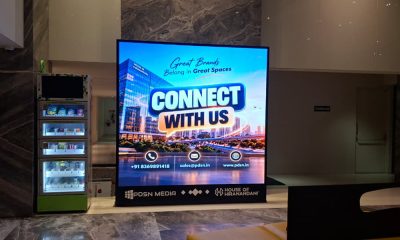

PDSN Media expands corporate DOOH network with new screens at Fulcrum
The new inventory comprises two 8×8 ft digital LED screens installed across Wing A and Wing B of the Mumbai...
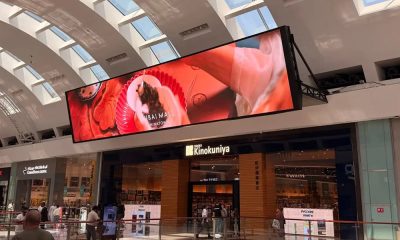

Dubai Mall expands its DOOH network with 1,100 sqm of LED displays
Emaar Properties has reportedly deployed approximately 1,100 sq m of LED displays across indoor and outdoor areas of Dubai Mall,...


Broadsign bags contract with Context Networks for screen network in 14 US states
Through the collaboration, Context Networks is connecting eligible CPMN™ inventory to the Broadsign Platform, the company’s complete, reliable Ad Server...
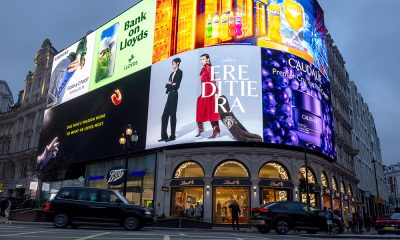

Landsec and Ocean Outdoor build on the cultural resonance of Piccadilly Lights
Changes to the screen's format come into effect from January 2027, 10 years after Piccadilly Lights relaunched following a nine-month...
-
 International Events
Publicis London secures double Gold in Ocean Outdoor Digital Creative Competition
-
Campaigns
Ethnix by Raymond brings a wedding to Gurgaon’s streets with ‘Mandap on Wheels’
-
Campaigns
billups celebrates its anniversary by putting its people on billboard
-
Creative Concepts
Noice turns a truck into a maximalist moving OOH experience