Insights
Creativity in DOOH: Insights by Media Owners | Part 2
As Digital Out-of-Home scales across smarter infrastructure and data-driven ecosystems, media leaders highlight how technology, content design and contextual intelligence are shaping the medium’s next creative frontier.

If Part 1 established context, design and cultural integration as the foundation of DOOH creativity, Part 2 expands the conversation into technology, content engineering and the growing role of media owners as creative enablers.
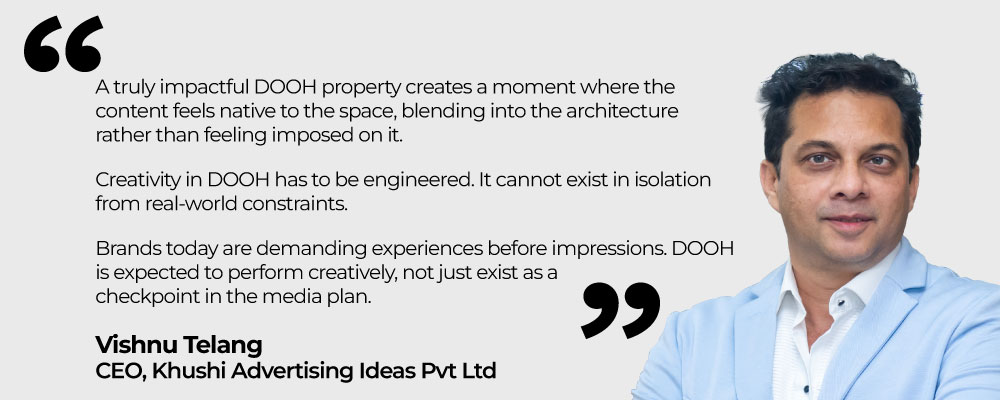
Vishnu Telang, CEO, Khushi Advertising Ideas Pvt. Ltd., underscores that visibility alone no longer guarantees impact, memorability is built through contextual integration. Vishnu notes that when DOOH assets are designed in harmony with architecture, movement patterns and spatial behaviour, communication transforms from passive exposure into immersive brand experience. For him, creativity must be engineered within real-world constraints such as infrastructure, power access and regulatory frameworks. He also points to evolving inventories, higher resolution screens, modular formats and adaptable placements, enabling more flexible storytelling and environment-led messaging.
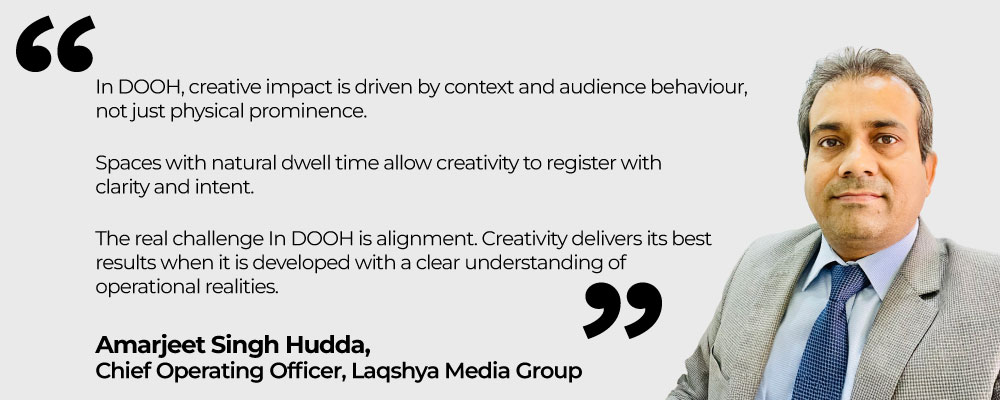
Adding an infrastructure and intelligence lens, Amarjeet Singh Hudda, Chief Operating Officer, Laqshya Media Group, emphasises that audience behaviour and dwell time are central to creative success. Amarjeet explains that environments such as airports and transit hubs enable deeper storytelling due to longer engagement windows. He observes that brands are now demanding environment-specific messaging, time-sensitive creatives and sequential narratives that travel across formats and cities. As a result, media owners are evolving into early-stage collaborators, contributing insights on spatial dynamics, commuter flow and execution feasibility to ensure creative ideas scale effectively without losing contextual relevance.
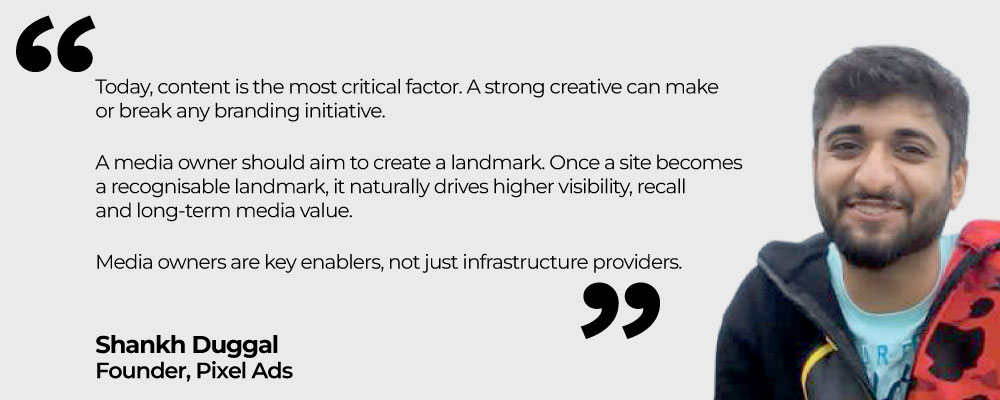
Focusing on content and format innovation, Shankh Duggal, Founder, Pixel Ads, argues that creative effectiveness in DOOH is now content-first rather than scale-first. Shankh highlights that LED behaviour, colour science and screen technology directly influence visibility and recall, making content optimisation critical. He stresses that landmark media creation is the future, where sites themselves become recognisable urban assets. He also points to growing experimentation with anamorphic creatives, dynamic scheduling and real-time content updates, alongside the integration of DOOH with influencer and digital ecosystems to amplify campaign resonance.
Collectively, these perspectives signal DOOH’s transition into a fully integrated communication medium, where data, design, technology and infrastructure converge. Creativity, in this evolving landscape, is no longer about occupying space, but about orchestrating intelligent, responsive and experience-led brand interactions at scale.







Daily Newsletter
Subscribe to receive the latest OOH
industry updates

DMRC floats three tenders for metro advertising and co-branding rights

Fortune Soya Health brings ‘Baarish Ke Saath Pakodon Ka Swaad’ to Life with boat innovation

Krishna Communication Outdoor secures exclusive branding rights across 8,000+ Gujarat buses

Traya Health uses a 7-ft hair-filled cube to start a conversation on hair fall

Aashirvaad Salt Active takes heart-health message to Delhi streets

Puma becomes PVMA for PV Sindhu

HOCCO’s Aamchi campaign brings mango tree to Ahmedabad

Blinkit in association with Kinetic India goes all Bollywood

Acclaimed Actor Manoj Joshi to deliver an inspirational address at OAC 2024

Zepto’s Fast 10 Minute Delivery Saves the Day for Game Night in Ahmedabad!

‘Let’s create an empathetic space for women’

‘It won’t just be a man’s world anymore’

‘We’re actively exploring acquisitions and working to increase our inventory’

A habit of success at Prakash Arts

‘OOH is an important channel to connect with corporate audiences’

Video Editor
Job Description: Editing videos of editorial interviews, in-house events, video podcasts, promotional videos and others based on team brief Planning...
Content Editor-Writer
Job Description: Editing daily news copies and magazine articles Writing industry research and interview based articles and client focused content...


Sales Manager (Amritsar, J&K, Chandigarh, Mumbai, Vadodara, Udaipur, U.P.)
Orango has been involved in creating, building, reviving and growing brands. Orango builds powerful connections with their customers & people...

Sales Executive
Established B2B Media and Events Group VJ Media Works is looking for sales executives
Digital Marketing/Social Media Executives
Established B2B Media and Events Group VJ Media Works is looking for the following: Digital Marketing/Social Media Executives Location: Mumbai/Bangalore...


Sales Manager – AdZ (Digital Advertising)
Estontec Group’s fast-growing adtech brand AdZ is hiring a Sales Manager to drive digital media sales and client growth. This...
Onboarding Specialist
Join Estontec Group’s transit media brand BrandonWheelz as an Onboarding Specialist, managing campaign execution, vendor coordination, and media planning across...


Operation Manager
Company Description: BajuGali an Advertisement Company is a leading firm specializing in advertising and marketing services. We provide innovative solutions...
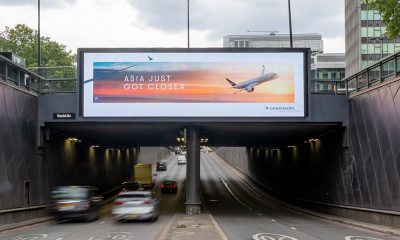

BackLite UK upgrades Landscape Gallery portfolio
The Landscape Gallery is a portfolio of eight high-quality, high-resolution LED technology large-format digital screens positioned in prime London gateways...
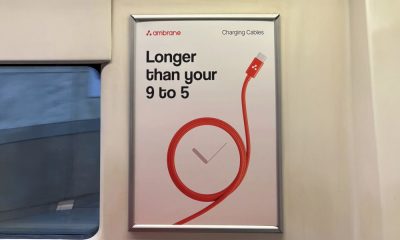

Ambrane brings a playful twist to metro OOH for its charging cables
Ambrane has taken its charging cable campaign inside the metro, using witty, relatable copy to turn everyday commuter moments into...
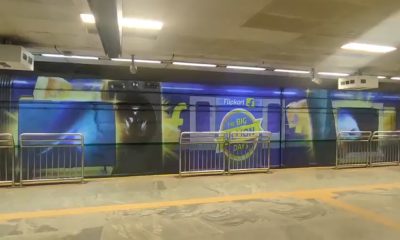

Flipkart brings Big Billion Days to life at Bengaluru’s Metro
As Big Billion Days 2026 approaches, Flipkart is taking its festive sale into the daily commute with a metro-led OOH...
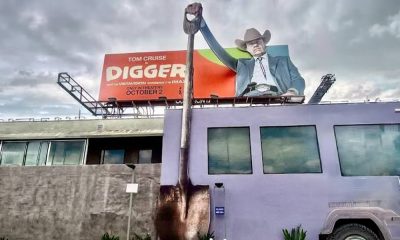

Digger takes a big swing at LA with larger-than-life 3D OOH
Tom Cruise’s upcoming film Digger turns a conventional billboard into a physical extension of its campaign, with a giant shovel...
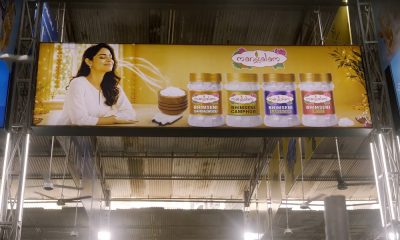

Mangalam brings #BreatheBhimseni experience at Lalbaugcha Raja
The installation transforms a part of the Lalbaugcha Raja queue into an immersive passage inspired by the purity and freshness...
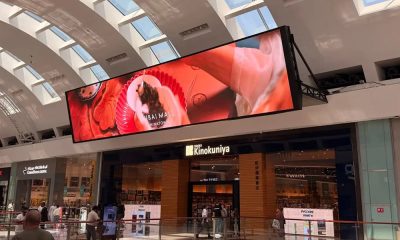

Dubai Mall expands its DOOH network with 1,100 sqm of LED displays
Emaar Properties has reportedly deployed approximately 1,100 sq m of LED displays across indoor and outdoor areas of Dubai Mall,...


Broadsign bags contract with Context Networks for screen network in 14 US states
Through the collaboration, Context Networks is connecting eligible CPMN™ inventory to the Broadsign Platform, the company’s complete, reliable Ad Server...
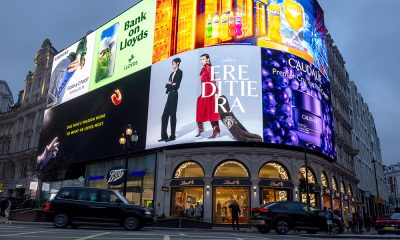

Landsec and Ocean Outdoor build on the cultural resonance of Piccadilly Lights
Changes to the screen's format come into effect from January 2027, 10 years after Piccadilly Lights relaunched following a nine-month...
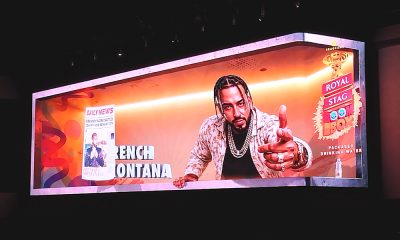

Royal Stag Boombox goes larger-than-life with anamorphic LED in Hyderabad
The campaign is conceptualised and executed by Coral Media
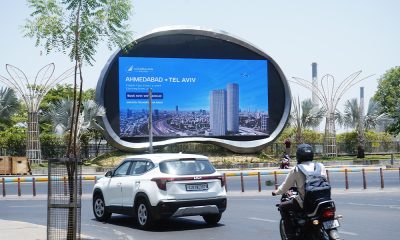

Times OOH Unveils ‘The Riviera’ in Ahmedabad
The screen is located at Sabarmati Riverfront on Ashram Road