
OAC
#OAC2026: Why tomorrow’s marketer must think like a technocrat and feel like a storyteller
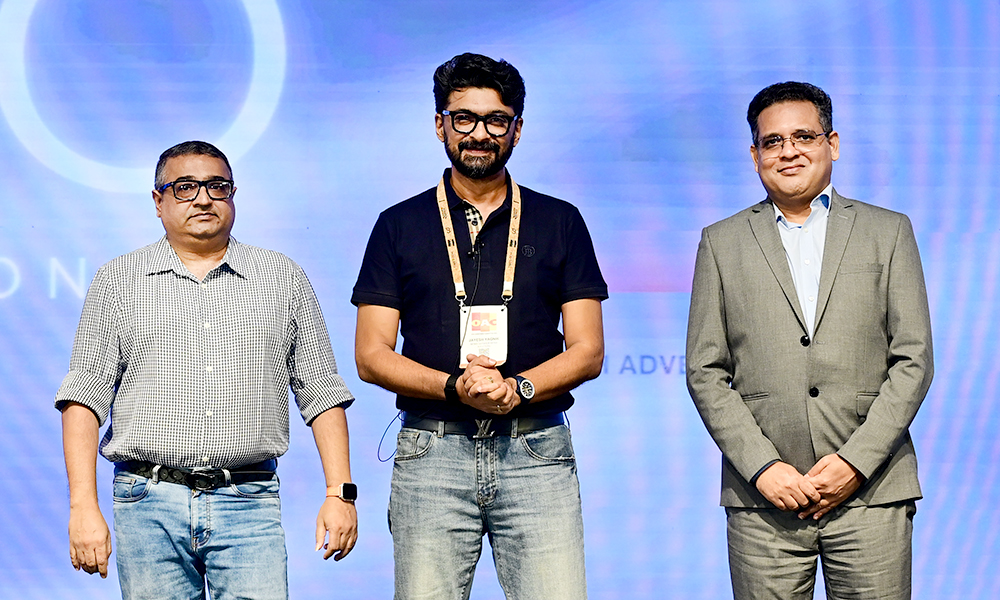
At OAC 2026, Kaushik Vedula, Vice President – Marketing, Castrol India; Jaikishin Chhaproo, Head – Media & Brand PR, ITC Ltd.; and Jayesh Yagnik, CEO, MOMS Outdoor Media Solutions, examined how technology is redefining marketing without replacing its most enduring strength – storytelling.

Marketing has never stood still.
From the days of television commercials and newspaper advertisements to today’s AI-generated creatives, programmatic buying and predictive analytics, every era has brought with it new tools, new platforms and new consumer expectations. Yet, amidst this relentless evolution, one question continues to remain relevant: Has marketing itself changed, or have marketers simply been given better ways to tell their stories?
This formed the basis of one of the most engaging sessions at the 20th edition of the Out-of-Home Advertising Convention (OAC), where three industry leaders explored how the marketer’s role is expanding far beyond creativity into technology, business strategy and data intelligence.
Storytelling remains the heart of marketing
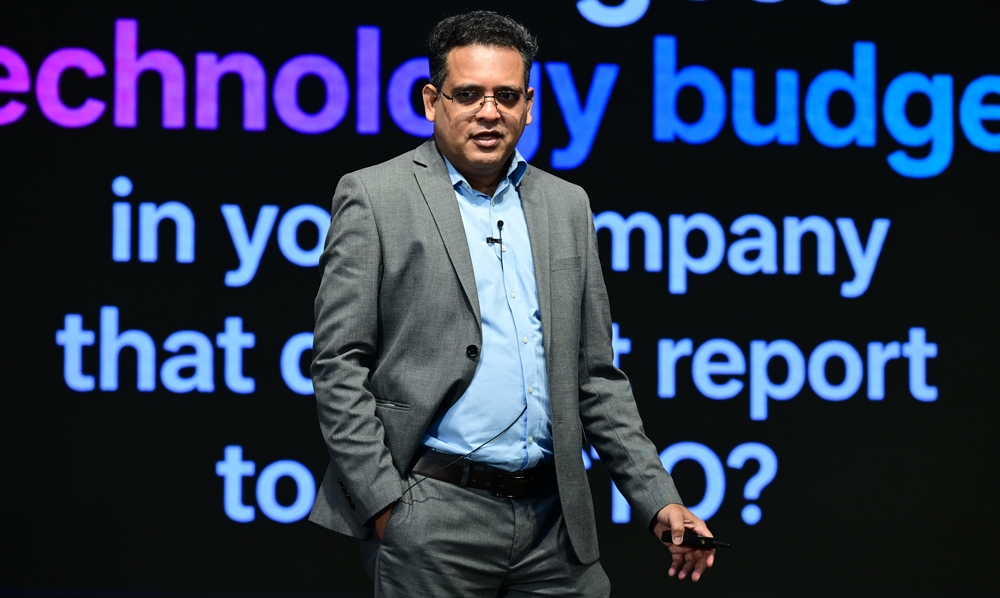
Reflecting on his own career, Kaushik Vedula, Vice President – Marketing, Castrol, observed that the marketing profession he entered in 2004 bears little resemblance to the one that exists today.
“The skills I acquired during my first ten years in marketing have almost become redundant,” Kaushik admitted, referring to the dramatic transformation the profession has undergone over the past two decades.
Yet despite the changing landscape, he argued that the essence of marketing has remained remarkably constant.
“Storytelling still remains the core. It always will. It is still about winning consumers. It is still about wooing them with the offerings that you are putting on the table.”
According to Kaushik, marketing has evolved in layers rather than through complete reinvention.
At its centre remains storytelling, supported first by consumer insight and branding, then by digital personalisation, followed by the explosion of data and now the possibilities unlocked by artificial intelligence.
Digital enabled marketers to communicate in context. Instead of speaking to everyone with one message, brands could now address different consumer cohorts with communications relevant to their individual lives. Data then added another dimension by allowing marketers to understand what consumers watched, clicked, ignored or revisited, enabling stories to evolve with every interaction.
Rather than replacing creativity, each technological advancement has simply made storytelling smarter.
AI’s biggest opportunity lies beyond advertising
While much of today’s conversation around AI revolves around content generation and campaign execution, Kaushik believes marketers are overlooking a much larger opportunity.
Instead of limiting AI to communication, he argued that it should fundamentally reshape product innovation. Consumer research, he explained, has traditionally depended on limited interactions and sample groups. Artificial intelligence now presents the possibility of understanding consumers at an unprecedented scale, enabling brands to rethink everything from product formulation to packaging.
Hyper-personalisation, according to Kaushik, should not stop at communication. It should extend to the products consumers eventually buy.
Packaging, product information and even the emphasis placed on different product benefits could eventually become personalised based on individual consumer preferences. “The future belongs to marketers who can speak two languages fluently, the language of human emotion and the language of machines and intelligence,” says Kaushik
That, he suggested, will define the next generation of marketing leadership.
The marketer’s job description has fundamentally changed
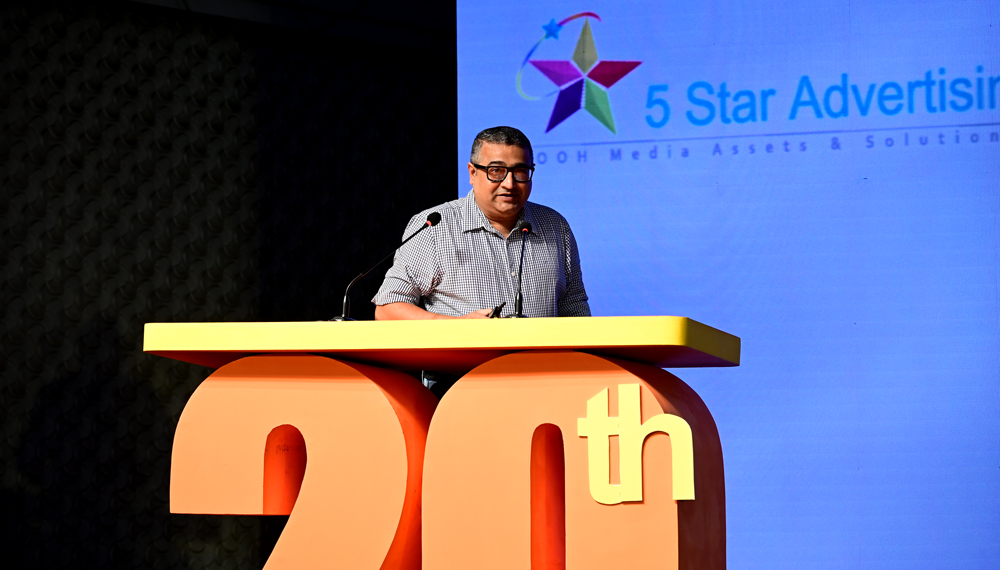
Building on Kaushik’s perspective, Jaikishin Chhaproo, Head – Media & Brand PR, ITC Ltd., explained that marketers today are expected to possess an entirely different skillset from their predecessors.
For decades, marketing was primarily about brand positioning, creativity and storytelling.
Today, those responsibilities exist alongside AI, attribution modelling, e-commerce, data platforms, automation and performance marketing.
Jaikishin said, “Creativity is critical, but business impact is now increasingly dependent on technology-enabled execution.”
According to Jaikishin, modern marketers can no longer afford to think only like brand custodians. They must become hybrid professionals capable of balancing creativity with analytical thinking. Beyond telling stories, they are expected to understand algorithms, interpret data, optimise media investments and measure business outcomes with far greater precision than ever before.
This evolution, he noted, is not replacing creativity but extending its boundaries. The marketer of today is no longer simply a storyteller. He or she is becoming what Jaikishin described as a “storytelling technologist.”
From one campaign to hundreds of conversations
Technology, Jaikishin pointed out, has also transformed how brands communicate. Earlier, a single television commercial or print advertisement would carry a campaign across the country. Today, the same campaign may require hundreds of creative adaptations.
Consumers expect relevance, not just emotionally, but geographically, culturally and contextually. Campaigns are now customised by language, neighbourhood, consumer cohort, purchase behaviour and even time of day, while still maintaining a consistent brand identity.
For Jaikishin, “A national campaign today means generating hundreds of communication messages that are hyper-localised while preserving the same core brand story.” The evolution has been equally significant for OOH advertising.
DOOH has transformed outdoor media into an intelligent communication platform capable of responding dynamically to weather conditions, traffic density, audience movement and time-specific consumer behaviour.
Programmatic buying, sensor-driven insights and mobile integration are enabling marketers to move beyond visibility towards measurable outcomes. “Out-of-Home is no longer just a static medium. It has become a responsive touchpoint that mirrors the intelligence of a digital platform.”
Outdoor is no longer selling visibility. It is selling intelligence.
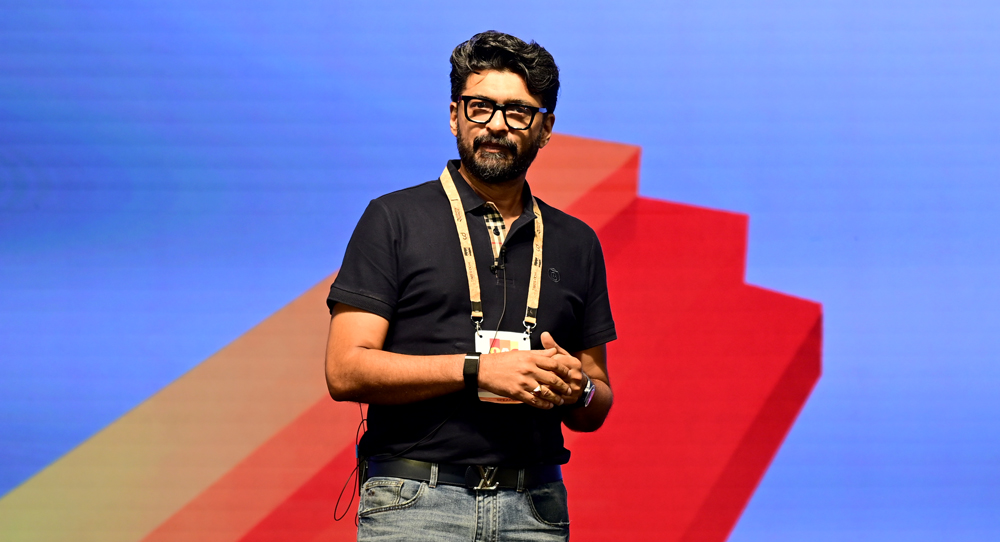
Summarising the discussion, Jayesh Yagnik, CEO, MOMS Outdoor Media Solutions, reflected on how dramatically the outdoor industry itself has evolved.
Most professionals, he observed, entered advertising because they loved brands, creativity and seeing campaigns come alive in the physical world—not because they wanted to learn algorithms or artificial intelligence.
Yet today, technology has become impossible to ignore.
Rather than viewing this as a disruption, Jayesh believes the industry should embrace it as an opportunity.
One of his biggest takeaways from the session was that technology has not reduced the importance of creativity, it has made creativity accountable. Earlier, campaigns were evaluated largely on reach and visibility.
Today, marketers expect far greater precision. Outdoor advertising is increasingly being evaluated through audience profiles, mobility patterns, frequency of exposure, contextual relevance and measurable business outcomes.
“For years, we sold locations, traffic and visibility. Today, we sell audience, context, measurement and insights. That’s the biggest shift our industry has witnessed,” says Jayesh. The conversation around OOH, therefore, is no longer centred on inventory alone. It is increasingly about intelligence.
Creativity will always have the final word
Despite spending much of the session discussing AI, data, automation and technology, all three speakers returned to one common conclusion.
Technology can make marketing faster. It can make it more measurable. It can make it more efficient.
But it cannot replace the emotional understanding that has always defined great brands.
As Jayesh aptly summarised, “Technology may tell us where consumers are. Data may tell us where they are going. AI may even suggest what we should do next. But only human creativity can decide why people should care.”
Perhaps that was the most important takeaway from the session.
The marketer of tomorrow will not be judged by creativity alone, nor by technological expertise in isolation. Success will belong to professionals who can seamlessly combine both, those who can tell stories that move people while using technology to make those stories more relevant, more measurable and ultimately, more impactful.








Daily Newsletter
Subscribe to receive the latest OOH
industry updates

Beyond selling a product to building an ecosystem

Indian OOH & the Measurability Journey: From OTS to business outcomes

Hamdard reimagines skincare for Gen Z through new-age OOH

Qubo puts its security cameras on billboards, literally

Claire’s pierces a billboard in New York

Puma becomes PVMA for PV Sindhu

HOCCO’s Aamchi campaign brings mango tree to Ahmedabad

Blinkit in association with Kinetic India goes all Bollywood

Acclaimed Actor Manoj Joshi to deliver an inspirational address at OAC 2024

Zepto’s Fast 10 Minute Delivery Saves the Day for Game Night in Ahmedabad!

‘Let’s create an empathetic space for women’

‘It won’t just be a man’s world anymore’

‘We’re actively exploring acquisitions and working to increase our inventory’

A habit of success at Prakash Arts

‘OOH is an important channel to connect with corporate audiences’


Sales Manager (Amritsar, J&K, Chandigarh, Mumbai, Vadodara, Udaipur, U.P.)
Orango has been involved in creating, building, reviving and growing brands. Orango builds powerful connections with their customers & people...


Sales Executive
Established B2B Media and Events Group VJ Media Works is looking for sales executives
Digital Marketing/Social Media Executives
Established B2B Media and Events Group VJ Media Works is looking for the following: Digital Marketing/Social Media Executives Location: Mumbai/Bangalore...


Sales Manager – AdZ (Digital Advertising)
Estontec Group’s fast-growing adtech brand AdZ is hiring a Sales Manager to drive digital media sales and client growth. This...
Onboarding Specialist
Join Estontec Group’s transit media brand BrandonWheelz as an Onboarding Specialist, managing campaign execution, vendor coordination, and media planning across...


Operation Manager
Company Description: BajuGali an Advertisement Company is a leading firm specializing in advertising and marketing services. We provide innovative solutions...


Senior Copy Editor
No of openings: 1 Experience/ qualifications: 3-4 years in any media/news publication Graduate Degree in any discipline, degree in Journalism...


Sales Specialist at BajuGali (OOH Advertising Company)
At BajuGali, we are a marketing and advertising agency that specializes in transforming creative visions into reality for brands and...


Trip.com turns Dhoby Ghaut MRT into a personal travel story
For the second year running, Trip.com has transformed Singapore’s Dhoby Ghaut MRT station into an immersive travel experience, inviting commuters...

Fortune Soya Health brings ‘Baarish Ke Saath Pakodon Ka Swaad’ to the streets
The OOH innovations are conceptualised and executed across Delhi, Lucknow and Patna by Coral Media


YesMadam turns Delhi Metro into a reminder to ‘Stop Overthinking’
With a series of sharply relatable messages placed inside Delhi Metro coaches, YesMadam uses everyday anxieties around work, money, relationships...


Netflix takes ‘The Gentlemen’ outdoors – and puts its message on the grass
For Season 2 of Netflix’s The Gentlemen, a field near the Gatwick flight path became an unexpected OOH canvas, with...


HDFC Bank turns a bus shelter into a lesson in fraud awareness
With its latest Vigil Aunty campaign, HDFC Bank uses a familiar public space and a playful visual to bring its...


Landsec and Ocean Outdoor build on the cultural resonance of Piccadilly Lights
Changes to the screen's format come into effect from January 2027, 10 years after Piccadilly Lights relaunched following a nine-month...

Royal Stag Boombox goes larger-than-life with anamorphic LED in Hyderabad
The campaign is conceptualised and executed by Coral Media

Times OOH Unveils ‘The Riviera’ in Ahmedabad
The screen is located at Sabarmati Riverfront on Ashram Road


Times OOH upgrades the Media Experience on Mumbai Metro Line 1
The move to 75-inch displays gives brand creatives significantly greater visual impact, while the enhanced brightness ensures vivid, true-to-life imagery...

Broadsign released 2026 programmatic DOOH trends report
Drawing on full-year 2025 and Q1 2026 internal transaction data, the report, surfaces useful signals about what today’s buyers value...