
Brand Insights
‘OOH is how we show up in someone’s city, their neighbourhood, their daily commute’
Abhishek Malik, Associate Director – Creative and Social, Shaadi.com, shares insights on how the brand builds hyperlocal OOH campaigns, uses culture as a creative signal, and why physical presence does something for trust that digital alone cannot.

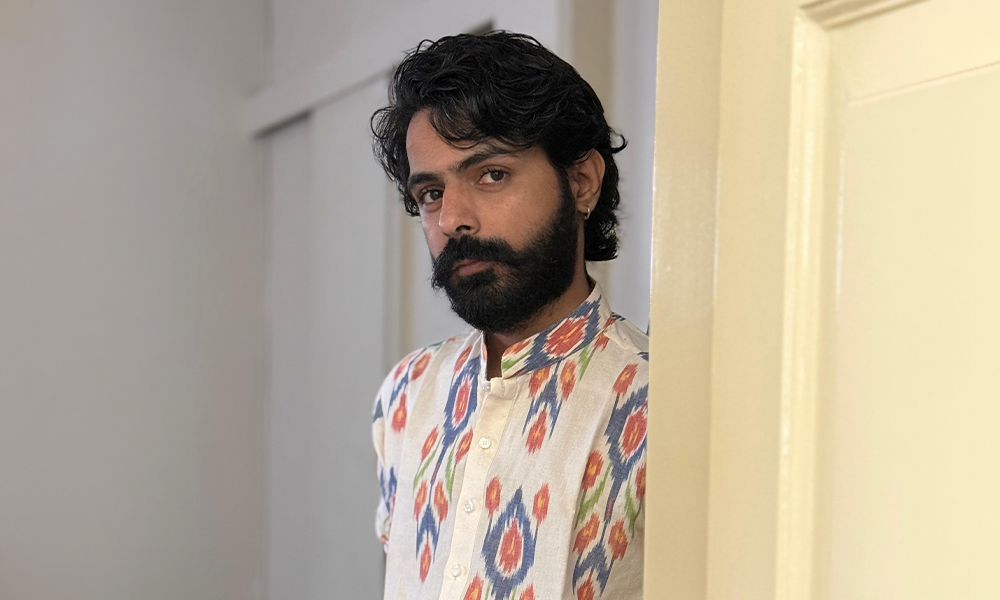
Shaadi.com has built a reputation for outdoor work that feels like it belongs to the city it is running in. The copy is sharp, the cultural references are precise, and the humour lands because it is not trying to land everywhere at once. Behind that consistency is a clear point of view on what OOH is for and how to make it work. Abhishek Malik, Associate Director – Creative and Social at Shaadi.com, explains the thinking.
Local first, always
The foundation of Shaadi.com’s OOH approach is straightforward in principle, even if it takes real discipline to execute. “The core philosophy is simple: go local rather than pan-India,” Abhishek says. “We believe that the most universal thing a brand can do is be deeply, specifically local.” The creative for one market is not adapted from a national template, it is built from scratch around the sensibilities of that particular city or community. “The creative for one market will naturally look and feel very different from another, because the people, their sensibilities, and their relationship with the institution of marriage are different.”
It is a philosophy that runs counter to the efficiency instinct that often governs OOH planning, where the temptation is to produce one strong idea and roll it out across markets. Shaadi.com’s bet is the opposite: that the more specific the insight, the more widely it actually travels. “Local done right is the most global you can ever be,” Abhishek says.
Culture as a signal
India gives a brand like Shaadi.com an extraordinary amount of raw material to work with. Weddings and relationships touch every region, community, language, and ritual in ways that are genuinely distinct from one another. The challenge is not finding the insight, it is knowing which ones are ready to be amplified.
Abhishek describes a feedback loop that has become increasingly central to how the team identifies what to take outdoors. “We’ll often test an idea as social content or a reel first, gauge how organically people respond to it, and if the reaction is strong, that becomes the signal to take it to a larger, on-ground manifestation.” It is a way of letting culture confirm what the team already suspects, and of avoiding the risk of taking an idea to a large format before it has earned that scale.
Hyperlocal as a matter of respect
On the question of hyperlocal messaging, Abhishek is unambiguous. “It’s foundational, not optional.” The argument he makes is less about marketing effectiveness and more about what it communicates to the audience. “Hyperlocal messaging is our way of showing respect for the language, the sensibility, the humour, and the lived reality of the audience we’re addressing.”
That respect, he says, is what allows local creative to transcend its geography. “When local is done right, when it’s genuinely rooted and not just a token reference, it becomes something universal.” There is an important distinction buried in that line: the difference between work that is locally informed and work that uses local as decoration. The former earns trust. The latter tends to feel patronising to the very audience it is trying to reach.
What OOH does that digital cannot
For a brand that lives on a digital platform, the case for OOH spending is one that has to be made deliberately. Abhishek makes it clearly. “There’s something about physical presence that digital alone can’t replicate. OOH is how we show up in someone’s city, their neighbourhood, their daily commute, and that visibility builds a kind of familiarity and trust that a screen can’t always achieve.”
Beyond reach, he frames OOH as a signal, one that communicates something about the brand’s intent. “It tells people that we understand their culture, their context, their conversations.” For Shaadi.com specifically, where the platform sits at the centre of one of the most significant decisions in a person’s life, that sense of being understood carries real weight. Trust is not just a brand metric here. It is a prerequisite for the product itself to be considered.
From awareness to action
The connection between OOH campaigns and platform outcomes is something Abhishek tracks closely, and what he has observed reinforces the hyperlocal logic. “We’ve seen strong campaign impact translate into tangible platform outcomes, and what’s particularly interesting is that the effect is most pronounced at a hyperlocal level.” In cities and micro-markets where the creative has been built around specific cultural context, the correlation between the campaign and increased platform activity is clear. “The more targeted and culturally resonant the creative, the more effectively it moves people from awareness to action.”
It is a finding that makes intuitive sense but is not always easy to demonstrate, and having that data makes the case for investing in hyperlocal creative considerably easier to sustain internally.
What comes next
On the question of digital OOH and new formats, Abhishek acknowledges the possibilities but is candid about where the immediate energy is going. “Our immediate focus is on making our physical presence more immersive and unexpected, going beyond the billboard as a static canvas. We want people to encounter the brand in ways that surprise them, that feel like experiences rather than ads.”
DOOH is on the radar, but the ambition driving that interest is not about the technology itself. It is about what the technology enables, encounters with the brand that feel genuinely unexpected in a medium that people have largely learned to tune out. That, in the end, is the same problem that Shaadi.com’s hyperlocal creative has always been trying to solve. The format changes. The question stays the same.








Daily Newsletter
Subscribe to receive the latest OOH
industry updates

Beyond selling a product to building an ecosystem

Indian OOH & the Measurability Journey: From OTS to business outcomes

Hamdard reimagines skincare for Gen Z through new-age OOH

Qubo puts its security cameras on billboards, literally

Claire’s pierces a billboard in New York

Puma becomes PVMA for PV Sindhu

HOCCO’s Aamchi campaign brings mango tree to Ahmedabad

Blinkit in association with Kinetic India goes all Bollywood

Acclaimed Actor Manoj Joshi to deliver an inspirational address at OAC 2024

Zepto’s Fast 10 Minute Delivery Saves the Day for Game Night in Ahmedabad!

‘Let’s create an empathetic space for women’

‘It won’t just be a man’s world anymore’

‘We’re actively exploring acquisitions and working to increase our inventory’

A habit of success at Prakash Arts

‘OOH is an important channel to connect with corporate audiences’


Sales Manager (Amritsar, J&K, Chandigarh, Mumbai, Vadodara, Udaipur, U.P.)
Orango has been involved in creating, building, reviving and growing brands. Orango builds powerful connections with their customers & people...


Sales Executive
Established B2B Media and Events Group VJ Media Works is looking for sales executives
Digital Marketing/Social Media Executives
Established B2B Media and Events Group VJ Media Works is looking for the following: Digital Marketing/Social Media Executives Location: Mumbai/Bangalore...


Sales Manager – AdZ (Digital Advertising)
Estontec Group’s fast-growing adtech brand AdZ is hiring a Sales Manager to drive digital media sales and client growth. This...
Onboarding Specialist
Join Estontec Group’s transit media brand BrandonWheelz as an Onboarding Specialist, managing campaign execution, vendor coordination, and media planning across...


Operation Manager
Company Description: BajuGali an Advertisement Company is a leading firm specializing in advertising and marketing services. We provide innovative solutions...


Senior Copy Editor
No of openings: 1 Experience/ qualifications: 3-4 years in any media/news publication Graduate Degree in any discipline, degree in Journalism...


Sales Specialist at BajuGali (OOH Advertising Company)
At BajuGali, we are a marketing and advertising agency that specializes in transforming creative visions into reality for brands and...


Trip.com turns Dhoby Ghaut MRT into a personal travel story
For the second year running, Trip.com has transformed Singapore’s Dhoby Ghaut MRT station into an immersive travel experience, inviting commuters...
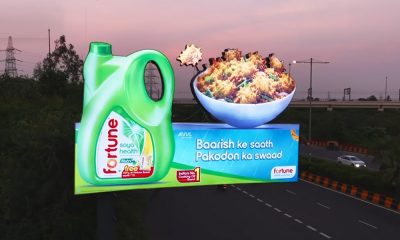

Fortune Soya Health brings ‘Baarish Ke Saath Pakodon Ka Swaad’ to the streets
The OOH innovations are conceptualised and executed across Delhi, Lucknow and Patna by Coral Media
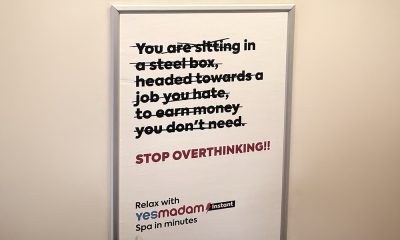

YesMadam turns Delhi Metro into a reminder to ‘Stop Overthinking’
With a series of sharply relatable messages placed inside Delhi Metro coaches, YesMadam uses everyday anxieties around work, money, relationships...


Netflix takes ‘The Gentlemen’ outdoors – and puts its message on the grass
For Season 2 of Netflix’s The Gentlemen, a field near the Gatwick flight path became an unexpected OOH canvas, with...


HDFC Bank turns a bus shelter into a lesson in fraud awareness
With its latest Vigil Aunty campaign, HDFC Bank uses a familiar public space and a playful visual to bring its...


Landsec and Ocean Outdoor build on the cultural resonance of Piccadilly Lights
Changes to the screen's format come into effect from January 2027, 10 years after Piccadilly Lights relaunched following a nine-month...


Royal Stag Boombox goes larger-than-life with anamorphic LED in Hyderabad
The campaign is conceptualised and executed by Coral Media


Times OOH Unveils ‘The Riviera’ in Ahmedabad
The screen is located at Sabarmati Riverfront on Ashram Road


Times OOH upgrades the Media Experience on Mumbai Metro Line 1
The move to 75-inch displays gives brand creatives significantly greater visual impact, while the enhanced brightness ensures vivid, true-to-life imagery...

Broadsign released 2026 programmatic DOOH trends report
Drawing on full-year 2025 and Q1 2026 internal transaction data, the report, surfaces useful signals about what today’s buyers value...
-

 Campaigns
Wolong: The Mastermind takes its story from the road to the screen in Malaysia
-
Campaigns
Netflix takes ‘The Gentlemen’ outdoors – and puts its message on the grass
-
Campaigns
HDFC Bank turns a bus shelter into a lesson in fraud awareness
-
 Creative Concepts
Qubo puts its security cameras on billboards, literally