
Insights
Why DOOH works in the era of Attention Economics
In an age driven by attention economy with excessive focus on clicks, shares and instant gratification, Stephen Joseph, Group CEO of Ocean Outdoor, explains why there’s never been a better time to integrate DOOH into wider digital strategies.

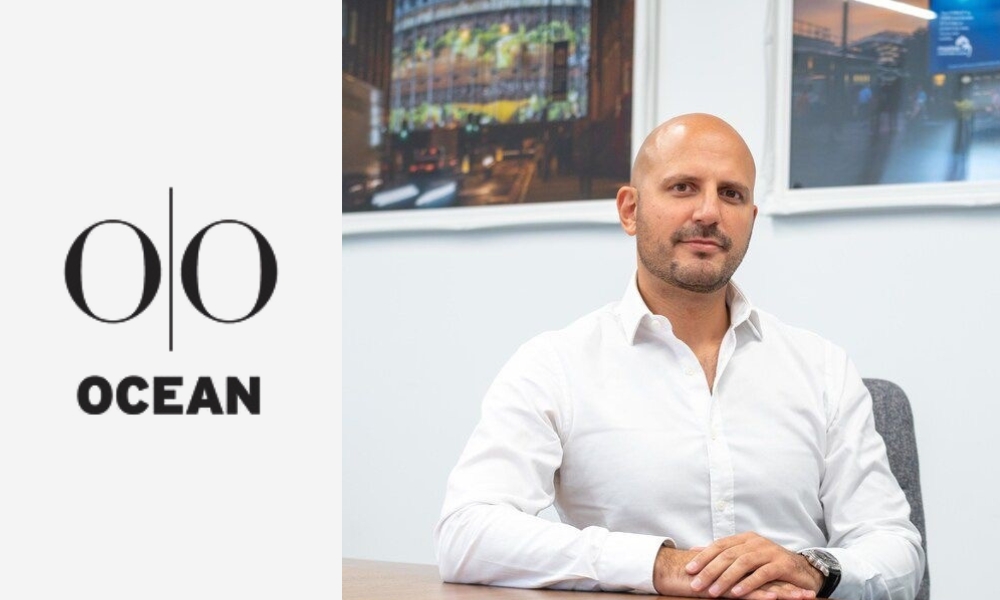
Stephen writes:
In a world where we are relentlessly bombarded with ads every day, the majority of them online and of negligible value, the need for differentiation and cut-through is paramount. Not All Impacts are Equal Nowadays, technology, data and analytics are central to advertising, and DOOH is no different. Accountability and measurement is a hotbed of debate and obfuscation. But while the attention economy focuses on clicks, shares and instant gratification, a trend that has driven brands to prioritise short-term thinking and short-term gains, Out of Home (OOH) advertising is ploughing a very different furrow. One which is building long-term brand salience and value. A principle that advertisers are now rapidly returning to, for very good reason. And that can only be good for DOOH.
What We Already Know
OOH is a one to many broadcast medium. Its primary strengths are mass reach, visual impact and location. OOH ads are not intrusive, and they deliver on brand trust. DOOH grabs audiences’ attention in high-traffic, roadside, retail and transit environments. It’s an unskippable medium and can also reach consumers close to purchase points.
Creativity is key. Years of independent Neuroscience based studies carried out by Ocean, have established that full motion DOOH is significantly more impactful than static ads, eliciting a powerful emotional response and brand recall, correlating with real world sales impact.
These studies also establish the positive priming effect of DOOH on other media and the wider all screen media universe.
It begs the question as to why all brands wouldn’t want this from their media channel?
The Attention Dividend
Attention is the foundational part of any successful ad campaign, but in shorter supply than ever given the proliferation of digital channels and the fragmenting of media.
Earlier this year we conducted a survey of the top 25 marketers, and three in every four said attention was their biggest challenge. Ocean’s latest study, The Attention Dividend, conducted with Lumen, the experts in measuring human attention, challenges this status quo regards attention. It not only proves premium DOOH’s ability to capture real-world attention but demonstrates that there’s never been a better time to integrate DOOH into wider digital strategies.
The Attention Dividend study establishes that:
- Premium DOOH formats deliver five times more attention than online digital formats.
- Premium large format holds attention for 8.2 times longer than online display, 5.5 times longer than social media content and 1.6 times longer than online video.
- When looking at DOOH only, premium large formats hold attention for longer than six-sheets.
- When it comes to brand recall, our study finds that premium large-format DOOH delivers 2.5 times higher brand recall than online video.
- Full motion creative also drives 2.5 times more brand choice than static content.
- Meanwhile, Ocean’s 3D DeepScreen® format delivers a 32% uplift in brand desirability.
Previous research by Lumen and Ebiquity has shown a strong correlation between attention gains and long-term profit. Using the model from that study and Lumen’s attention per mille (APM) metric, Ocean’s research establishes that APM is at its highest when premium large-format DOOH is combined with standard OOH. It’s mutually beneficial to use both in the media plan. The three key payoffs for advertisers are that premium large-format DOOH drives long-term profitability; boosts brand recall (or mental availability); and increases consumer desire to choose the brand.
To Go Big, Go OOH
The abandonment of scaled broad-audience campaigns in the quest for efficiency is having negative consequences. In his latest research study with the IPA, the effectiveness expert Les Binet says while digital marketing might be cheap and measurable, marketers are kidding themselves if they think it’s truly effective. According to Binet, advertisers must generate between 30m and 60m exposures to drive statistically significant sales uplift, and at least 200m to drive “major results”. Binet warns that the relative decline of brand-building can lead to a “death spiral”, with budgets, campaigns and profits all shrinking due to worsening effectiveness. The message is simple: to drive meaningful results, advertisers need to think big.







Daily Newsletter
Subscribe to receive the latest OOH
industry updates

Beyond selling a product to building an ecosystem

Indian OOH & the Measurability Journey: From OTS to business outcomes

Hamdard reimagines skincare for Gen Z through new-age OOH

Qubo puts its security cameras on billboards, literally

Claire’s pierces a billboard in New York

Puma becomes PVMA for PV Sindhu

HOCCO’s Aamchi campaign brings mango tree to Ahmedabad

Blinkit in association with Kinetic India goes all Bollywood

Acclaimed Actor Manoj Joshi to deliver an inspirational address at OAC 2024

Zepto’s Fast 10 Minute Delivery Saves the Day for Game Night in Ahmedabad!

‘Let’s create an empathetic space for women’

‘It won’t just be a man’s world anymore’

‘We’re actively exploring acquisitions and working to increase our inventory’

A habit of success at Prakash Arts

‘OOH is an important channel to connect with corporate audiences’

Sales Manager (Amritsar, J&K, Chandigarh, Mumbai, Vadodara, Udaipur, U.P.)
Orango has been involved in creating, building, reviving and growing brands. Orango builds powerful connections with their customers & people...

Sales Executive
Established B2B Media and Events Group VJ Media Works is looking for sales executives
Digital Marketing/Social Media Executives
Established B2B Media and Events Group VJ Media Works is looking for the following: Digital Marketing/Social Media Executives Location: Mumbai/Bangalore...

Sales Manager – AdZ (Digital Advertising)
Estontec Group’s fast-growing adtech brand AdZ is hiring a Sales Manager to drive digital media sales and client growth. This...
Onboarding Specialist
Join Estontec Group’s transit media brand BrandonWheelz as an Onboarding Specialist, managing campaign execution, vendor coordination, and media planning across...


Operation Manager
Company Description: BajuGali an Advertisement Company is a leading firm specializing in advertising and marketing services. We provide innovative solutions...


Senior Copy Editor
No of openings: 1 Experience/ qualifications: 3-4 years in any media/news publication Graduate Degree in any discipline, degree in Journalism...


Sales Specialist at BajuGali (OOH Advertising Company)
At BajuGali, we are a marketing and advertising agency that specializes in transforming creative visions into reality for brands and...
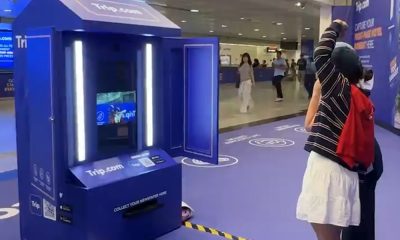

Trip.com turns Dhoby Ghaut MRT into a personal travel story
For the second year running, Trip.com has transformed Singapore’s Dhoby Ghaut MRT station into an immersive travel experience, inviting commuters...
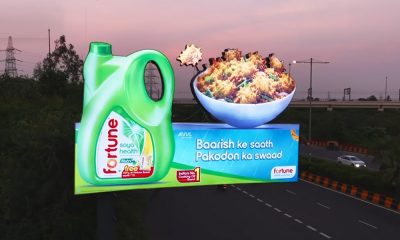

Fortune Soya Health brings ‘Baarish Ke Saath Pakodon Ka Swaad’ to the streets
The OOH innovations are conceptualised and executed across Delhi, Lucknow and Patna by Coral Media
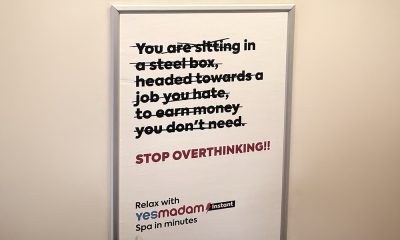

YesMadam turns Delhi Metro into a reminder to ‘Stop Overthinking’
With a series of sharply relatable messages placed inside Delhi Metro coaches, YesMadam uses everyday anxieties around work, money, relationships...


Netflix takes ‘The Gentlemen’ outdoors – and puts its message on the grass
For Season 2 of Netflix’s The Gentlemen, a field near the Gatwick flight path became an unexpected OOH canvas, with...
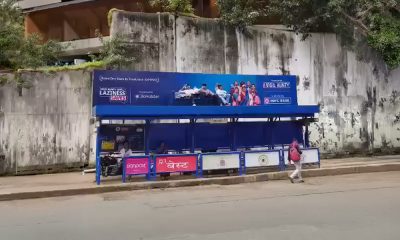

HDFC Bank turns a bus shelter into a lesson in fraud awareness
With its latest Vigil Aunty campaign, HDFC Bank uses a familiar public space and a playful visual to bring its...
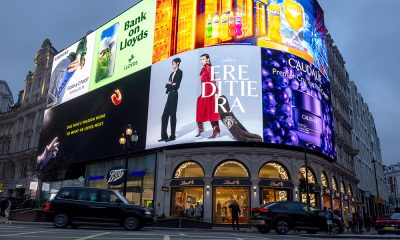

Landsec and Ocean Outdoor build on the cultural resonance of Piccadilly Lights
Changes to the screen's format come into effect from January 2027, 10 years after Piccadilly Lights relaunched following a nine-month...

Royal Stag Boombox goes larger-than-life with anamorphic LED in Hyderabad
The campaign is conceptualised and executed by Coral Media

Times OOH Unveils ‘The Riviera’ in Ahmedabad
The screen is located at Sabarmati Riverfront on Ashram Road

Times OOH upgrades the Media Experience on Mumbai Metro Line 1
The move to 75-inch displays gives brand creatives significantly greater visual impact, while the enhanced brightness ensures vivid, true-to-life imagery...

Broadsign released 2026 programmatic DOOH trends report
Drawing on full-year 2025 and Q1 2026 internal transaction data, the report, surfaces useful signals about what today’s buyers value...