
OOH Adtech
High on Holograms: When the virtual gets real and the real gets cutting-edge
Immersive technologies are redefining what’s possible when it comes to the intersection of brands and consumer experience. In this highly engaging exclusive conversation, David Nussbaum, Founder and Executive Chairman of Proto Hologram, shares his passion for discovering what technology can do to elevate consumer engagement, and in the process, drive new business opportunities for a whole eco-system.

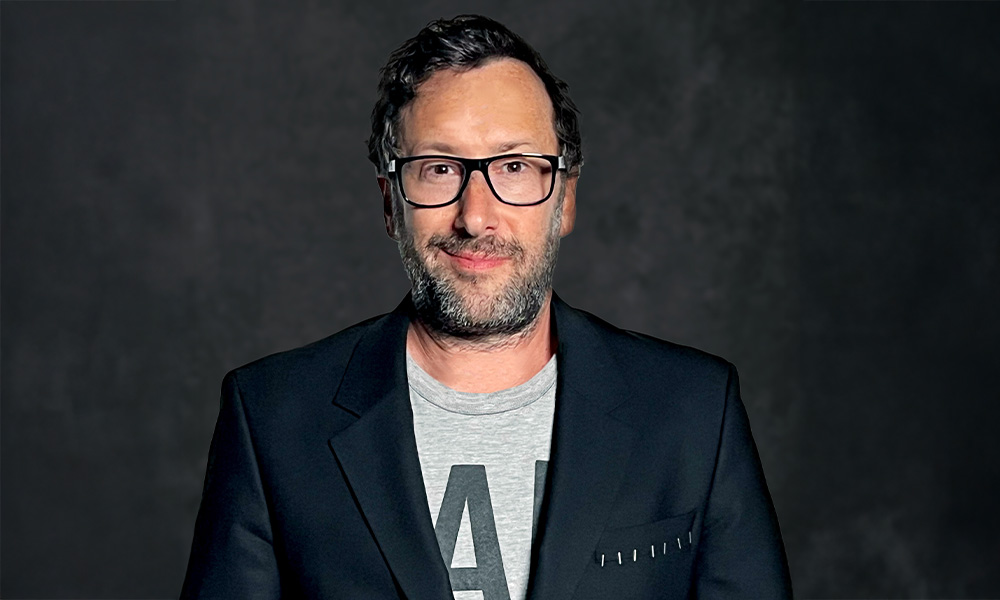
It takes a certain kind of personality to exude the energy that David Nussbaum does, an energy that comes from creative passion and conviction. Indeed, even a virtual interaction spanning diverse time zones does nothing to dilute the palpable energy that David represents as he sits talking from his LA based studio, sipping his caffeine fix.
David Nussbaum is the Founder and Executive Chairman of Proto Hologram, which by its own statement of mission, “brings AI to life in physical spaces”. Proto Hologram is a global creator/ developer and leading provider of the holobox hardware and software that makes hologram broadcast and communication a reality. Proto Hologram, based out of LA, California, works in the areas of advertising, retail, events, healthcare, education, entertainment and more.
David is considered a pioneer, who is widely regarded as the leading voice in hologram communication and credited with popularizing the medium globally.
Rooted in futuristic vision
Ask David about the start of his journey and how he came up with Proto Hologram and David is quick to answer, “My vision, when I began my journey, was to make communication more engaging, more interactive, more real. For example, instead of talking through a microphone and hearing the voice come through a speaker, or instead of looking into a screen and seeing a face come through on the other side, I thought, what if I could broadcast the other person? What if I can make it physically look like the person is actually in the room with me? And then there was no turning back,” he says, describing his first visualisation of the hologram technology.
Proto Hologram was in the news recently for enabling an AI Avatar of Sadhguru interact with attendees of the Mahashivratri festival at the Isha Yoga Centre (in Coimbatore, India) – one of the globe’s largest multi-cultural events and spiritual festivals, attracting hundreds of thousands of visitors in person from over 100 countries, and approximately 140 million via global streaming. Attendees were able to have their own one-on-one conversations with an AI Avatar of Sadhguru by visiting the Proto Hologram units at the event. They were also able to have a selfie taken with the Sadhguru’s AI avatar and download the photos via Proto’s innovative selfie feature.
As David explains, “I wanted to give people one to one access to inspirational speakers and leaders and give them the experience of a live interaction, that’s why I started this company. And I’ve been very fortunate that a lot of my dreams have come true here.”
Hologram for immersive consumer experiences
Making all of this happen is hologram technology. To put simply, a hologram is a 3-dimensional image that is created from light waves. It doesn’t take a stretch of imagination to see how Holograms can be an effective part of brand marketing and consumer experience.
As David says, “Being able to sell is also about communication – it’s the brand communicating with the customer, so holograms can be used to not just beam people but brands and calls to action too. Now, when it comes advertising and brand communication, it’s all about creating those wow moments and stand out experiences that make people to pull their car over, take their phones out and record them on their camera and that’s what we’re enabling at Proto.”
Proto Hologram, as David says, has a pretty sophisticated AI backbone with a closed language model, which means it’s a secure proprietary AI model developed by the company and supported by a big team of data and prompt engineers. As he explains, “There are guardrails in place to make sure you couldn’t ask an avatar a question that the real life person wouldn’t answer.”
He adds, “We also have lots of customers and partners who are building their own AI applications with their own internal data engineers. So we give them the platform, the hardware and the software platform to help them create their own AI avatars.”
Proto Hologram has partnered with The Hologram Media Network to distribute the holographic projections to hundreds of malls, airports and movie theatres. Speaking about it, David says, “These projections are so engaging, it’s like live social selling. I’ve seen people congregating around these projections, taking selfies etc.”
While North America is the biggest market for the company, Europe and parts of Middle East also promise lot of growth, as David shares. Speaking about India, David says, “India is exploding with popularity for us. We’ve worked with some big brands here, so yes India is big for us.”
Why Holograms?
So, what does it really take for a brand to invest in something like Holograms for their in-store or OOH campaigns?
For David, the answer comes easily, “It’s just like buying time on a radio station or a TV station or a digital display. Go to any city in the world and there’s digital billboards, and then you go into any mall and you could buy advertising on any of those flat screens. It’s the same thing. It’s sold the exact same way, and it’s priced similarly. So all things being equal, you can pay some more for a spot on a flat screen in a mall, or in multiple locations, or buy a hologram spot, and make people stop in their tracks and smile. The embedded third-party software applications enable data collection, which gives us leads on demographics and dwell times and this has shown us how people react to the holograms.”
He adds, talking about the challenge of making brands adopt new technologies, “When you’re trying out a new technology, it sometimes takes a bit of a leap of faith. But we have been able to build a large enough platform with different options for brands/client to buy locally, nationally or even internationally. More importantly, they are realizing that with this technology, people are experiencing the brand, not just seeing it.”
David sums up, “Hologram advertising is the next multi-billion dollar business.”
Read the full interview in the March edition of Outdoor Asia magazine.
Daily Newsletter
Subscribe to receive the latest OOH
industry updates

Traya’s ‘Hair Truth Mirror’ shows men what their everyday mirrors don’t

M4G Talkies S2E2: Emanda Vaz of Embassy Group on brands, business & the AI question

Canva gives Spain’s new students a royal welcome with ‘Welcome Princess’

“The AI Paradox: Why the Future of Marketing May Be More Physical Than Ever”

Cars24 drives Bappa Ki Savari into the heart of Ganesh Chaturthi

Puma becomes PVMA for PV Sindhu

HOCCO’s Aamchi campaign brings mango tree to Ahmedabad

Blinkit in association with Kinetic India goes all Bollywood

Acclaimed Actor Manoj Joshi to deliver an inspirational address at OAC 2024

Zepto’s Fast 10 Minute Delivery Saves the Day for Game Night in Ahmedabad!

‘Let’s create an empathetic space for women’

‘It won’t just be a man’s world anymore’

‘We’re actively exploring acquisitions and working to increase our inventory’

A habit of success at Prakash Arts

‘OOH is an important channel to connect with corporate audiences’

Sales Manager (Amritsar, J&K, Chandigarh, Mumbai, Vadodara, Udaipur, U.P.)
Orango has been involved in creating, building, reviving and growing brands. Orango builds powerful connections with their customers & people...

Sales Executive
Established B2B Media and Events Group VJ Media Works is looking for sales executives
Digital Marketing/Social Media Executives
Established B2B Media and Events Group VJ Media Works is looking for the following: Digital Marketing/Social Media Executives Location: Mumbai/Bangalore...

Sales Manager – AdZ (Digital Advertising)
Estontec Group’s fast-growing adtech brand AdZ is hiring a Sales Manager to drive digital media sales and client growth. This...
Onboarding Specialist
Join Estontec Group’s transit media brand BrandonWheelz as an Onboarding Specialist, managing campaign execution, vendor coordination, and media planning across...


Operation Manager
Company Description: BajuGali an Advertisement Company is a leading firm specializing in advertising and marketing services. We provide innovative solutions...


Senior Copy Editor
No of openings: 1 Experience/ qualifications: 3-4 years in any media/news publication Graduate Degree in any discipline, degree in Journalism...


Sales Specialist at BajuGali (OOH Advertising Company)
At BajuGali, we are a marketing and advertising agency that specializes in transforming creative visions into reality for brands and...


Zomato takes Bappa banter to Mumbai’s streets this Ganesh Chaturthi
This Ganesh Chaturthi, Zomato brings its signature food-led wit to Mumbai’s OOH landscape, turning familiar festive conversations, local food references...
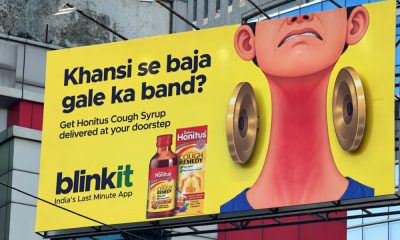

Honitus turns coughs into music across cities, links relief to Blinkit
Spotted across high-traffic locations in Delhi, Gurugram, and Mumbai
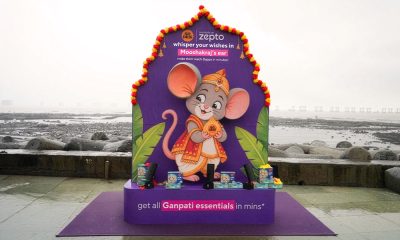

Zepto brings Bappa’s favourite messenger to the seafront
Spotted by the Mumbai seafront this Ganesh Chaturthi.


Hamdard reimagines skincare for Gen Z through new-age OOH
The campaign is executed by WPP Media


Qubo puts its security cameras on billboards, literally
The campaign is executed by Platinum Outdoor with Sakshi Advertising as production partner
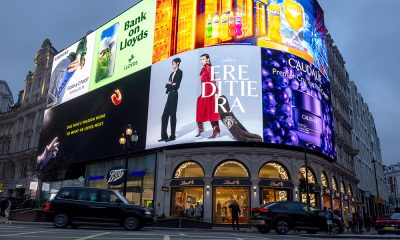

Landsec and Ocean Outdoor build on the cultural resonance of Piccadilly Lights
Changes to the screen's format come into effect from January 2027, 10 years after Piccadilly Lights relaunched following a nine-month...

Royal Stag Boombox goes larger-than-life with anamorphic LED in Hyderabad
The campaign is conceptualised and executed by Coral Media

Times OOH Unveils ‘The Riviera’ in Ahmedabad
The screen is located at Sabarmati Riverfront on Ashram Road

Times OOH upgrades the Media Experience on Mumbai Metro Line 1
The move to 75-inch displays gives brand creatives significantly greater visual impact, while the enhanced brightness ensures vivid, true-to-life imagery...

Broadsign released 2026 programmatic DOOH trends report
Drawing on full-year 2025 and Q1 2026 internal transaction data, the report, surfaces useful signals about what today’s buyers value...
-
Campaigns
Honitus turns coughs into music across cities, links relief to Blinkit
-
Campaigns
Zepto brings Bappa’s favourite messenger to the seafront
-
 Contracts & Investments
Rajouri Garden metro station now goes by Ai+ NOVA
-
 Tenders
Orango Solutions secures exclusive advertising rights at Dehradun Airport for seven years