
Insights
‘Time to recognize OOH as the heavyweight champion of real-world impact’
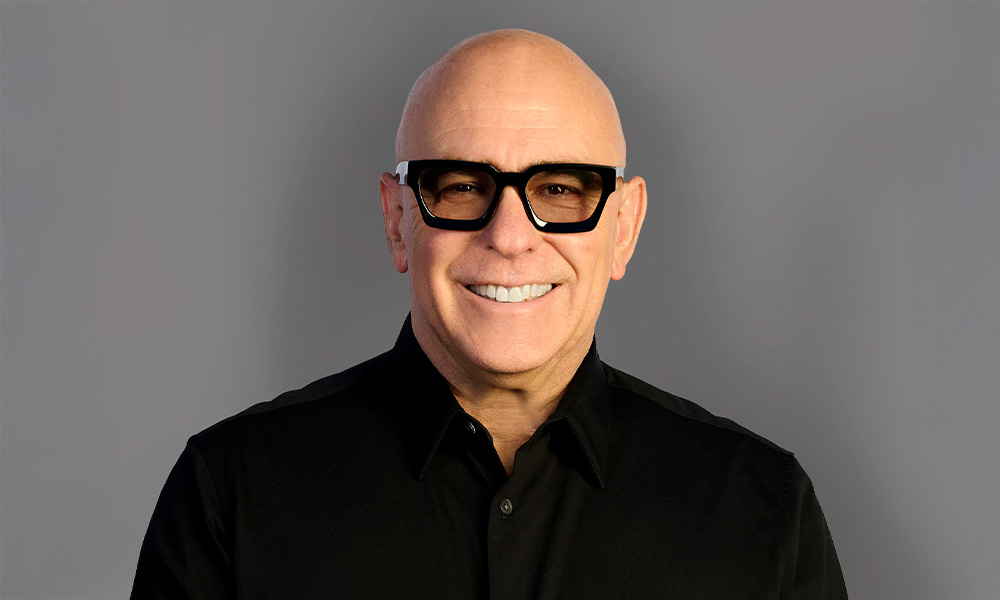
“We must be careful not to trade the gravitas of our presence in the public space for a narrow, lower-funnel “measurement quest” that ignores the bigger picture,” says Rick Robinson, CEO of PJX Media, while highlighting the primary reason brands invest in OOH: the profound, resonating, and irreplaceable human feeling of being “real” in the public space.

The New Year sparks fresh optimism and a drive for “what’s next” in out-of-home (OOH) advertising. This energy is fueling several key shifts: the digital transition is moving at a breakneck pace as static inventory converts to flexible, real-time screens, while immersive tech like holograms and 3D anamorphic displays are becoming mainstream, turning street corners into theatrical stages.
Simultaneously, the industry is answering a “clarion call” for better accountability, with a mandate to refine attribution and prove tangible ROI. Efficiency is also a priority; we expect further DSP consolidation and deeper investments in programmatic tools to streamline the buying process.
Yet, despite this rush toward a high-tech future, we must not lose sight of the “Human Element.” Even with the rise of automation, there is a clear and growing demand for talented practitioners, experts who can synthesize complex data points and turn them into a cohesive real-world strategy.
The playbook for OOH’s future
While evolution is exciting, I find myself reflecting on a critical question: How can our legacy medium compete with its new-age counterparts without losing its soul? What is our playbook for the future? I am occasionally troubled that, in our rush to become “digitally compatible,” we might leave behind the very essence of what makes OOH irreplaceable – our undeniable, physical visibility in the real world.
As OOH continues to fight for bigger slices of the marketing budget, the common refrain is that delivering better metrics will unlock more revenue. In some cases, this is true; we’ve seen brands invest, test, prove, and subsequently increase their OOH spend. But just as often, we see brands buy into our medium because they simply know OOH works. They see it with their own eyes. They feel its presence.
Let’s not diminish the power of that sentiment. We must be careful not to trade the gravitas of our presence in the public space for a narrow, lower-funnel “measurement quest” that ignores the bigger picture. Instead, we should channel our energy into measuring how OOH impacts the full funnel. Out-of-home drives brand affinity, fuels search intent, and ultimately moves the needle on sales. I propose we double down on the primary reason brands invest in OOH: the profound, resonating, and irreplaceable human feeling of being “real” in the public space.
The tangible canvas: Claiming the territory
The New Year sparks fresh optimism and a drive for “what’s next” in out-of-home (OOH) advertising. This energy is fueling several key shifts: the digital transition is moving at a breakneck pace as static inventory converts to flexible, real-time screens, while immersive tech like holograms and 3D anamorphic displays are becoming mainstream, turning street corners into theatrical stages.
Simultaneously, the industry is answering a “clarion call” for better accountability, with a mandate to refine attribution and prove tangible ROI. Efficiency is also a priority; we expect further DSP consolidation and deeper investments in programmatic tools to streamline the buying process.
Yet, despite this rush toward a high-tech future, we must not lose sight of the “Human Element.” Even with the rise of automation, there is a clear and growing demand for talented practitioners, experts who can synthesize complex data points and turn them into a cohesive real-world strategy.
The playbook for OOH’s future
While evolution is exciting, I find myself reflecting on a critical question: How can our legacy medium compete with its new-age counterparts without losing its soul? What is our playbook for the future? I am occasionally troubled that, in our rush to become “digitally compatible,” we might leave behind the very essence of what makes OOH irreplaceable – our undeniable, physical visibility in the real world.
As OOH continues to fight for bigger slices of the marketing budget, the common refrain is that delivering better metrics will unlock more revenue. In some cases, this is true; we’ve seen brands invest, test, prove, and subsequently increase their OOH spend. But just as often, we see brands buy into our medium because they simply know OOH works. They see it with their own eyes. They feel its presence.
Let’s not diminish the power of that sentiment. We must be careful not to trade the gravitas of our presence in the public space for a narrow, lower-funnel “measurement quest” that ignores the bigger picture. Instead, we should channel our energy into measuring how OOH impacts the full funnel. Out-of-home drives brand affinity, fuels search intent, and ultimately moves the needle on sales. I propose we double down on the primary reason brands invest in OOH: the profound, resonating, and irreplaceable human feeling of being “real” in the public space.
The tangible canvas: Claiming the territory
Out-of-home is the original legacy medium, surviving for two centuries because it is the only format that truly stakes a claim in physical territory. Global evidence proves this: AI firms dominate the Silicon Valley 101 corridor to signal authority, fashion brands own Tokyo’s Shibuya district to capture the city’s pulse, and luxury houses use massive building wraps in Paris to project sheer permanence.
As a tangible, unskippable canvas, OOH drives the entire funnel, from brand equity to conversion. Research shows about 70% of U.S. adults notice OOH ads while on their way to shop. Whether through guerrilla posters or high-end spectaculars, the medium works because it occupies the same physical reality as the consumer.
The expectation that OOH must be as specifically “trackable” as a digital click or “it doesn’t work” is a head fake. While an “impression” is the unit of measure for both, all impressions are not created, valued, or measured equally. Out-of-home stands alone because it exists in the public square. When that power is harnessed, you get amplification, impact, and a ripple effect that digital cannot replicate. How can a fleeting, 2-second scroll-by be compared to a 40-foot tall statement of brand intent?
The superpowers: Unskippable, tangible, and fraud-free
Out-of-home wins because it is real-world media for real people. It offers the largest “In Real Life” canvas for creativity – a critical factor since creative drives 75% of an ad’s effectiveness. Unlike forgettable digital banners, OOH has a viral second life; 38% of TikTok users often see OOH ads reposted on the platform. It delivers a level of cultural resonance that digital’s private, 1-to-1 conversations simply cannot buy.
Furthermore, OOH is uniquely unskippable and fraud-free. While audiences mute TV, skip podcasts, and install digital ad blockers, you cannot “ad block” the street. It also bypasses the $100 billion lost annually to digital ad fraud. With OOH, there are no bots or “ghost” impressions, just physical presence. Our 1-to-many reach isn’t a flaw; it’s a superpower that turns advertising into a shared shout from the mountaintop.
The call to action: Shift the mix
While a balanced media mix is essential, OOH remains chronically underfunded relative to its full-funnel impact. Our call to action is simple: allocate at least 10% of your budget to OOH from the start. Even a small increase in spend has been proven to significantly boost overall ROAS across categories from automotive to CPG.
We must demand the market recognize OOH as the undisputed heavyweight champion of real-world impact. In a life saturated with fleeting digital noise, OOH offers something tangible and real. It is a human medium woven into “The People’s Space,” serving as the visual voice of our culture. Rather than trying to blend in with the digital crowd, the industry must lead with its unique, physical strength.
Out-of-home is the original legacy medium, surviving for two centuries because it is the only format that truly stakes a claim in physical territory. Global evidence proves this: AI firms dominate the Silicon Valley 101 corridor to signal authority, fashion brands own Tokyo’s Shibuya district to capture the city’s pulse, and luxury houses use massive building wraps in Paris to project sheer permanence.
As a tangible, unskippable canvas, OOH drives the entire funnel, from brand equity to conversion. Research shows about 70% of U.S. adults notice OOH ads while on their way to shop. Whether through guerrilla posters or high-end spectaculars, the medium works because it occupies the same physical reality as the consumer.
The expectation that OOH must be as specifically “trackable” as a digital click or “it doesn’t work” is a head fake. While an “impression” is the unit of measure for both, all impressions are not created, valued, or measured equally. Out-of-home stands alone because it exists in the public square. When that power is harnessed, you get amplification, impact, and a ripple effect that digital cannot replicate. How can a fleeting, 2-second scroll-by be compared to a 40-foot tall statement of brand intent?
The superpowers: Unskippable, tangible, and fraud-free
Out-of-home wins because it is real-world media for real people. It offers the largest “In Real Life” canvas for creativity – a critical factor since creative drives 75% of an ad’s effectiveness. Unlike forgettable digital banners, OOH has a viral second life; 38% of TikTok users often see OOH ads reposted on the platform. It delivers a level of cultural resonance that digital’s private, 1-to-1 conversations simply cannot buy.
Furthermore, OOH is uniquely unskippable and fraud-free. While audiences mute TV, skip podcasts, and install digital ad blockers, you cannot “ad block” the street. It also bypasses the $100 billion lost annually to digital ad fraud. With OOH, there are no bots or “ghost” impressions, just physical presence. Our 1-to-many reach isn’t a flaw; it’s a superpower that turns advertising into a shared shout from the mountaintop.
The call to action: Shift the mix
While a balanced media mix is essential, OOH remains chronically underfunded relative to its full-funnel impact. Our call to action is simple: allocate at least 10% of your budget to OOH from the start. Even a small increase in spend has been proven to significantly boost overall ROAS across categories from automotive to CPG.
We must demand the market recognize OOH as the undisputed heavyweight champion of real-world impact. In a life saturated with fleeting digital noise, OOH offers something tangible and real. It is a human medium woven into “The People’s Space,” serving as the visual voice of our culture. Rather than trying to blend in with the digital crowd, the industry must lead with its unique, physical strength.


Daily Newsletter
Subscribe to receive the latest OOH
industry updates

When OOH starts with the idea, not the inventory

Flipkart Minutes stretches aarti lyrics across OOH this Ganpati season

Havells adds a 3D festive twist to OOH this Ganpati season

Ownly brings ‘Mooshak on Wheels’ to Hyderabad this Ganesh Chaturthi

AAP-GFP takes its electoral message to Goa’s OOH landscape

Puma becomes PVMA for PV Sindhu

HOCCO’s Aamchi campaign brings mango tree to Ahmedabad

Blinkit in association with Kinetic India goes all Bollywood

Acclaimed Actor Manoj Joshi to deliver an inspirational address at OAC 2024

Zepto’s Fast 10 Minute Delivery Saves the Day for Game Night in Ahmedabad!

‘Let’s create an empathetic space for women’

‘It won’t just be a man’s world anymore’

‘We’re actively exploring acquisitions and working to increase our inventory’

A habit of success at Prakash Arts

‘OOH is an important channel to connect with corporate audiences’


Video Editor
Job Description: Editing videos of editorial interviews, in-house events, video podcasts, promotional videos and others based on team brief Planning...
Content Editor-Writer
Job Description: Editing daily news copies and magazine articles Writing industry research and interview based articles and client focused content...


Sales Manager (Amritsar, J&K, Chandigarh, Mumbai, Vadodara, Udaipur, U.P.)
Orango has been involved in creating, building, reviving and growing brands. Orango builds powerful connections with their customers & people...


Sales Executive
Established B2B Media and Events Group VJ Media Works is looking for sales executives
Digital Marketing/Social Media Executives
Established B2B Media and Events Group VJ Media Works is looking for the following: Digital Marketing/Social Media Executives Location: Mumbai/Bangalore...


Sales Manager – AdZ (Digital Advertising)
Estontec Group’s fast-growing adtech brand AdZ is hiring a Sales Manager to drive digital media sales and client growth. This...
Onboarding Specialist
Join Estontec Group’s transit media brand BrandonWheelz as an Onboarding Specialist, managing campaign execution, vendor coordination, and media planning across...


Operation Manager
Company Description: BajuGali an Advertisement Company is a leading firm specializing in advertising and marketing services. We provide innovative solutions...


bigbasket’s Modak Meter gets Mumbai’s volume up for Ganpati Bappa
The activation was conceptualised by Bare Bones Collective and executed by MOMS Outdoor

Traya’s ‘Hair Truth Mirror’ shows men what their everyday mirrors don’t
The activation is live at Inorbit Mall, Malad until 26th September


Canva gives Spain’s new students a royal welcome with ‘Welcome Princess’
As Princess Leonor, heir to the Spanish throne and eldest daughter of King Felipe VI and Queen Letizia, begins university,...


Cars24 drives Bappa Ki Savari into the heart of Ganesh Chaturthi
This Ganesh Chaturthi, Cars24 turned a car into more than a branded installation, bringing Bappa closer to devotees through an...


Zomato takes Bappa banter to Mumbai’s streets this Ganesh Chaturthi
This Ganesh Chaturthi, Zomato brings its signature food-led wit to Mumbai’s OOH landscape, turning familiar festive conversations, local food references...

Landsec and Ocean Outdoor build on the cultural resonance of Piccadilly Lights
Changes to the screen's format come into effect from January 2027, 10 years after Piccadilly Lights relaunched following a nine-month...


Royal Stag Boombox goes larger-than-life with anamorphic LED in Hyderabad
The campaign is conceptualised and executed by Coral Media

Times OOH Unveils ‘The Riviera’ in Ahmedabad
The screen is located at Sabarmati Riverfront on Ashram Road

Times OOH upgrades the Media Experience on Mumbai Metro Line 1
The move to 75-inch displays gives brand creatives significantly greater visual impact, while the enhanced brightness ensures vivid, true-to-life imagery...

Broadsign released 2026 programmatic DOOH trends report
Drawing on full-year 2025 and Q1 2026 internal transaction data, the report, surfaces useful signals about what today’s buyers value...
-

 Campaigns
Honitus turns coughs into music across cities, links relief to Blinkit
-
Creative Concepts
Cars24 drives Bappa Ki Savari into the heart of Ganesh Chaturthi
-

 Contracts & Investments
Rajouri Garden metro station now goes by Ai+ NOVA
-
 Campaigns
Zepto brings Bappa’s favourite messenger to the seafront