
Markets in Focus
What will spur growth for Ahmedabad OOH? Industry players share their take
Insights by Sanjay Raval, Director, Sitemax Media; Shivani Nijhawan, Business Head – Gujarat & UP, Coral Media; and Saket Shah, Managing Director, Kaushik Outdoor, on demand, inventory pressure and the pace of digital adoption in Ahmedabad, a key market for brands.

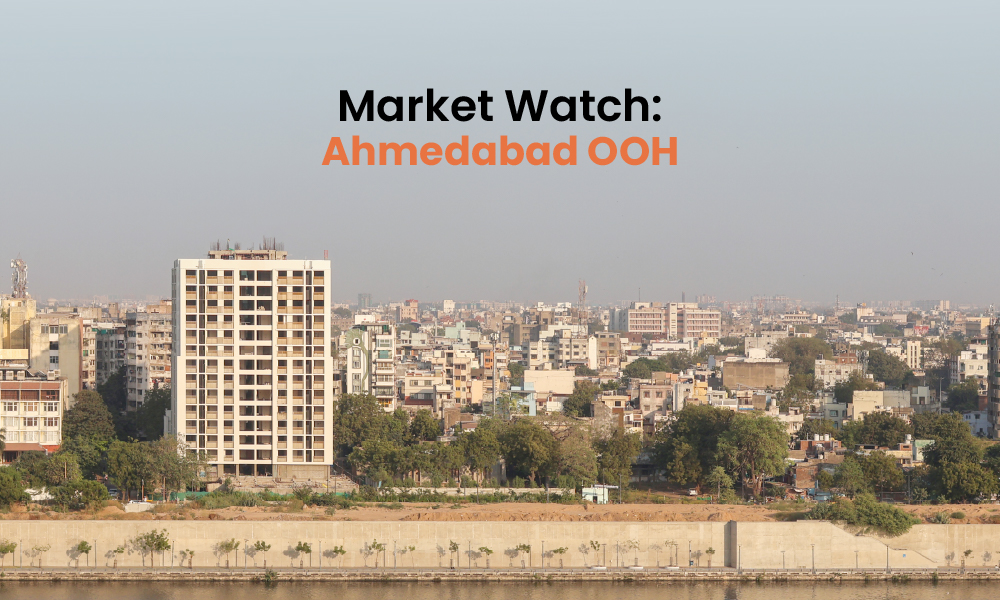
Ahmedabad’s out-of-home (OOH) market is steadily expanding, backed by consistent advertiser demand and a growing mix of categories. However, the region continues to operate within structural limitations, particularly around premium inventory and digital adoption, making it a market that is evolving in layers rather than undergoing rapid transformation.
Across industry players, the consensus is clear: while demand is strong, infrastructure and policy are still catching up.
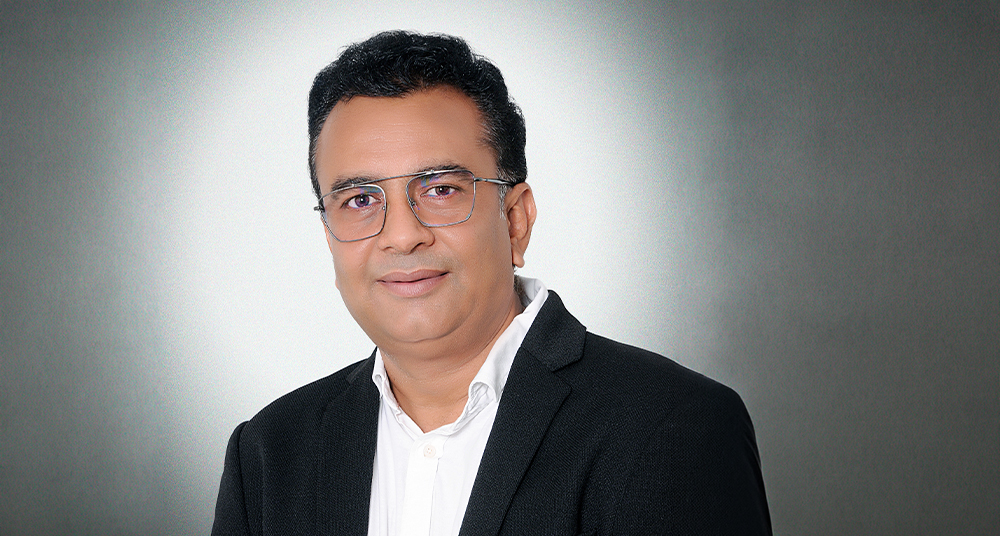
Sanjay Raval, Director at Sitemax Media
Demand rises, but premium inventory remains limited
Sanjay Raval, Director at Sitemax Media, describes the market as active and growing, with increasing participation from brands. However, this demand is heavily concentrated in a few high-visibility corridors.
“The market is good. Growth is happening, and there are many brands,” Sanjay says, pointing to stretches like SG Highway where inventory is already saturated. With multiple advertisers competing for the same premium sites, the pressure on static formats is becoming evident.
Echoing this, Saket Shah, Managing Director at Kaushik Outdoor, notes that while inventory quality has improved over the past few years, “the ecosystem remains largely driven by conventional hoardings”, with gradual upgrades rather than large-scale transformation.
This imbalance between demand and supply is now pushing the market to explore more flexible formats.
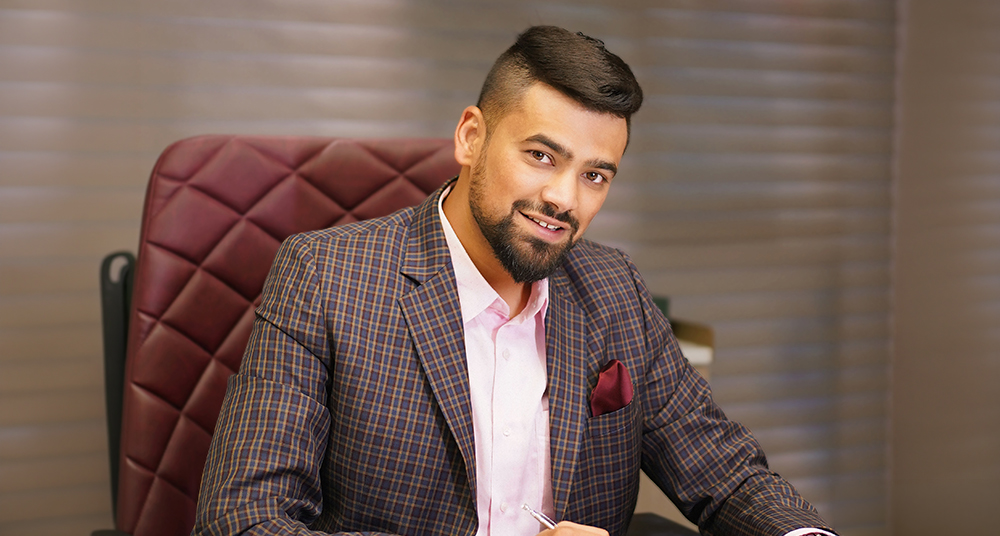
Saket Shah, Managing Director at Kaushik Outdoor
LED growth driven by necessity, not ecosystem maturity
As inventory pressure increases, digital formats, particularly LEDs, are emerging as a practical solution.
“At a junction, if there are four unipoles and none are available, but everyone wants that spot, what do you do? You convert it into LED and serve multiple clients,” Sanjay explains, highlighting how digital enables higher utilisation of prime locations.
However, DOOH adoption in Ahmedabad remains significantly behind metro markets. Shivani Nijhawan, Business Head – Gujarat & UP at Coral Media, attributes this to a mix of regulatory, financial and ecosystem challenges.
“The gap is not because of one single factor, it’s a combination of regulation, cost, demand and ecosystem limitations,” she says. “Most advertisers here are still tactical and cost-driven. They prefer static media.”
Saket reinforces this, pointing out that while digital formats are being introduced, the high cost of infrastructure and limited advertiser appetite for premium pricing continue to slow down adoption.
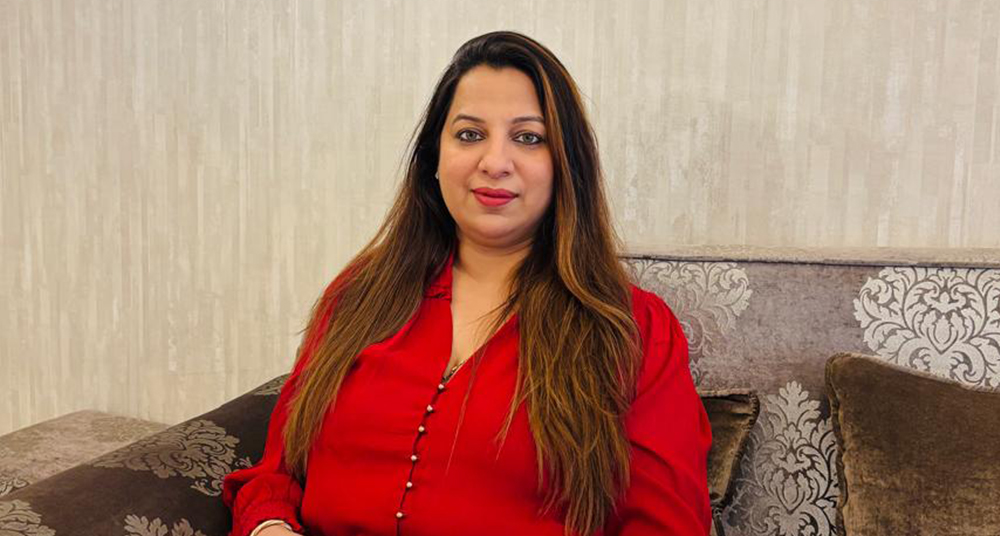
Shivani Nijhawan, Business Head – Gujarat & UP at Coral Media
Measurement improves, but remains fragmented
Measurement and accountability are gradually improving, but are far from standardised.
Today, media owners are offering solutions such as traffic data, geo-tagged proof-of-execution, and audience profiling. However, scalability remains a challenge due to fragmented inventory and the absence of unified frameworks.
“Everything is local. It depends on the road, traffic and movement,” Sanjay explains, underlining how location continues to be the primary decision-making factor in the market.
Shivani adds that while brands are increasingly asking for data, OOH in the region still operates partly on trust and long-standing relationships, unlike digital platforms where measurement is centralised and real-time.
A hybrid future shaped by policy and infrastructure
Despite these constraints, advertiser expectations are evolving. There is a visible shift from visibility-led planning to impact-driven communication, with brands exploring premium sites, bundled offerings and innovation-led formats.
“OOH is moving from just visibility to impact and presence,” Shivani notes.
Looking ahead, Ahmedabad is expected to remain a hybrid market, where premium formats such as LEDs, transit media and landmark sites grow in key corridors, while traditional hoardings continue to dominate in terms of scale and cost-efficiency.
“Large LEDs and landmark sites will grow, but the pace will take time to match metro cities,” she adds.
For this transition to accelerate, policy will play a critical role. Industry players highlight the need for clearer regulations, faster approvals and more standardised frameworks to support both traditional and digital growth.
As Saket summarises, the market’s evolution will be steady rather than disruptive, built on a strong traditional base, with innovation gradually layering on top.







Daily Newsletter
Subscribe to receive the latest OOH
industry updates

When OOH starts with the idea, not the inventory

Flipkart Minutes stretches aarti lyrics across OOH this Ganpati season

Havells adds a 3D festive twist to OOH this Ganpati season

Ownly brings ‘Mooshak on Wheels’ to Hyderabad this Ganesh Chaturthi

AAP-GFP takes its electoral message to Goa’s OOH landscape

Puma becomes PVMA for PV Sindhu

HOCCO’s Aamchi campaign brings mango tree to Ahmedabad

Blinkit in association with Kinetic India goes all Bollywood

Acclaimed Actor Manoj Joshi to deliver an inspirational address at OAC 2024

Zepto’s Fast 10 Minute Delivery Saves the Day for Game Night in Ahmedabad!

‘Let’s create an empathetic space for women’

‘It won’t just be a man’s world anymore’

‘We’re actively exploring acquisitions and working to increase our inventory’

A habit of success at Prakash Arts

‘OOH is an important channel to connect with corporate audiences’

Video Editor
Job Description: Editing videos of editorial interviews, in-house events, video podcasts, promotional videos and others based on team brief Planning...
Content Editor-Writer
Job Description: Editing daily news copies and magazine articles Writing industry research and interview based articles and client focused content...

Sales Manager (Amritsar, J&K, Chandigarh, Mumbai, Vadodara, Udaipur, U.P.)
Orango has been involved in creating, building, reviving and growing brands. Orango builds powerful connections with their customers & people...

Sales Executive
Established B2B Media and Events Group VJ Media Works is looking for sales executives
Digital Marketing/Social Media Executives
Established B2B Media and Events Group VJ Media Works is looking for the following: Digital Marketing/Social Media Executives Location: Mumbai/Bangalore...

Sales Manager – AdZ (Digital Advertising)
Estontec Group’s fast-growing adtech brand AdZ is hiring a Sales Manager to drive digital media sales and client growth. This...
Onboarding Specialist
Join Estontec Group’s transit media brand BrandonWheelz as an Onboarding Specialist, managing campaign execution, vendor coordination, and media planning across...

Operation Manager
Company Description: BajuGali an Advertisement Company is a leading firm specializing in advertising and marketing services. We provide innovative solutions...


bigbasket’s Modak Meter gets Mumbai’s volume up for Ganpati Bappa
The activation was conceptualised by Bare Bones Collective and executed by MOMS Outdoor
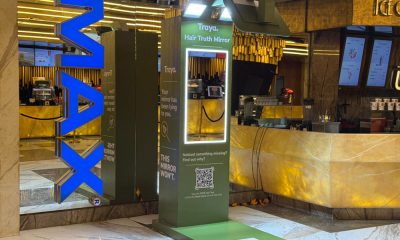

Traya’s ‘Hair Truth Mirror’ shows men what their everyday mirrors don’t
The activation is live at Inorbit Mall, Malad until 26th September
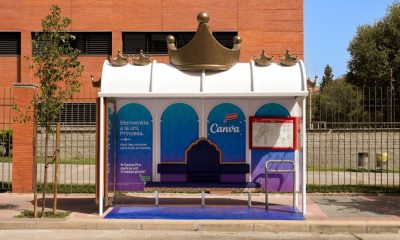

Canva gives Spain’s new students a royal welcome with ‘Welcome Princess’
As Princess Leonor, heir to the Spanish throne and eldest daughter of King Felipe VI and Queen Letizia, begins university,...
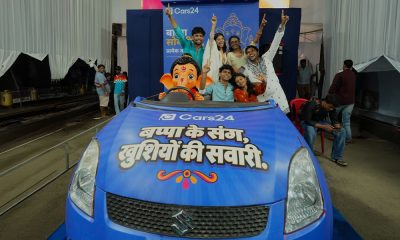

Cars24 drives Bappa Ki Savari into the heart of Ganesh Chaturthi
This Ganesh Chaturthi, Cars24 turned a car into more than a branded installation, bringing Bappa closer to devotees through an...
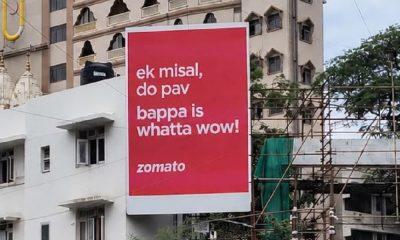

Zomato takes Bappa banter to Mumbai’s streets this Ganesh Chaturthi
This Ganesh Chaturthi, Zomato brings its signature food-led wit to Mumbai’s OOH landscape, turning familiar festive conversations, local food references...

Landsec and Ocean Outdoor build on the cultural resonance of Piccadilly Lights
Changes to the screen's format come into effect from January 2027, 10 years after Piccadilly Lights relaunched following a nine-month...

Royal Stag Boombox goes larger-than-life with anamorphic LED in Hyderabad
The campaign is conceptualised and executed by Coral Media
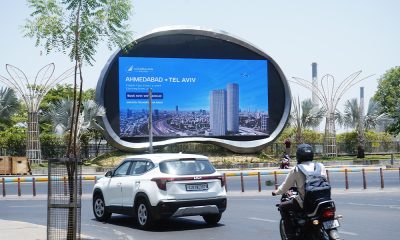

Times OOH Unveils ‘The Riviera’ in Ahmedabad
The screen is located at Sabarmati Riverfront on Ashram Road
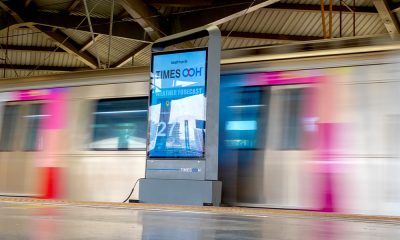

Times OOH upgrades the Media Experience on Mumbai Metro Line 1
The move to 75-inch displays gives brand creatives significantly greater visual impact, while the enhanced brightness ensures vivid, true-to-life imagery...

Broadsign released 2026 programmatic DOOH trends report
Drawing on full-year 2025 and Q1 2026 internal transaction data, the report, surfaces useful signals about what today’s buyers value...
-
Creative Concepts
Cars24 drives Bappa Ki Savari into the heart of Ganesh Chaturthi
-
 Campaigns
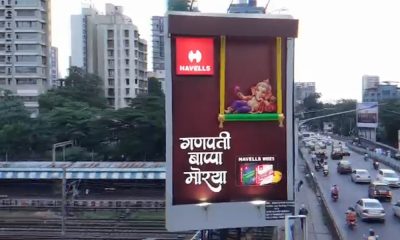
Havells adds a 3D festive twist to OOH this Ganpati season
-
Campaigns
Canva gives Spain’s new students a royal welcome with ‘Welcome Princess’
-
 Campaigns
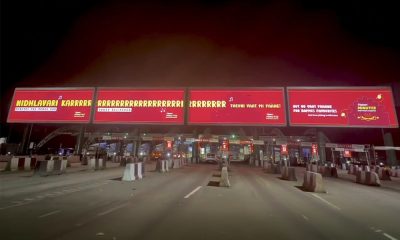
Flipkart Minutes stretches aarti lyrics across OOH this Ganpati season