
Markets in Focus
PwC forecasts India’s OOH revenue to near $800M, powered by DOOH and measurement
The OOH industry, one of India’s strongest traditional media segments, is projected to scale to USD 798 million by 2029, with Digital OOH increasing its market share to over 44%.


India’s Out-of-Home (OOH) industry is in the midst of a structural transformation, and PwC’s Global Entertainment & Media Outlook 2025–29 reinforces this shift with clear data-backed momentum. The report highlights how transit environments, digital screen networks and measurement advancements are reshaping the pace and profile of OOH growth in the country.
India’s OOH revenue reached USD 568 million in 2024, growing 13.4% year-on-year, making it one of the strongest-performing traditional media segments. PwC forecasts the market to scale to USD 798 million by 2029, at a 7.0% CAGR, with digital OOH (DOOH) emerging as the central growth engine.
DOOH emerges as the driver of industry expansion
With a projected 16.5% CAGR, DOOH is expected to grow more than eight times faster than traditional OOH formats, increasing its market share from 28.8% in 2024 to 44.1% by 2029. Traditional formats, meanwhile, are expected to expand at a modest 2.0% CAGR, signalling a decisive market shift toward digital-led outdoor communication.
This acceleration is being powered by sustained DOOH investments in transit locations and controlled environments. Airports and metro systems continue to lead digital adoption, with Times OOH, Laqshya Media Group, JCDecaux and other operators executing large-scale digital transformations across India’s busiest commuter networks.
An outdoor media player is also pioneering solar-powered billboards, signalling the emergence of sustainability as a competitive differentiator in outdoor advertising infrastructure.
Measurement unlocks the next phase of OOH maturity
PwC identifies the rollout of the IOAA national audience measurement system in 2024 as one of the sector’s most important developments. The GPS-based system—designed to capture real-time exposure and mobility insights—is expected to cover 85% of India’s OOH market by 2025.
This marks the sector’s first large-scale move toward unified, third-party metrics, paving the way for:
- More transparent and accountable OOH planning
- Greater advertiser confidence in DOOH
- Increased viability of programmatic buying
However, despite the progress, programmatic DOOH currently accounts for only 1–2% of India’s DOOH spending. PwC attributes this to infrastructure gaps, cost-sharing concerns and the absence of formal approval from the Advertising Agencies Association of India (AAAI). Adoption is expected to improve as measurement stabilises and digital networks expand.
Regulatory developments introduce both opportunities and risks
As DOOH accelerates, regulatory shifts remain a critical variable. PwC notes that Mumbai’s proposed advertising policy changes could restrict hoarding placements, potentially impacting inventory availability and growth opportunities for operators. At the same time, digital expansion in metros such as Mumbai, Delhi and Bengaluru continues at a rapid clip, supported by private infrastructure development and transit modernisation.
A sector advancing toward a more digital, measurable and sustainable future
PwC’s outlook positions India’s OOH industry on a steady long-term growth curve—underpinned by DOOH expansion, transit-media scaling, sustainability initiatives and the maturing measurement ecosystem.
While challenges persist in programmatic enablement, cost models and policy frameworks, the fundamentals remain strong. With improved infrastructure, better metrics and clearer regulatory direction, India’s OOH sector is set for a significant evolution and deeper integration with digitally enabled media strategies over the next five years.


Daily Newsletter
Subscribe to receive the latest OOH
industry updates

Alberta Cancer Foundation turns movie spoilers into a life-saving OOH campaign

Aldi creates a ‘broomstick parking’ bay for witches and wizards ahead of Halloween

Riddhesh Raval, Dy Municipal Commissioner, Ahmedabad, to address Gujarat Talks OOH

Maharashtra Maritime Board floats 19 advertising tenders across Mumbai’s waterfront, jetties and bridges

Traya marks Dussehra with ‘Andhere Mein Teer Mat Chalao’ activation

Puma becomes PVMA for PV Sindhu

HOCCO’s Aamchi campaign brings mango tree to Ahmedabad

District uses Samay Raina’s signature shirt to announce his live show

Blinkit in association with Kinetic India goes all Bollywood

Acclaimed Actor Manoj Joshi to deliver an inspirational address at OAC 2024

‘Let’s create an empathetic space for women’

‘It won’t just be a man’s world anymore’

‘We’re actively exploring acquisitions and working to increase our inventory’

A habit of success at Prakash Arts

‘OOH is an important channel to connect with corporate audiences’

Video Editor
Job Description: Editing videos of editorial interviews, in-house events, video podcasts, promotional videos and others based on team brief Planning...
Content Editor-Writer
Job Description: Editing daily news copies and magazine articles Writing industry research and interview based articles and client focused content...

Sales Manager (Amritsar, J&K, Chandigarh, Mumbai, Vadodara, Udaipur, U.P.)
Orango has been involved in creating, building, reviving and growing brands. Orango builds powerful connections with their customers & people...

Sales Executive
Established B2B Media and Events Group VJ Media Works is looking for sales executives
Digital Marketing/Social Media Executives
Established B2B Media and Events Group VJ Media Works is looking for the following: Digital Marketing/Social Media Executives Location: Mumbai/Bangalore...

Sales Manager – AdZ (Digital Advertising)
Estontec Group’s fast-growing adtech brand AdZ is hiring a Sales Manager to drive digital media sales and client growth. This...
Onboarding Specialist
Join Estontec Group’s transit media brand BrandonWheelz as an Onboarding Specialist, managing campaign execution, vendor coordination, and media planning across...


Operation Manager
Company Description: BajuGali an Advertisement Company is a leading firm specializing in advertising and marketing services. We provide innovative solutions...
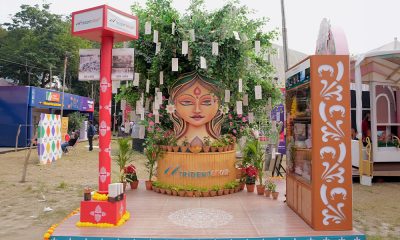

Trident Group brings ‘Tree of Strength’ to Durga Puja with a sustainability-led activation in Kolkata
Produced by Sakshi Advertising, the activation at Maddox Square invites visitors to plant their wishes while connecting the spirit of...


KISNA takes festive gifting nationwide with 300+ billboards featuring Shahid and Mira Kapoor
Projected to generate 5+ million OOH impressions, the #GiftHappiness campaign highlights exclusive jewellery offers, exchange benefits and a Grand Festive...


Kolonkojoyini uses Maa Durga installation to highlight stigma faced by trafficking survivors
The installation was conceptualised and brought to life by Tribes in collaboration with Sanlaap.
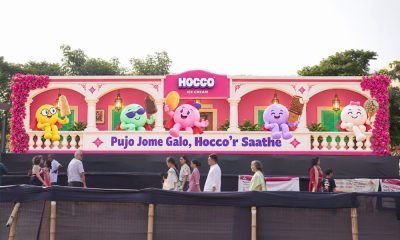

Hocco brings its East India debut to Kolkata streets with a pujo-themed campaign
To give the campaign a local feel and connect with people during Pujo, the brand used regional-language hoardings in Bengali.
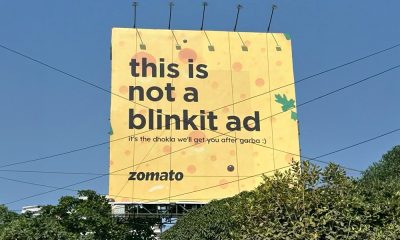

Zomato serves up a Garba-inspired OOH twist with a ‘not a Blinkit ad’ billboard
The billboard plays on Blinkit’s brand identity to promise a familiar Gujarati treat after Garba, using local food culture and...
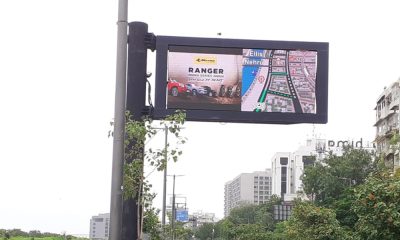

WOW Advertisement adds eight digital OOH screens across Ahmedabad and Surat
The expansion includes seven traffic LED screens across Ahmedabad and a 41 ft × 60 ft curved outdoor LED screen...


billups celebrates its anniversary by putting its people on billboard
The campaign is participating in fifteen locations across Asia, Europe and North America, including Belgrade, Amsterdam, Brussels, Berlin, Chicago. Portland,...
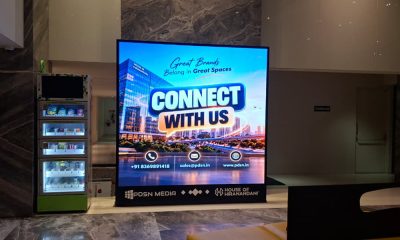

PDSN Media expands corporate DOOH network with new screens at Fulcrum
The new inventory comprises two 8×8 ft digital LED screens installed across Wing A and Wing B of the Mumbai...
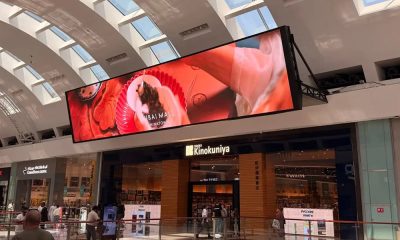

Dubai Mall expands its DOOH network with 1,100 sqm of LED displays
Emaar Properties has reportedly deployed approximately 1,100 sq m of LED displays across indoor and outdoor areas of Dubai Mall,...


Broadsign bags contract with Context Networks for screen network in 14 US states
Through the collaboration, Context Networks is connecting eligible CPMN™ inventory to the Broadsign Platform, the company’s complete, reliable Ad Server...
-
Campaigns
Zomato serves up a Garba-inspired OOH twist with a ‘not a Blinkit ad’ billboard
-
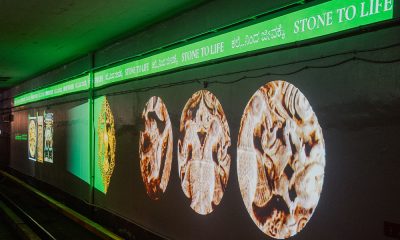
 Creative Concepts
Signpost India turns Bengaluru Metro into a canvas for Karnataka’s cultural heritage
-

 Industry News
US study finds OOH delivers $7.97 in marginal profit ROI as DOOH adoption triples
-

 Contracts & Investments
TVS Motor appoints Dentsu for integrated media mandate