
OAC
#OAC2026: “Fragmentation is a fact; collaboration is a choice.”
At OAC 2026, Shekhar Narayanaswami, CEO, Times Innovative Media Ltd. and Chairman, IOAA, called on the industry to move beyond regional silos and work towards a unified, technology-driven future, one built on collaboration, standardisation and a shared vision for growth.

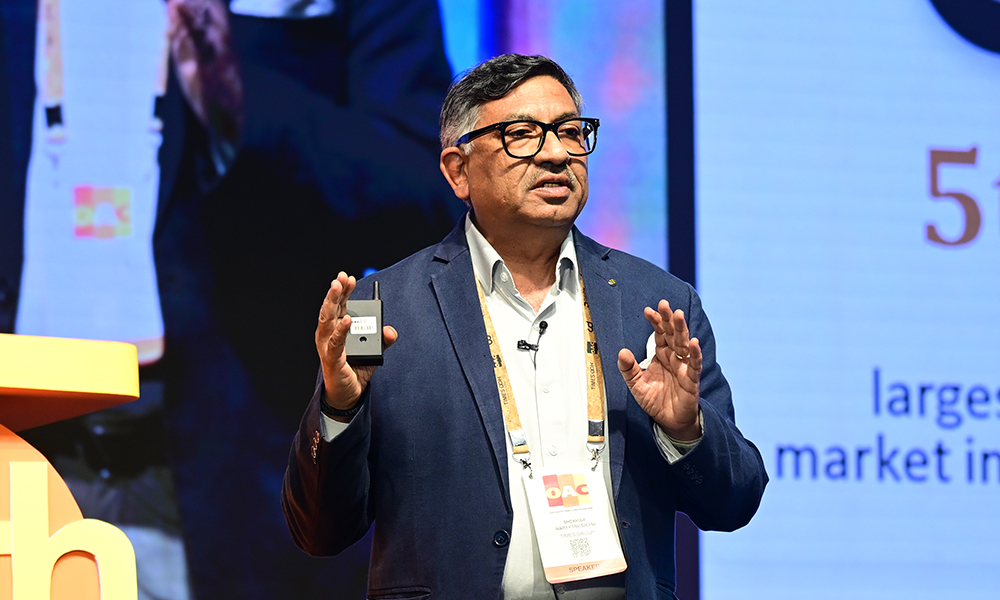
India’s OOH industry has never had greater potential. Yet, according to Shekhar Narayanaswami, CEO, Times Innovative Media Ltd. and Chairman, IOAA, unlocking that potential will require more than just expanding inventory or embracing technology. It will demand a fundamental shift in mindset, from fragmented growth to collective progress.
Addressing delegates during his session, ‘Making OOH Industry Body Work in a Fragmented Environment: The Challenges and Way Forward’, at the 20th edition of the Out-of-Home Advertising Convention (OAC), Shekhar painted a realistic picture of where the industry stands today and where it must head next.
Quoting Victor Hugo’s famous words, “No power on earth can stop an idea whose time has come,” Shekhar said India’s economic trajectory presents a defining opportunity for OOH, provided the industry learns to work together.
India’s moment has arrived
Shekhar began by placing the OOH industry within the larger context of India’s economic rise.
Having crossed the $4 trillion GDP milestone, India is now the world’s fourth-largest economy and is expected to become the third largest within the next few years. The advertising industry, he noted, is projected to reach $26 billion by 2030, growing at an annual rate of nearly 10–11%.
The OOH sector, too, is showing encouraging momentum.
India today is the fifth-largest OOH market globally by inventory, with nearly eight to ten lakh outdoor advertising assets, while also boasting the second-largest OOH audience in the world. “India’s time has come. We are sitting on the cusp of explosive growth,” Shekhar said.
A giant market that remains under-indexed
Despite this impressive scale, however, the industry’s global standing tells a different story. While India’s inventory and audience numbers compare with the world’s largest OOH markets, revenue generation remains disproportionately low.
Shekhar pointed out that although India accounts for nearly 20% of the world’s population and has one of the largest outdoor audiences globally, it contributes only around 1% of global OOH spending.
On a per capita basis, India’s OOH expenditure stands at just 38 cents, significantly below the global average. “We have the second-largest OOH audience in the world, but we are severely under-indexed compared to global markets,” Shekhar observed. The issue, he explained, is not the absence of opportunity but the absence of standardisation.
The real challenge is fragmentation
According to Shekhar, fragmentation remains the industry’s biggest roadblock. India’s OOH ecosystem continues to function as multiple regional markets, each with its own regulations, pricing models, measurement systems and operational practices. As a result, advertisers struggle to compare markets, agencies find it difficult to build confidence around planning, and media owners often lose pricing power.
“We don’t operate as one industry. We operate as multiple regional silos,” Shekhar remarked
He added, “Every player does their own maths. Every city writes its own rules.” This fragmentation, he argued, comes at a significant cost. Media owners lose value. Agencies lose trust. Advertisers lose confidence.
Ultimately, the industry loses a larger share of advertising budgets.
From inventory-led selling to audience-led planning
Another major shift, Shekhar said, must come in the way outdoor media is bought and sold. While many global markets have already transitioned towards audience-based planning, India continues to rely heavily on inventory-led transactions.
Without a common measurement framework, advertisers cannot evaluate campaigns consistently across markets. “Our buying is still very conventional. It is price-led planning rather than audience-led planning,” Shekhar explained.
As advertisers increasingly demand accountability and measurable outcomes, the industry can no longer depend solely on location and visibility.
Audience metrics, transparency and standardisation will become essential.
Making OOH buying simple
Rather than focusing only on the industry’s shortcomings, Shekhar proposed what he believes should become its common goal. Make OOH buying easy.
He asked delegates to imagine a future where buying a billboard could become as seamless as purchasing a product online.
To make that possible, he introduced four essentials that he described as the industry’s own ABCD:
- Real-time Availability
- One-click Booking
- Transparent Cost
- Trusted Delivery
Together, these four pillars can simplify planning, improve advertiser confidence and make OOH significantly easier to buy at scale.
“If buying OOH becomes simple and transparent, the industry will naturally grow much faster,” Shekhar said.
Technology will redefine the industry’s future
Technology, according to Shekhar, will inevitably reshape the way outdoor advertising functions.
With algorithm-driven planning becoming increasingly common across media, the traditional ways of buying and selling outdoor inventory will no longer be sufficient.
“Seventy-nine percent of media planning and buying will be algorithm-driven by 2027. The old way of doing business will be challenged,” Shekhar said.
Rather than resisting this evolution, he urged stakeholders to prepare for it by investing in technology, common standards and collaborative systems.
He also highlighted how mature OOH markets have already embraced unified audience currencies through platforms such as Geopath in the United States, ROOT in the United Kingdom and MOVE in Australia.
India, he said, must build a similar ecosystem if it wants to compete globally.
Collaboration begins with one industry voice
As Chairman of IOAA, Shekhar emphasised that no single stakeholder can transform the industry alone.
Advertisers, agencies, media owners, regulators, measurement bodies and industry associations all need to contribute towards creating common standards and a unified marketplace.
He stressed that industry associations must first establish governance, standards and measurement before advocating for broader policy reforms.
“Action must come before advocacy. We need to fix our own house first,” Shekhar said.
He also outlined several ongoing initiatives by IOAA, including certified market sizing, strengthening audience measurement, expanding regional chapters, improving member engagement, enhancing governance frameworks and increasing collaboration with organisations such as AAAI and ISA.
Building an industry, not just individual businesses
During the session, Shekhar borrowed inspiration from John F. Kennedy’s famous quote, encouraging delegates to rethink their relationship with the industry body.
Instead of asking only what the association can do for individual businesses, stakeholders must also consider what they can contribute towards building a stronger industry.
“A stronger industry body means a stronger industry. A stronger industry means a stronger you,” Shekhar said.
He urged delegates to move away from transactional thinking and embrace a collective approach that prioritises long-term industry growth over short-term competitive advantage.
Every contribution matters
To conclude his address, Shekhar narrated the story of the squirrel from the Ramayana, which helped build the Ram Setu by carrying tiny grains of sand while others transported massive boulders.
The story, he explained, perfectly captures the role every stakeholder can play in strengthening India’s OOH ecosystem.
“No contribution is too small when the purpose is big,” Shekhar said.
He left delegates with what became the defining message of the session:
“Fragmentation is a fact. Collaboration is a choice.”
As India’s economy gathers momentum and the OOH industry enters its next phase of growth, Shekhar’s message was clear, the future will not belong to organisations that grow in isolation, but to an industry that chooses to grow together through shared standards, common measurement and a unified voice.







Daily Newsletter
Subscribe to receive the latest OOH
industry updates

Beyond selling a product to building an ecosystem

Indian OOH & the Measurability Journey: From OTS to business outcomes

Hamdard reimagines skincare for Gen Z through new-age OOH

Qubo puts its security cameras on billboards, literally

Claire’s pierces a billboard in New York

Puma becomes PVMA for PV Sindhu

HOCCO’s Aamchi campaign brings mango tree to Ahmedabad

Blinkit in association with Kinetic India goes all Bollywood

Acclaimed Actor Manoj Joshi to deliver an inspirational address at OAC 2024

Zepto’s Fast 10 Minute Delivery Saves the Day for Game Night in Ahmedabad!

‘Let’s create an empathetic space for women’

‘It won’t just be a man’s world anymore’

‘We’re actively exploring acquisitions and working to increase our inventory’

A habit of success at Prakash Arts

‘OOH is an important channel to connect with corporate audiences’


Sales Manager (Amritsar, J&K, Chandigarh, Mumbai, Vadodara, Udaipur, U.P.)
Orango has been involved in creating, building, reviving and growing brands. Orango builds powerful connections with their customers & people...

Sales Executive
Established B2B Media and Events Group VJ Media Works is looking for sales executives
Digital Marketing/Social Media Executives
Established B2B Media and Events Group VJ Media Works is looking for the following: Digital Marketing/Social Media Executives Location: Mumbai/Bangalore...

Sales Manager – AdZ (Digital Advertising)
Estontec Group’s fast-growing adtech brand AdZ is hiring a Sales Manager to drive digital media sales and client growth. This...
Onboarding Specialist
Join Estontec Group’s transit media brand BrandonWheelz as an Onboarding Specialist, managing campaign execution, vendor coordination, and media planning across...

Operation Manager
Company Description: BajuGali an Advertisement Company is a leading firm specializing in advertising and marketing services. We provide innovative solutions...


Senior Copy Editor
No of openings: 1 Experience/ qualifications: 3-4 years in any media/news publication Graduate Degree in any discipline, degree in Journalism...

Sales Specialist at BajuGali (OOH Advertising Company)
At BajuGali, we are a marketing and advertising agency that specializes in transforming creative visions into reality for brands and...

Trip.com turns Dhoby Ghaut MRT into a personal travel story
For the second year running, Trip.com has transformed Singapore’s Dhoby Ghaut MRT station into an immersive travel experience, inviting commuters...
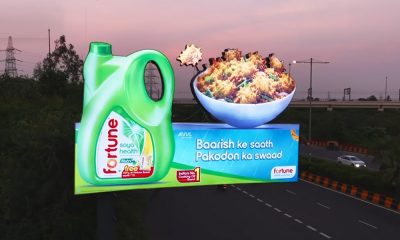

Fortune Soya Health brings ‘Baarish Ke Saath Pakodon Ka Swaad’ to the streets
The OOH innovations are conceptualised and executed across Delhi, Lucknow and Patna by Coral Media
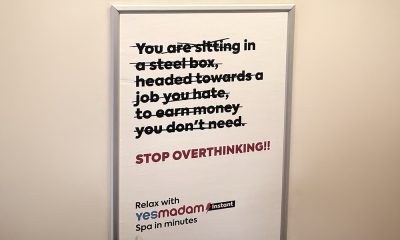

YesMadam turns Delhi Metro into a reminder to ‘Stop Overthinking’
With a series of sharply relatable messages placed inside Delhi Metro coaches, YesMadam uses everyday anxieties around work, money, relationships...


Netflix takes ‘The Gentlemen’ outdoors – and puts its message on the grass
For Season 2 of Netflix’s The Gentlemen, a field near the Gatwick flight path became an unexpected OOH canvas, with...

HDFC Bank turns a bus shelter into a lesson in fraud awareness
With its latest Vigil Aunty campaign, HDFC Bank uses a familiar public space and a playful visual to bring its...


Landsec and Ocean Outdoor build on the cultural resonance of Piccadilly Lights
Changes to the screen's format come into effect from January 2027, 10 years after Piccadilly Lights relaunched following a nine-month...
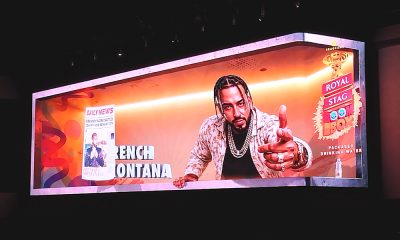

Royal Stag Boombox goes larger-than-life with anamorphic LED in Hyderabad
The campaign is conceptualised and executed by Coral Media
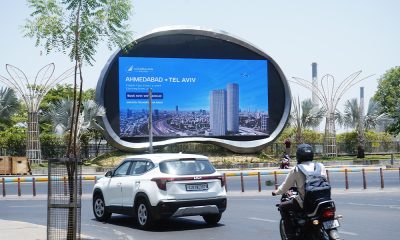

Times OOH Unveils ‘The Riviera’ in Ahmedabad
The screen is located at Sabarmati Riverfront on Ashram Road
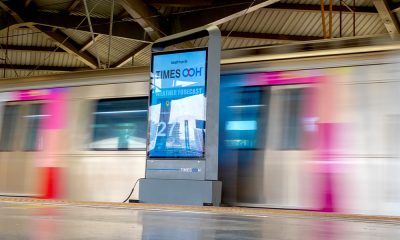

Times OOH upgrades the Media Experience on Mumbai Metro Line 1
The move to 75-inch displays gives brand creatives significantly greater visual impact, while the enhanced brightness ensures vivid, true-to-life imagery...

Broadsign released 2026 programmatic DOOH trends report
Drawing on full-year 2025 and Q1 2026 internal transaction data, the report, surfaces useful signals about what today’s buyers value...
-
 Campaigns
Wolong: The Mastermind takes its story from the road to the screen in Malaysia
-
Campaigns
Netflix takes ‘The Gentlemen’ outdoors – and puts its message on the grass
-
Campaigns
HDFC Bank turns a bus shelter into a lesson in fraud awareness
-
 Creative Concepts
Qubo puts its security cameras on billboards, literally