Insights
‘Make the AI companies accountable’
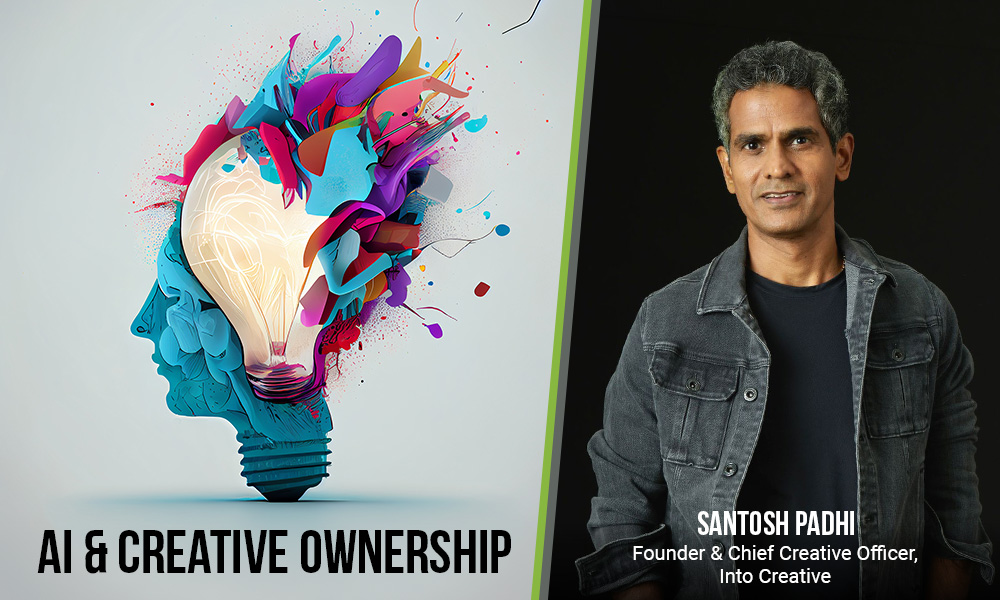
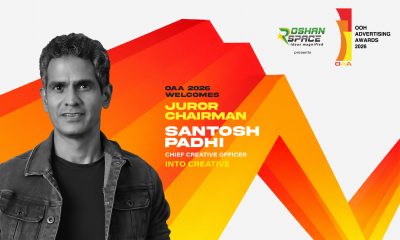
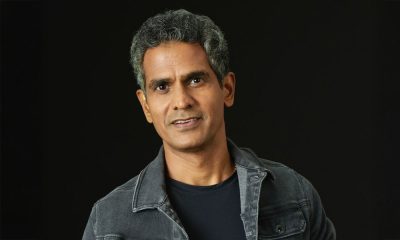
With AI having democratised content, where lies creative ownership? The question gains significance given the recent instances of fake AI-generated brand campaigns on social media. Media4Growth begins this series on ‘AI & Creative Ownership’, with insights from industry stakeholders. We start with Santosh Padhi (Paddy), Founder and Chief Creative Officer, Into Creative.

At a time when AI has eased the creative processes, taking them beyond the confines of core human competency, who owns a piece of creativity, communication or story telling? And what does it entail for the marketing and media eco-systems where the core of a narrative lies in its creative content?
The question becomes even more critical considering this recent real scenario: A fake campaign went viral. The internet believed it was real. The brand stepped in to deny involvement.
Indeed, a recent circulation of an AI-generated creative falsely attributed to Amul, ignited a debate across the advertising and marketing industry. While the content was not created by the brand, the association spread rapidly online, forcing the company to publicly distance itself from the viral creative.
Quite understandably, the industry is suddenly forced to confront a larger question: in the age of AI-generated creativity, who owns the idea, and who takes responsibility when things go wrong?
For Santosh Padhi (Paddy), Founder and Chief Creative Officer of Into Creative, the issue is not just about misinformation. It reflects a much larger legal and ethical vacuum around AI, ownership, and originality.
“Some genuine brands are getting affected because the global copyright and legal bodies still haven’t been able to clearly define the rules,” Paddy says. “Every week, the do’s and don’ts are changing.”
According to him, the problem begins with the way AI systems are trained and operated. He cites an example. “If I ask AI to create somebody’s image in the style of Raja Ravi Varma, the AI tool simply lifts from the existing body of work by the original artist. Years ago, you would have needed permission, or you would have had to commission an artist. If someone copied it directly, they could be sued.” But AI, he says, has complicated that process by creating a layer between the original creator and the final output.
“Right now, everyone blames the AI tool. But I feel the AI companies themselves should be held responsible because they know the source,” Paddy says. “If the system is clearly pulling references from an artist’s work, and at the same time charging users to generate that output, then there has to be some accountability.”
For Paddy, this concern goes far beyond brands and advertising campaigns. It extends into the larger creative ecosystem, art, writing, visual identity, and personal style, although the former is driven by the latter.
“A unique style comes after decades of hard work,” he says. “An artist spends 30 or 40 years building that identity, and suddenly AI can replicate or morph it within seconds.”
He points out that the impact is often felt most strongly by creators who have already built recognition and influence. “The bigger you are, the more likely your work, your style, or your personality gets copied,” he notes. “People are borrowing that aura and blending it into their own personal or brand communication.”
While many brands are currently experimenting with AI-generated content, Paddy believes the industry still needs stronger guardrails around originality and usage rights.
“As a creative person, I feel there has to be a stopping point somewhere,” he says. “There is a lot of hard work behind every painting, every line, every creative expression, and that has to be valued.”
The Amul incident may have appeared like just another viral moment on social media, but conversations like these reveal the deeper tension now emerging within advertising and marketing ecosystems. AI has made creativity more accessible than ever before, but it has also blurred the boundaries between inspiration, imitation, ownership, and misuse.
And as the technology evolves faster than regulation, the industry is increasingly being pushed to answer a difficult question: when creativity can be replicated instantly, how do you still protect originality?







Daily Newsletter
Subscribe to receive the latest OOH
industry updates

Third edition of Gujarat Talks OOH coming up on October 30, 2026

Why is India’s digital signage market not looking beyond the screen?

BRND.ME’s perfume brand Villain puts its Gold Revolver on the move across Bengaluru

Chandak Vansham’s swinging Ganpati OOH campaign in Mumbai

Flipkart Minutes serves up Barosi Ghee in a larger-than-life OOH execution

Puma becomes PVMA for PV Sindhu

HOCCO’s Aamchi campaign brings mango tree to Ahmedabad

Blinkit in association with Kinetic India goes all Bollywood

Acclaimed Actor Manoj Joshi to deliver an inspirational address at OAC 2024

Zepto’s Fast 10 Minute Delivery Saves the Day for Game Night in Ahmedabad!

‘Let’s create an empathetic space for women’

‘It won’t just be a man’s world anymore’

‘We’re actively exploring acquisitions and working to increase our inventory’

A habit of success at Prakash Arts

‘OOH is an important channel to connect with corporate audiences’

Video Editor
Job Description: Editing videos of editorial interviews, in-house events, video podcasts, promotional videos and others based on team brief Planning...
Content Editor-Writer
Job Description: Editing daily news copies and magazine articles Writing industry research and interview based articles and client focused content...


Sales Manager (Amritsar, J&K, Chandigarh, Mumbai, Vadodara, Udaipur, U.P.)
Orango has been involved in creating, building, reviving and growing brands. Orango builds powerful connections with their customers & people...

Sales Executive
Established B2B Media and Events Group VJ Media Works is looking for sales executives
Digital Marketing/Social Media Executives
Established B2B Media and Events Group VJ Media Works is looking for the following: Digital Marketing/Social Media Executives Location: Mumbai/Bangalore...

Sales Manager – AdZ (Digital Advertising)
Estontec Group’s fast-growing adtech brand AdZ is hiring a Sales Manager to drive digital media sales and client growth. This...
Onboarding Specialist
Join Estontec Group’s transit media brand BrandonWheelz as an Onboarding Specialist, managing campaign execution, vendor coordination, and media planning across...


Operation Manager
Company Description: BajuGali an Advertisement Company is a leading firm specializing in advertising and marketing services. We provide innovative solutions...


Lloyd puts its TV screen on a billboard in Noida
Posterscope India, along with Sakshi Advertising, has executed this campaign in Noida.
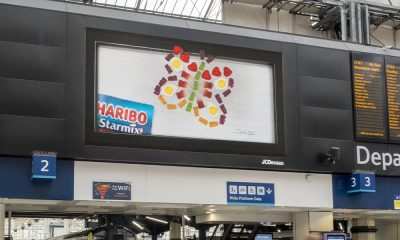

HARIBO gives Starmix a creative OOH makeover
The campaign is created by Quiet Storm and is currently running across the UK and the Republic of Ireland.


Flipkart Minutes stretches aarti lyrics across OOH this Ganpati season
While you were busy singing “Ganpati Bappa Morya”, Flipkart Minutes got a billboard to sing along too, turning a familiar...
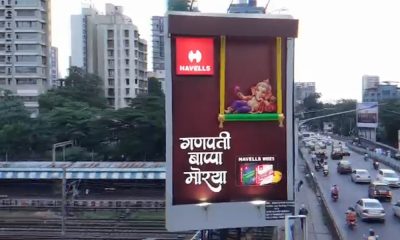

Havells adds a 3D festive twist to OOH this Ganpati season
Executed by Posterscope India, the Havells hoarding uses 3D elements to give its Ganpati communication added depth and visual presence...
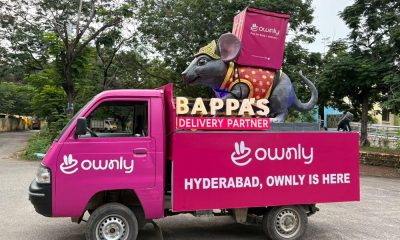

Ownly brings ‘Mooshak on Wheels’ to Hyderabad this Ganesh Chaturthi
This Ganesh Chaturthi, Ownly took its brand presence beyond the screen and onto the streets of Hyderabad with “Mooshak on...


Landsec and Ocean Outdoor build on the cultural resonance of Piccadilly Lights
Changes to the screen's format come into effect from January 2027, 10 years after Piccadilly Lights relaunched following a nine-month...
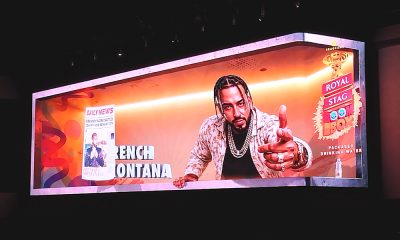

Royal Stag Boombox goes larger-than-life with anamorphic LED in Hyderabad
The campaign is conceptualised and executed by Coral Media

Times OOH Unveils ‘The Riviera’ in Ahmedabad
The screen is located at Sabarmati Riverfront on Ashram Road


Times OOH upgrades the Media Experience on Mumbai Metro Line 1
The move to 75-inch displays gives brand creatives significantly greater visual impact, while the enhanced brightness ensures vivid, true-to-life imagery...

Broadsign released 2026 programmatic DOOH trends report
Drawing on full-year 2025 and Q1 2026 internal transaction data, the report, surfaces useful signals about what today’s buyers value...