Insights
OOH: The unmeasured power of waiting- By Aman Nanda
Aman Nanda, CSO & Head of Marketing, Times OOH, pens down his thoughts on OOH, exploring how a digital-blackout break revealed the profound “waiting economy” and why the industry’s greatest strength lies in the silent, captive pauses of our physical world.

During my recent digital-blackout break, the first thing I missed wasn’t information, it was stimulation. The easy dopamine of “just checking.” The illusion of progress. Without it, I kept reaching for my phone and finding… nothing. So, I waited. At the coffee counter. In the lobby. In traffic. In queues that suddenly felt longer because there was no screen to anesthetize them. Then a strange reversal happened, the waiting stopped feeling like a problem to solve and started feeling like a space to inhabit. The mind doesn’t need more content all the time. Sometimes it needs a pause long enough to notice what it already knows. And somewhere in that wait, a thought surfaced: waiting is not wasted time. Waiting is where the mind finally gets a turn to speak.
“Between stimulus and response there is a space. In the space is our power to choose our response. In our response lies our growth and freedom.” Victor Frankl, Steven Convoy.
Is there a lesson for brands here? Among all formats of media, out-of-home (OOH) owns the “waiting economy” the captive, reflective moments where people are open to narratives. In moments of waiting, people are more open to noticing, thinking, and absorbing. OOH wins in these pauses. It doesn’t interrupt your content; it accompanies your time.
“Waiting” is a special attention state. When we’re standing in a queue, at a signal, in a lobby, or at a boarding gate, our brain isn’t chasing the next tab. In this calmer state, I felt the messages are more likely to connect with personal context: “That’s relevant to me,” “I should remember that” “I should check that out later.” Reflection creates meaning. Fewer stimuli create lasting impact.
Waiting can create boredom or anticipation – both are openings where a relevant message can land
Real Life vs. Content Life
OOH advertising thrives in the physical world rather than the digital “content life.” It appears organically where life actually unfolds – whether we are commuting, shopping, or fueling up. OOH functions as an ambient presence that plants seeds of thought without the invasive demand for an immediate click. This effectiveness is driven by the marriage of waiting and relevance: when a coffee ad meets a commuter in a morning rush or a finance brand greets a professional in a business district, the context itself becomes the creative engine that drives deeper impact.
Screen Attention vs. Space Attention
There is a fundamental psychological divide between “screen attention” and “space attention”; while mobile devices command high intensity, the depth of that attention is shallow, as the next swipe quickly erases the memory of the last message. In contrast, OOH requires lower active effort but leaves a more permanent imprint, allowing the brain to passively store essential cues like color, logos, and taglines. Furthermore, the physical scale of these formats signals a level of institutional importance, lending brands a sense of credibility and “realness” that small, fleeting rectangles on a personal screen simply cannot replicate.
Flippin vs. Reflection
While newspapers’ reading habit has shifted toward a rapid scan of headlines, meaning ads are often “flipped” along with the page before they can be truly absorbed. This physical action of turning pages essentially trains the brain to move on quickly, treating the advertisement as a hurdle to be cleared rather than a message to be considered. Conversely, OOH offers a “reflective” experience rather than a “flipping” one; it cannot be turned off or bypassed, remaining constant in the physical environment. By staying present and reappearing throughout a person’s daily routine, OOH moves past the fleeting nature of the scan-and-skip habit to build a slow, steady, and more permanent relationship with the viewer.
The truth is: decisions don’t always happen during action. They often happen during pauses. And in a world built on constant scroll, the power is shifting to whatever can hold attention when people are forced to stop. That’s the core advantage of Out-of-Home!
Daily Newsletter
Subscribe to receive the latest OOH
industry updates

DMRC floats three tenders for metro advertising and co-branding rights

Fortune Soya Health brings ‘Baarish Ke Saath Pakodon Ka Swaad’ to Life with boat innovation

Krishna Communication Outdoor secures exclusive branding rights across 8,000+ Gujarat buses

Traya Health uses a 7-ft hair-filled cube to start a conversation on hair fall

Aashirvaad Salt Active takes heart-health message to Delhi streets

Puma becomes PVMA for PV Sindhu

HOCCO’s Aamchi campaign brings mango tree to Ahmedabad

Blinkit in association with Kinetic India goes all Bollywood

Acclaimed Actor Manoj Joshi to deliver an inspirational address at OAC 2024

Zepto’s Fast 10 Minute Delivery Saves the Day for Game Night in Ahmedabad!

‘Let’s create an empathetic space for women’

‘It won’t just be a man’s world anymore’

‘We’re actively exploring acquisitions and working to increase our inventory’

A habit of success at Prakash Arts

‘OOH is an important channel to connect with corporate audiences’

Video Editor
Job Description: Editing videos of editorial interviews, in-house events, video podcasts, promotional videos and others based on team brief Planning...
Content Editor-Writer
Job Description: Editing daily news copies and magazine articles Writing industry research and interview based articles and client focused content...

Sales Manager (Amritsar, J&K, Chandigarh, Mumbai, Vadodara, Udaipur, U.P.)
Orango has been involved in creating, building, reviving and growing brands. Orango builds powerful connections with their customers & people...

Sales Executive
Established B2B Media and Events Group VJ Media Works is looking for sales executives
Digital Marketing/Social Media Executives
Established B2B Media and Events Group VJ Media Works is looking for the following: Digital Marketing/Social Media Executives Location: Mumbai/Bangalore...

Sales Manager – AdZ (Digital Advertising)
Estontec Group’s fast-growing adtech brand AdZ is hiring a Sales Manager to drive digital media sales and client growth. This...
Onboarding Specialist
Join Estontec Group’s transit media brand BrandonWheelz as an Onboarding Specialist, managing campaign execution, vendor coordination, and media planning across...


Operation Manager
Company Description: BajuGali an Advertisement Company is a leading firm specializing in advertising and marketing services. We provide innovative solutions...

BackLite UK upgrades Landscape Gallery portfolio
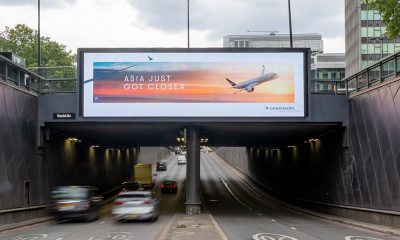
The Landscape Gallery is a portfolio of eight high-quality, high-resolution LED technology large-format digital screens positioned in prime London gateways...
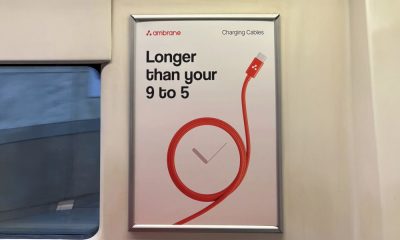

Ambrane brings a playful twist to metro OOH for its charging cables
Ambrane has taken its charging cable campaign inside the metro, using witty, relatable copy to turn everyday commuter moments into...
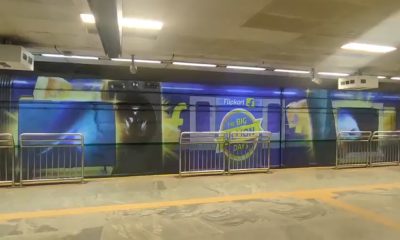

Flipkart brings Big Billion Days to life at Bengaluru’s Metro
As Big Billion Days 2026 approaches, Flipkart is taking its festive sale into the daily commute with a metro-led OOH...
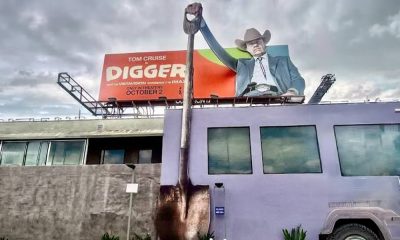

Digger takes a big swing at LA with larger-than-life 3D OOH
Tom Cruise’s upcoming film Digger turns a conventional billboard into a physical extension of its campaign, with a giant shovel...
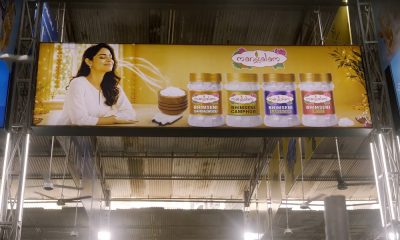

Mangalam brings #BreatheBhimseni experience at Lalbaugcha Raja
The installation transforms a part of the Lalbaugcha Raja queue into an immersive passage inspired by the purity and freshness...

Dubai Mall expands its DOOH network with 1,100 sqm of LED displays
Emaar Properties has reportedly deployed approximately 1,100 sq m of LED displays across indoor and outdoor areas of Dubai Mall,...


Broadsign bags contract with Context Networks for screen network in 14 US states
Through the collaboration, Context Networks is connecting eligible CPMN™ inventory to the Broadsign Platform, the company’s complete, reliable Ad Server...

Landsec and Ocean Outdoor build on the cultural resonance of Piccadilly Lights
Changes to the screen's format come into effect from January 2027, 10 years after Piccadilly Lights relaunched following a nine-month...


Royal Stag Boombox goes larger-than-life with anamorphic LED in Hyderabad
The campaign is conceptualised and executed by Coral Media

Times OOH Unveils ‘The Riviera’ in Ahmedabad
The screen is located at Sabarmati Riverfront on Ashram Road