
Insights
“The AI Paradox: Why the Future of Marketing May Be More Physical Than Ever”
In this piece, first published in August 2026 edition of Outdoor Asia Gautam Bhirani, Founder, Eyetalk Media Ventures writes on how the next scarce commodity may be the one thing AI cannot manufacture: a meaningful presence in the real world. And if that proves true, Outdoor Advertising may emerge as one of the most strategically valuable assets, writes Gautam Bhirani, Founder, Eyetalk Media Ventures.

A New Question for the AI Era
Artificial Intelligence is undoubtedly the biggest force shaping the future of marketing. Every week brings another breakthrough: smarter content generation, more sophisticated audience targeting, faster campaign optimization and increasingly autonomous media buying. Tasks that once took days or even weeks can now be completed in minutes.
Naturally, much of the conversation has centered on disruption. Will AI replace agencies? Will it transform media buying? Will automation redefine advertising as we know it?
These are important questions. But perhaps they are not the most interesting ones.
A more compelling question is this: what happens to the value of the physical world when almost every aspect of digital marketing becomes automated?
For more than two decades, digital advertising has thrived because it offered marketers unprecedented precision, measurement and scalability. AI doesn’t diminish these strengths; it amplifies them. Campaign planning, creative production, audience segmentation, optimization and reporting are becoming faster, cheaper and increasingly accessible.
Ironically, that may be exactly why the role of brand building is about to become more important than ever.
When Execution Becomes a Commodity
Every major technological shift changes what businesses value. The internet made information abundant. Cloud computing made infrastructure abundant. AI is making marketing execution abundant. As campaign creation, optimization and media buying become democratized, they stop being sources of competitive advantage. They simply become the expected standard.
When everyone has access to the same intelligence, the question is no longer who can optimize campaigns more efficiently. The question becomes: who can build stronger brands?
That distinction matters because performance marketing and brand building play fundamentally different roles. Performance marketing captures existing demand. Brand building creates future demand. AI will undoubtedly make performance marketing more effective, but efficiency alone does not create preference. It does not create trust, emotional connection or long-term memory.
Great brands are rarely remembered because they ran the most efficient campaign. They are remembered because they created meaning, became culturally relevant and occupied a distinctive place in people’s minds.
That is why I believe the AI era will not reduce the importance of brand building. It may strengthen it.
The New Economics of Attention
There is another consequence of AI that receives surprisingly little attention. As the cost of creating advertising continues to fall, brands are unlikely to advertise less. History suggests the opposite. Lower production costs typically lead to greater experimentation. Marketers can test more ideas, launch more local campaigns, produce more creative variations and respond to cultural moments faster than ever before.
In other words, AI is likely to increase the volume of marketing, not reduce it.
As digital content becomes increasingly abundant, another economic principle begins to emerge. When something becomes abundant, something else becomes scarce.
Content is abundant. Creative is becoming abundant. Personalization is becoming abundant.
The scarce assets of the future may be trust, attention, physical presence and shared experiences.
The Return of the Real World
This is where the physical world re-enters the conversation.
Consumers already navigate an environment saturated with personalized feeds, recommendations and algorithmically curated content. AI will only accelerate that trend. Every individual will increasingly experience a different version of the internet.
Yet the real world operates differently.
Cities remain shared spaces. Airports, transit systems, business districts and retail destinations continue to bring together millions of people from different backgrounds.
Marketing has never been solely about delivering messages. It has always been about creating memories.
Digital media excels at personalization. The physical world excels at creating shared experiences.
Outdoor Advertising as the Anchor Medium
Perhaps this is why Outdoor Advertising deserves to be viewed differently in the age of AI.
For decades, Outdoor has often been considered another channel within the media mix. AI creates an opportunity to rethink that role entirely.
Rather than being another touchpoint, Outdoor has the potential to become the anchor medium around which modern campaigns are built.
Imagine an AI-powered marketing ecosystem where technology identifies audience clusters, recommends locations, adapts creative dynamically and continuously optimizes delivery. Yet every campaign still needs a defining moment that captures public attention.
That moment often exists in the real world.
A landmark billboard, a spectacular digital façade, an airport takeover or a synchronized citywide campaign become public experiences that people notice, photograph and share.
The Outdoor execution creates the moment. Everything else builds upon it. Social media amplifies it. Search activity increases. Earned media extends it. Digital channels convert the demand it creates.
AI orchestrates the ecosystem, while Outdoor provides the physical catalyst that gives the campaign cultural visibility.
The Last Shared Medium
Outdoor remains one of the last truly shared advertising mediums. Digital channels are increasingly personalized, while Outdoor is fundamentally public. Millions of people experience the same communication in the same place, creating common reference points that contribute to culture.
In an era where algorithms optimize for individuals, shared public experiences become increasingly valuable.
Trust in an Artificial World
As AI-generated content becomes commonplace, consumers will increasingly question what is authentic. Deepfakes, synthetic influencers and AI-generated reviews will become more sophisticated. In such an environment, physical presence acquires new meaning. Brands that invest visibly in the real world communicate confidence, legitimacy and permanence. Technology can improve efficiency, but trust is ultimately built through consistent experiences and meaningful presence.
The Real AI Paradox
None of this suggests that Outdoor Advertising replaces digital media. AI will make every media channel smarter and more measurable. Digital will continue to excel at precision and conversion, while Outdoor will continue to excel at visibility, fame and long-term brand building.
The future is not about choosing one over the other. It is about understanding that AI changes the role each medium plays within the marketing ecosystem.
For years, marketers have looked to technology to make advertising more intelligent. But intelligence alone has never built great brands. Great brands are built through experiences people remember, conversations they share and places they encounter in the real world.
Information became abundant. Content became abundant. Creativity is becoming abundant.
The next scarce commodity may be the one thing AI cannot manufacture: a meaningful presence in the real world.
The more artificial marketing becomes, the more valuable the real world may become.
And if that proves true, Outdoor Advertising will not simply adapt to the age of AI. It may emerge as one of its most strategically valuable assets.










Daily Newsletter
Subscribe to receive the latest OOH
industry updates

Ocean Outdoor partners with Cityz Media in Klépierre’s French shopping centres

Asian Footwears secures naming rights for NDLS platforms

Traya’s ‘Hair Truth Mirror’ shows men what their everyday mirrors don’t

M4G Talkies S2E2: Emanda Vaz of Embassy Group on brands, business & the AI question

Canva gives Spain’s new students a royal welcome with ‘Welcome Princess’

Puma becomes PVMA for PV Sindhu

HOCCO’s Aamchi campaign brings mango tree to Ahmedabad

Blinkit in association with Kinetic India goes all Bollywood

Acclaimed Actor Manoj Joshi to deliver an inspirational address at OAC 2024

Zepto’s Fast 10 Minute Delivery Saves the Day for Game Night in Ahmedabad!

‘Let’s create an empathetic space for women’

‘It won’t just be a man’s world anymore’

‘We’re actively exploring acquisitions and working to increase our inventory’

A habit of success at Prakash Arts

‘OOH is an important channel to connect with corporate audiences’

Video Editor
Job Description: Editing videos of editorial interviews, in-house events, video podcasts, promotional videos and others based on team brief Planning...
Content Editor-Writer
Job Description: Editing daily news copies and magazine articles Writing industry research and interview based articles and client focused content...


Sales Manager (Amritsar, J&K, Chandigarh, Mumbai, Vadodara, Udaipur, U.P.)
Orango has been involved in creating, building, reviving and growing brands. Orango builds powerful connections with their customers & people...

Sales Executive
Established B2B Media and Events Group VJ Media Works is looking for sales executives
Digital Marketing/Social Media Executives
Established B2B Media and Events Group VJ Media Works is looking for the following: Digital Marketing/Social Media Executives Location: Mumbai/Bangalore...


Sales Manager – AdZ (Digital Advertising)
Estontec Group’s fast-growing adtech brand AdZ is hiring a Sales Manager to drive digital media sales and client growth. This...
Onboarding Specialist
Join Estontec Group’s transit media brand BrandonWheelz as an Onboarding Specialist, managing campaign execution, vendor coordination, and media planning across...


Operation Manager
Company Description: BajuGali an Advertisement Company is a leading firm specializing in advertising and marketing services. We provide innovative solutions...
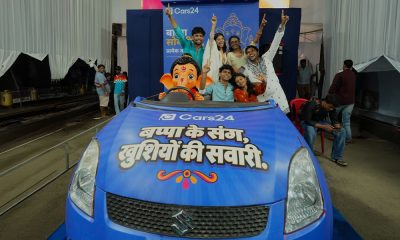

Cars24 drives Bappa Ki Savari into the heart of Ganesh Chaturthi
This Ganesh Chaturthi, Cars24 turned a car into more than a branded installation, bringing Bappa closer to devotees through an...
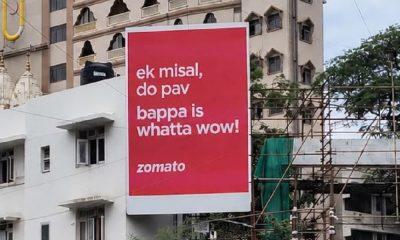

Zomato takes Bappa banter to Mumbai’s streets this Ganesh Chaturthi
This Ganesh Chaturthi, Zomato brings its signature food-led wit to Mumbai’s OOH landscape, turning familiar festive conversations, local food references...


Honitus turns coughs into music across cities, links relief to Blinkit
Spotted across high-traffic locations in Delhi, Gurugram, and Mumbai
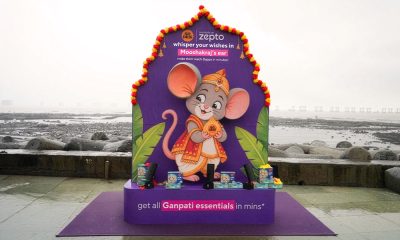

Zepto brings Bappa’s favourite messenger to the seafront
Spotted by the Mumbai seafront this Ganesh Chaturthi.


Hamdard reimagines skincare for Gen Z through new-age OOH
The campaign is executed by WPP Media


Landsec and Ocean Outdoor build on the cultural resonance of Piccadilly Lights
Changes to the screen's format come into effect from January 2027, 10 years after Piccadilly Lights relaunched following a nine-month...
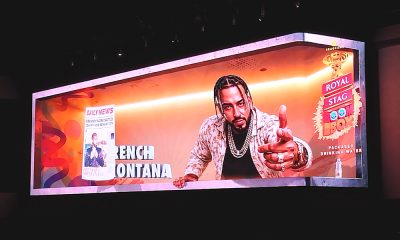

Royal Stag Boombox goes larger-than-life with anamorphic LED in Hyderabad
The campaign is conceptualised and executed by Coral Media
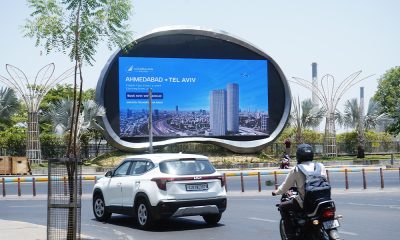

Times OOH Unveils ‘The Riviera’ in Ahmedabad
The screen is located at Sabarmati Riverfront on Ashram Road
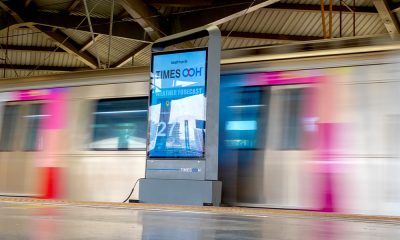

Times OOH upgrades the Media Experience on Mumbai Metro Line 1
The move to 75-inch displays gives brand creatives significantly greater visual impact, while the enhanced brightness ensures vivid, true-to-life imagery...

Broadsign released 2026 programmatic DOOH trends report
Drawing on full-year 2025 and Q1 2026 internal transaction data, the report, surfaces useful signals about what today’s buyers value...
-
Campaigns
Honitus turns coughs into music across cities, links relief to Blinkit
-

 Contracts & Investments
Rajouri Garden metro station now goes by Ai+ NOVA
-
Campaigns
Zepto brings Bappa’s favourite messenger to the seafront
-
Creative Concepts
Cars24 drives Bappa Ki Savari into the heart of Ganesh Chaturthi