
Insights
Driving better outcomes from better creative decisions
Andrew Tindall, Chief Growth Officer at System1, tells Media4Growth, why it’s important to map consumers’ emotional response to campaign creatives, for improved marketing outcomes.

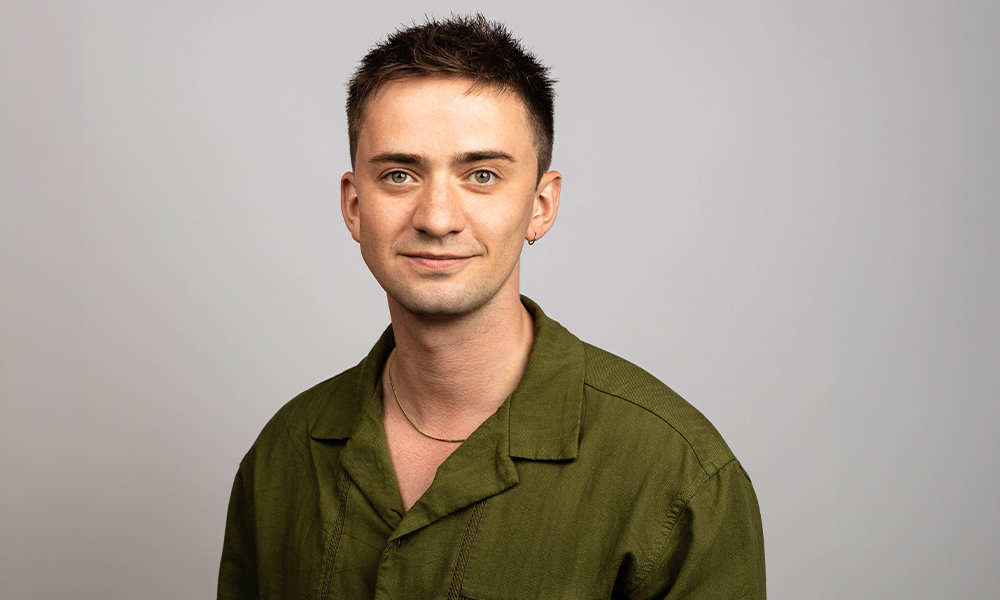
He’s a trained doctor who got hooked to marketing and since then there’s been no looking back. Indeed, for Andrew Tindall, Chief Growth Officer at System1, marketing is exciting because it’s “ubiquitous. It’s everywhere”.
“It changes culture and is a very large part of everyone’s life so it’s quite an important industry. It also allows you to be quite creative – it’s that marriage between science and creativity, between culture and human behaviour; and I found that really interesting,” shares Andrew Tindall.
“So, much to my mum’s disappointment I decided not to be a doctor and instead chose this career. But being grounded in the rigorous approach of science has helped me research well and understand behavioral science,” Andrew adds, explaining how his foundation in science helps him with what he does today.
Curating a database of emotions
The work that Andrew does at System1 does is all about the intersection of science, creativity and human emotions. System1 essentially decodes consumers’ emotional response and helps brands understand and improve the effectiveness of their communications.
System1 helps marketers tap into consumers’ emotions to predict and improve the commercial impact of ads and ideas and it’s been doing it for about 25 years now. The company works extensively in the OOH space, partnering with global OOH majors like JCDecaux, and helping them understand how a certain OOH campaign has influenced people’s behaviour. It entails discovering whether it drives quick brand recall or triggers a certain feeling in the people or entertains them. “These are drastically linked to outdoor outcomes like brand uplift, store visits, etc,” shares Andrew.
Among the tools the company has developed is one called ‘Test your Ad’ which exposes advertising to Respondents. The company’s Face Trace IP is a collection of images of emotions that people feel when they see an ad. Through the tool, respondents self-report how they feel, why they feel what they feel, etc. The tools also captures other details like brand recognition and the key associations that a campaign brings to mind.
Explaining it, Andrew says, “We turn the data we collect into key metrics that predict and explain how a particular advertising will perform. We have a star rating, which is based on the overall emotional response to advertising. The basic idea is that the more consumers feel, the more they buy, and the more it will create long-term behavior change.”
Catering to a challenge
Speaking about what drove System1, Andrew explains, “Marketers can spend a lot on media, but they are not sure whether their creative choices are going to convert that media into growth. So if you don’t have a confidence in the creativity of your advertising campaign, then you will not give it enough media spend and you cannot plan and predict business outcomes. Often marketers are having to make creative choices based on intuition and opinions, which is very subjective. So with our data, we aim to understand more objectively how a particular advertising works, how it makes the consumer feel and think. This not only allows marketers to make better creative decisions, but also allows them to have the confidence to plan, measure and make better marketing investments.”
“What we’ve managed to do is put some numbers to the magic,” says Andrew, summing up the process of marrying intangibles like creativity and emotions with data science.
Read the full interview in the May edition of Outdoor Asia.


Daily Newsletter
Subscribe to receive the latest OOH
industry updates

Beyond selling a product to building an ecosystem

Indian OOH & the Measurability Journey: From OTS to business outcomes

Hamdard reimagines skincare for Gen Z through new-age OOH

Qubo puts its security cameras on billboards, literally

Claire’s pierces a billboard in New York

Puma becomes PVMA for PV Sindhu

HOCCO’s Aamchi campaign brings mango tree to Ahmedabad

Blinkit in association with Kinetic India goes all Bollywood

Acclaimed Actor Manoj Joshi to deliver an inspirational address at OAC 2024

Zepto’s Fast 10 Minute Delivery Saves the Day for Game Night in Ahmedabad!

‘Let’s create an empathetic space for women’

‘It won’t just be a man’s world anymore’

‘We’re actively exploring acquisitions and working to increase our inventory’

A habit of success at Prakash Arts

‘OOH is an important channel to connect with corporate audiences’


Sales Manager (Amritsar, J&K, Chandigarh, Mumbai, Vadodara, Udaipur, U.P.)
Orango has been involved in creating, building, reviving and growing brands. Orango builds powerful connections with their customers & people...


Sales Executive
Established B2B Media and Events Group VJ Media Works is looking for sales executives
Digital Marketing/Social Media Executives
Established B2B Media and Events Group VJ Media Works is looking for the following: Digital Marketing/Social Media Executives Location: Mumbai/Bangalore...

Sales Manager – AdZ (Digital Advertising)
Estontec Group’s fast-growing adtech brand AdZ is hiring a Sales Manager to drive digital media sales and client growth. This...
Onboarding Specialist
Join Estontec Group’s transit media brand BrandonWheelz as an Onboarding Specialist, managing campaign execution, vendor coordination, and media planning across...


Operation Manager
Company Description: BajuGali an Advertisement Company is a leading firm specializing in advertising and marketing services. We provide innovative solutions...


Senior Copy Editor
No of openings: 1 Experience/ qualifications: 3-4 years in any media/news publication Graduate Degree in any discipline, degree in Journalism...


Sales Specialist at BajuGali (OOH Advertising Company)
At BajuGali, we are a marketing and advertising agency that specializes in transforming creative visions into reality for brands and...

Trip.com turns Dhoby Ghaut MRT into a personal travel story
For the second year running, Trip.com has transformed Singapore’s Dhoby Ghaut MRT station into an immersive travel experience, inviting commuters...
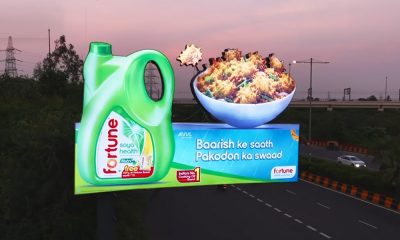

Fortune Soya Health brings ‘Baarish Ke Saath Pakodon Ka Swaad’ to the streets
The OOH innovations are conceptualised and executed across Delhi, Lucknow and Patna by Coral Media
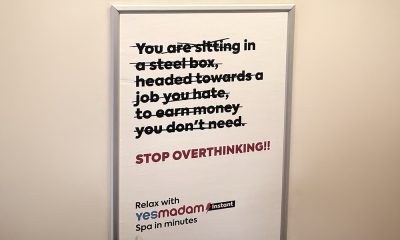

YesMadam turns Delhi Metro into a reminder to ‘Stop Overthinking’
With a series of sharply relatable messages placed inside Delhi Metro coaches, YesMadam uses everyday anxieties around work, money, relationships...


Netflix takes ‘The Gentlemen’ outdoors – and puts its message on the grass
For Season 2 of Netflix’s The Gentlemen, a field near the Gatwick flight path became an unexpected OOH canvas, with...


HDFC Bank turns a bus shelter into a lesson in fraud awareness
With its latest Vigil Aunty campaign, HDFC Bank uses a familiar public space and a playful visual to bring its...
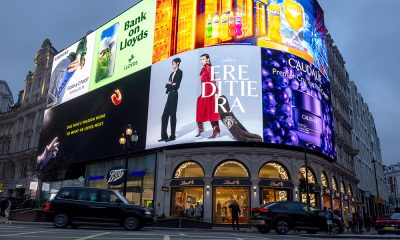

Landsec and Ocean Outdoor build on the cultural resonance of Piccadilly Lights
Changes to the screen's format come into effect from January 2027, 10 years after Piccadilly Lights relaunched following a nine-month...
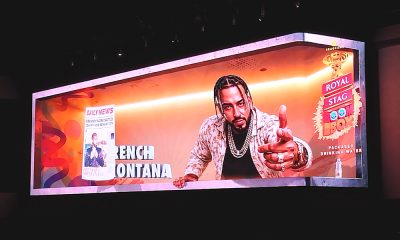

Royal Stag Boombox goes larger-than-life with anamorphic LED in Hyderabad
The campaign is conceptualised and executed by Coral Media


Times OOH Unveils ‘The Riviera’ in Ahmedabad
The screen is located at Sabarmati Riverfront on Ashram Road
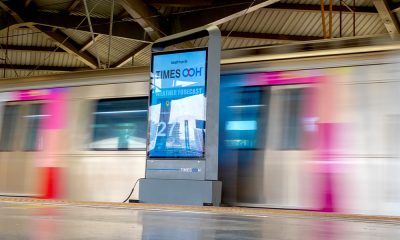

Times OOH upgrades the Media Experience on Mumbai Metro Line 1
The move to 75-inch displays gives brand creatives significantly greater visual impact, while the enhanced brightness ensures vivid, true-to-life imagery...

Broadsign released 2026 programmatic DOOH trends report
Drawing on full-year 2025 and Q1 2026 internal transaction data, the report, surfaces useful signals about what today’s buyers value...
-
 Campaigns
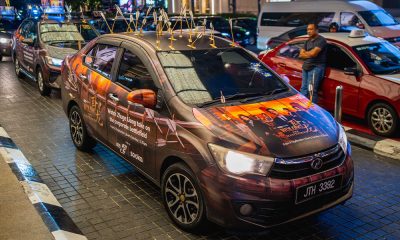
Wolong: The Mastermind takes its story from the road to the screen in Malaysia
-
Campaigns
Netflix takes ‘The Gentlemen’ outdoors – and puts its message on the grass
-
Campaigns
HDFC Bank turns a bus shelter into a lesson in fraud awareness
-
 Creative Concepts
Qubo puts its security cameras on billboards, literally