
Talks OOH
“It is relevance that earns attention”
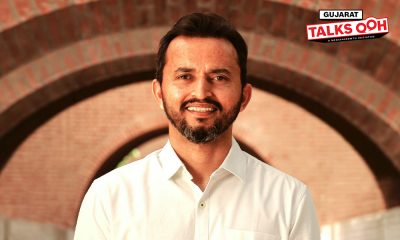
Speaking at Gujarat Talks OOH, Prof. Rajat Sharma, Chairperson, Marketing Area, IIM Ahmedabad, drew parallels between digital marketing and traditional media, highlighting the need for sharper audience understanding, consumer journey mapping and platform-specific communication.

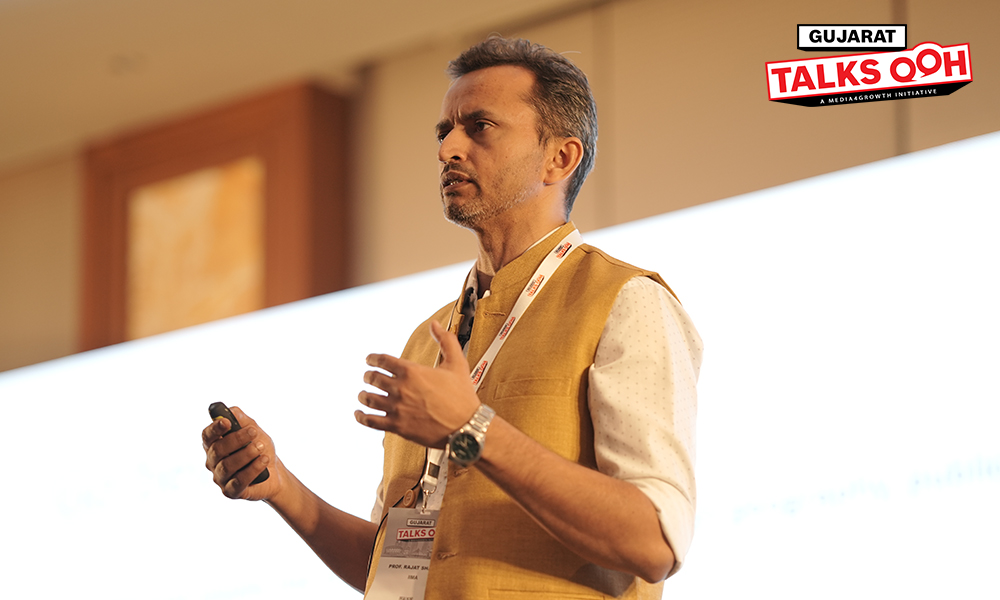
Digital marketing has transformed how brands identify consumers, understand their behaviour and deliver communication. While out-of-home (OOH) advertising operates in a different environment, several principles that guide digital strategy can offer valuable lessons for the medium.
This was the focus of a session by Prof. Rajat Sharma at Gujarat Talks OOH, where he examined how traditional media could adapt to the expectations of new-age consumers by borrowing from the evolving practices of digital marketing.
One of the first shifts he highlighted was the move from broad audience segmentation to individual consumer personas.
“Traditionally, we have been focusing on segments when we are identifying who our content should be seen by,” he said, explaining that marketers have typically relied on demographics such as age, gender, income and geography. Digital marketing, however, has moved beyond these broad classifications to understand individual personas — their needs, motivations, goals, frustrations and behaviour.
Using broadband services as an example, Prof. Rajat explained that identifying an audience as adults between 25 and 45 years of age does not reveal why they need the service. Some may require reliable connectivity for video meetings and remote work, while others may need it for streaming or connecting multiple devices.
He suggested that OOH planners could apply the same thinking to location-based audiences. Rather than treating all families in a residential catchment as one segment, they could distinguish between households with young children, school-going children, college students or elderly parents.
“Families as a segment is used, but then personas could be multiple,” he noted, emphasising the importance of understanding the specific characteristics of people living within a target location.
Mapping the consumer journey, not just the point of purchase
Another key learning from digital marketing, according to Prof. Rajat, is customer journey mapping. A consumer’s journey often begins much before a purchase decision, starting with an aspiration or a need and moving through information gathering, evaluation, purchase and eventually post-purchase conversations.
He illustrated this through the example of planning a holiday. The journey could begin with the dream of visiting Switzerland or Australia, long before the traveller starts comparing hotels or making bookings. As the plan progresses, the kind of information and communication that influences the consumer also changes.
“Your travel plan starts from a dream,” he said, explaining how a consumer’s needs evolve through different stages of the journey.
For marketers, this means understanding what message is relevant at each stage. Content that inspires someone to consider a destination may not be the same as the information they need when comparing hotels or preparing to book.
Prof. Rajat encouraged the OOH industry to look at how consumers move between physical and digital touchpoints. A person may encounter a brand on their phone, see its outdoor advertisement while travelling, come across it again at a retail outlet and later receive a message on WhatsApp before making a purchase.
The objective, he suggested, should be to understand these interactions as part of a larger consumer journey rather than viewing each exposure in isolation.
Content abundance makes relevance more important
Prof. Rajat also pointed to how technology, particularly large language models (LLMs), has made content creation easier. Marketers can now generate and modify stories, reviews and creative messages in a matter of seconds.
“Content creation has become easy,” he observed, adding that consumers themselves are also creating and sharing content across platforms. With content available in abundance, the question for marketers is increasingly about what should be shown to a particular consumer and when.
He connected this back to the importance of personas and journey mapping. Understanding the audience and the stage they are at can help brands decide what kind of communication is likely to be relevant.
For instance, a consumer in the early stages of planning a holiday may respond to aspirational and entertaining content, while someone closer to booking may need more practical information. The same principle, he suggested, can inform how traditional media approaches messaging.
“People are still spending time, but they like the story”
Addressing concerns around shrinking attention spans, Prof. Rajat challenged the assumption that consumers are no longer willing to spend time with content.
He pointed to podcasts and episodic videos on social media, where audiences continue to spend considerable time when the content holds their interest.
“People are still spending time on content, and why do they pay attention? It is because of relevance,” he explained.
His point was that attention is not determined by duration alone. When content connects with a consumer’s interests and needs, they are more likely to engage with it. For OOH, this brings the focus back to understanding the audience and the context in which a message is encountered.
Different platforms, different strategies
Another important point raised during the session was regarding the tendency among brands to use the same creative across multiple digital platforms without considering their distinct audiences and objectives.
Prof. Rajat highlighted how Twitter, LinkedIn and Facebook attract different user groups and serve different purposes. While media and PR professionals are particularly active on Twitter, LinkedIn has a strong presence of industry experts and recruiters. Facebook, meanwhile, caters to different audience interests and communities.
“If you want to put the same content, there is a problem,” he said. “Every platform has a different audience. Every platform’s strategy should be different.”
He extended this principle to traditional media, arguing that different platforms and environments require communication strategies designed around their specific objectives and audiences. A uniform approach to messaging may overlook the distinct role each medium can play.
The attribution challenge for traditional media
Towards the end of the session, Prof. Rajat also touched upon attribution, identifying it as a significant challenge for traditional media.
“One of the biggest problems in traditional media is that they are not sure if the customer is going to respond or not,” he said.
Unlike digital campaigns, where marketers often have access to more direct response and tracking mechanisms, establishing whether an OOH exposure led to a call, enquiry or purchase remains difficult. This uncertainty continues to influence how advertisers assess the effectiveness of traditional media.
Across the session, Prof. Rajat’s message was that OOH does not necessarily need to replicate digital formats to learn from digital marketing. It can, however, adopt a more detailed understanding of consumers, map their journeys, develop communication around context and recognise that relevance is central to earning attention.
For an industry increasingly looking to demonstrate its value to advertisers, these shifts could play an important role in how OOH is planned, positioned and measured.






Daily Newsletter
Subscribe to receive the latest OOH
industry updates

Bridging the demand-supply gap for premium inventory in Gujarat: Way ahead

Muzz takes a witty approach to finding love with a series of billboards across Mumbai

Blinkit and UNO Flip bring the game’s signature move to a flipping billboard in Gurgaon

OOH has the reach but brands want the numbers

“There is no better media for regional brands than outdoor”

Puma becomes PVMA for PV Sindhu

HOCCO’s Aamchi campaign brings mango tree to Ahmedabad

District uses Samay Raina’s signature shirt to announce his live show

Blinkit in association with Kinetic India goes all Bollywood

Acclaimed Actor Manoj Joshi to deliver an inspirational address at OAC 2024

‘Let’s create an empathetic space for women’

‘It won’t just be a man’s world anymore’

‘We’re actively exploring acquisitions and working to increase our inventory’

A habit of success at Prakash Arts

‘OOH is an important channel to connect with corporate audiences’


Video Editor
Job Description: Editing videos of editorial interviews, in-house events, video podcasts, promotional videos and others based on team brief Planning...
Content Editor-Writer
Job Description: Editing daily news copies and magazine articles Writing industry research and interview based articles and client focused content...


Sales Manager (Amritsar, J&K, Chandigarh, Mumbai, Vadodara, Udaipur, U.P.)
Orango has been involved in creating, building, reviving and growing brands. Orango builds powerful connections with their customers & people...


Sales Executive
Established B2B Media and Events Group VJ Media Works is looking for sales executives
Digital Marketing/Social Media Executives
Established B2B Media and Events Group VJ Media Works is looking for the following: Digital Marketing/Social Media Executives Location: Mumbai/Bangalore...


Sales Manager – AdZ (Digital Advertising)
Estontec Group’s fast-growing adtech brand AdZ is hiring a Sales Manager to drive digital media sales and client growth. This...
Onboarding Specialist
Join Estontec Group’s transit media brand BrandonWheelz as an Onboarding Specialist, managing campaign execution, vendor coordination, and media planning across...


Operation Manager
Company Description: BajuGali an Advertisement Company is a leading firm specializing in advertising and marketing services. We provide innovative solutions...
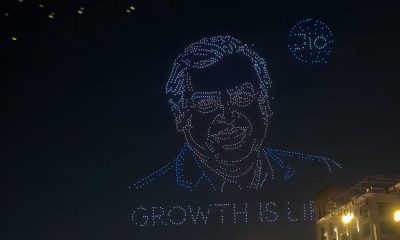

Jio celebrates its stock market debut with a spectacular drone show at Wankhede Stadium
The large-scale aerial display marked Jio Platforms’ market listing, turning a major corporate milestone into a public spectacle across Mumbai’s...
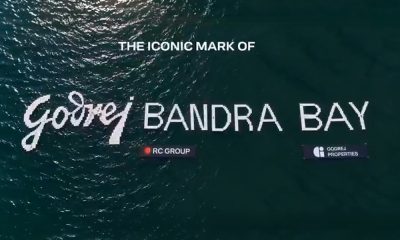

Godrej Properties unveils Godrej Bandra Bay with a large-scale floating logo formation in Mumbai
The campaign is conceptualised by OAP Mediatech.
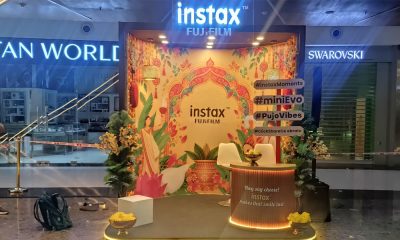

Fujifilm Instax takes its instant photography experience to Delhi and Kolkata
It was initiated and facilitated by Times One, a Times Group Company.


Call of Duty brings Korean Alleyway to life in London and Los Angeles
The experience was developed by Activision in partnership with Omnicom Media and Amazon Ads.
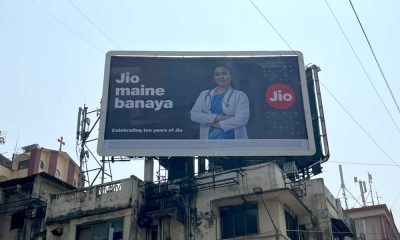

Jio marks 10 years with ‘Jio maine banaya’ outdoor campaign
Featuring everyday Indians across large-format hoardings and digital billboards, the campaign puts people at the centre of Jio’s decade-long journey.
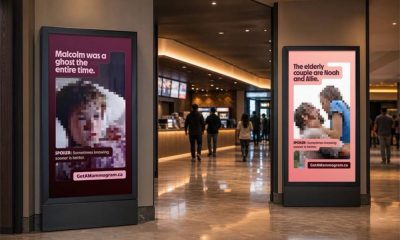

Alberta Cancer Foundation turns movie spoilers into a life-saving OOH campaign
The ‘Life-Saving Spoilers’ campaign uses iconic film and television plot twists to encourage people to get mammograms, turning a familiar...
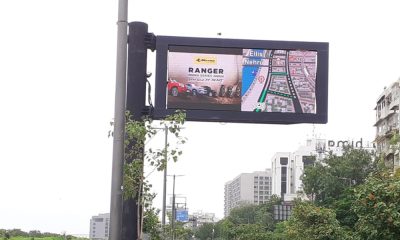

WOW Advertisement adds eight digital OOH screens across Ahmedabad and Surat
The expansion includes seven traffic LED screens across Ahmedabad and a 41 ft × 60 ft curved outdoor LED screen...

billups celebrates its anniversary by putting its people on billboard
The campaign is participating in fifteen locations across Asia, Europe and North America, including Belgrade, Amsterdam, Brussels, Berlin, Chicago. Portland,...

PDSN Media expands corporate DOOH network with new screens at Fulcrum
The new inventory comprises two 8×8 ft digital LED screens installed across Wing A and Wing B of the Mumbai...

Dubai Mall expands its DOOH network with 1,100 sqm of LED displays
Emaar Properties has reportedly deployed approximately 1,100 sq m of LED displays across indoor and outdoor areas of Dubai Mall,...
-
Campaigns
Jio celebrates its stock market debut with a spectacular drone show at Wankhede Stadium
-
 Talks OOH
Rajat Sharma, Associate Professor of Marketing at IIMA, to speak at Gujarat Talks OOH
-
 Talks OOH
Prashant Gadhavi, Executive Director, The Secretariat, to moderate panel discussion at Gujarat Talks OOH
-
 Talks OOH
Raj Hadvani, Director-CEO of Gopal Namkeen, joins Gujarat Talks OOH panel