
Brand Insights
From visibility to precision: How brands are leveraging tech-led OOH
As the OOH Advertising Awards (OAA) enters its 20th edition, some of the OAA jury members from leading brands share their perspectives on how technology is reshaping the planning, targeting, creativity, and effectiveness of outdoor advertising.


OOH advertising has always been a medium built on visibility. The right location, the right format, and the right message were often enough to make an impact.
Today, however, the conversation around OOH extends far beyond physical presence. Technologies powering DOOH, AI, programmatic buying, mobility data, and audience analytics are changing how brands approach planning, execution, and measurement. As marketers seek greater accountability from every media investment, outdoor is increasingly being viewed through a more data-driven lens.
This shift formed the basis of a question posed to a select group of industry leaders who are serving as jurors for the 20th edition of the OOH Advertising Awards. Representing brands across categories, from FMCG and QSR to infrastructure and real estate, the jurors bring diverse perspectives on how technology is influencing modern marketing decisions.
We asked them a simple question: What role do technologies such as programmatic buying, AI, and data-led targeting play in outdoor advertising decisions today?
Their responses highlight how brands are balancing innovation with effectiveness, using technology not just to improve measurement, but also to unlock new possibilities for engagement, contextual communication, and audience understanding.
Technology is helping brands move from broad visibility to precision-led impact

For Skipper Pipes, one of India’s leading pipe and fittings manufacturers, technology is fundamentally changing how OOH campaigns are planned and evaluated.
According to Anirban Paul Chowdhury, National Marketing Head, Skipper Pipes, advancements in data and digital infrastructure are giving marketers greater control over how OOH media is used. “Technology is fundamentally reshaping OOH advertising. DOOH has expanded creative flexibility, while data-led planning is making media decisions sharper and more measurable.”
Traditionally, OOH advertising was largely evaluated through visibility and reach. While those factors continue to matter, marketers today have access to significantly more information about audiences, movement patterns, and contextual opportunities.
Anirban points to the growing role of AI, mobility data, and programmatic capabilities in helping brands make more informed decisions. “AI, mobility data and programmatic capabilities are helping brands move from broad visibility to precision-led impact. For us, technology is enabling OOH campaigns to become more dynamic, contextual and accountable without losing the power of scale.”
His observation reflects a broader industry shift. OOH advertising is no longer viewed solely as a mass-awareness medium. Increasingly, brands are looking for ways to combine OOH’s reach with the targeting and accountability often associated with digital channels.
For marketers like Anirban, technology is helping bridge that gap.
From landmark locations to understanding consumer journeys

For KFC, technology has changed not just how campaigns are executed, but also how locations themselves are evaluated.
Snehita Chakravorty, Brand Manager, Yum Brands – KFC, believes OOH planning has moved beyond simply selecting the most prominent sites in a city.
“Earlier, OOH decisions were largely driven by visibility and location value. It created bottlenecks for many media which had potential but never could stand out of the queue, where large-format media gave better coverage on the basis of location and status.”
The introduction of programmatic tools, audience data, and mobility insights has expanded the way brands think about OOH inventory. According to Snehita, marketers today can look beyond the traditional perception of a location and instead understand how consumers move through spaces.
“For example, every brand’s choice some years back was focused on Vasant Kunj Ambience Mall OOH only on the basis that crème de la crème clients visit the mall. But now with all the tools and technology, we can determine the on-road consumer journey and plan visibility accordingly,” shares Snehita.
The shift is subtle but significant. Rather than relying purely on the prestige associated with a location, brands can now use data to understand where consumers travel, what routes they take, and where communication opportunities exist along those journeys.
For marketers, that means planning decisions are increasingly being influenced by audience behaviour rather than location reputation alone.
Making creativity smarter, more timely and more impactful

Technology’s growing role in OOH advertising often sparks questions about creativity. As automation, data, and AI become more prominent, does creativity take a back seat? For HOCCO Ice Cream, the answer is clear.
Roli Shrivastava, Vice President – Marketing, HOCCO, sees technology as an enabler that strengthens creative possibilities rather than limiting them.
“Technology is making OOH advertising significantly smarter and more accountable. DOOH has opened up opportunities for dynamic messaging, contextual communication, and greater flexibility.”
Digital screens have introduced new possibilities for brands to adapt messaging according to context, location, and audience. At the same time, AI is beginning to influence how marketers think about consumers before a campaign even reaches the market.
“AI is also beginning to influence how we approach consumer insights and creative development.” However, despite the growing sophistication of technology, Roli believes strong ideas remain central to successful OOH communication.
“While creativity remains at the heart of effective OOH, technology enables us to make that creativity more precise, timely, and impactful.” The observation highlights an important reality within the industry. While technology can improve targeting, measurement, and flexibility, the effectiveness of a campaign still depends on the quality of the idea itself.
For brands experimenting with newer technologies, the challenge is increasingly about combining data-driven planning with creative thinking.
The billboard is becoming an experience

While technology is transforming planning and measurement, it is also changing the way consumers interact with OOH media.
For Bhartiya Urban, a real estate developer known for premium residential projects, the evolution of consumer engagement has been particularly noticeable.
Satanik Chaudhuri, Head of Marketing, Bhartiya Urban Pvt Ltd, points to three distinct shifts in how audiences engage with OOH advertising today.
The first is the emergence of immersive phygital experiences. “Consumers engage by scanning minimal, elegantly placed QR codes on premium, clutter-free displays. This instantly unlocks high-end digital experiences, like immersive 3D virtual walkthroughs of a penthouse, right on their smartphones.”
In this environment, the billboard is no longer the final touchpoint. Instead, it becomes the gateway to a deeper digital experience.
The second shift is the rise of what Satanik describes as high-art digital spectacles. “The billboard becomes an architectural feature. By leveraging sleek, borderless 3D anamorphic screens in premium districts, the brand captures active, prolonged attention through fluid, high-design motion that feels like public art rather than a loud sales pitch.”
This reflects the growing popularity of premium digital installations that blur the line between advertising, design, and public engagement.
The third change for Satanik is perhaps the most visible in today’s social-media-driven environment. “Sleek typography, vast negative space, and bold, minimalist design turn the physical asset into a backdrop. Audiences naturally photograph and share these visually stunning installations on LinkedIn and Instagram, transforming a single premium location into a digital trend.”
For marketers, this represents an additional layer of value. OOH campaigns are no longer confined to the physical audience passing by them. Increasingly, they are being photographed, shared, discussed, and amplified online.
OOH’s next chapter
While each marketer approaches OOH advertising from a different category and business challenge, a common theme runs through all their responses. Technology is helping brands make OOH media more measurable, more dynamic, and more informed.
Yet throughout that evolution, one thing remains constant: the objective is still to create communication that captures attention, builds engagement, and drives impact. The tools may be changing, but the challenge of creating meaningful connections with audiences remains at the heart of OOH advertising.
Daily Newsletter
Subscribe to receive the latest OOH
industry updates

Alberta Cancer Foundation turns movie spoilers into a life-saving OOH campaign

Aldi creates a ‘broomstick parking’ bay for witches and wizards ahead of Halloween

Riddhesh Raval, Dy Municipal Commissioner, Ahmedabad, to address Gujarat Talks OOH

Maharashtra Maritime Board floats 19 advertising tenders across Mumbai’s waterfront, jetties and bridges

Traya marks Dussehra with ‘Andhere Mein Teer Mat Chalao’ activation

Puma becomes PVMA for PV Sindhu

HOCCO’s Aamchi campaign brings mango tree to Ahmedabad

District uses Samay Raina’s signature shirt to announce his live show

Blinkit in association with Kinetic India goes all Bollywood

Acclaimed Actor Manoj Joshi to deliver an inspirational address at OAC 2024

‘Let’s create an empathetic space for women’

‘It won’t just be a man’s world anymore’

‘We’re actively exploring acquisitions and working to increase our inventory’

A habit of success at Prakash Arts

‘OOH is an important channel to connect with corporate audiences’


Video Editor
Job Description: Editing videos of editorial interviews, in-house events, video podcasts, promotional videos and others based on team brief Planning...
Content Editor-Writer
Job Description: Editing daily news copies and magazine articles Writing industry research and interview based articles and client focused content...


Sales Manager (Amritsar, J&K, Chandigarh, Mumbai, Vadodara, Udaipur, U.P.)
Orango has been involved in creating, building, reviving and growing brands. Orango builds powerful connections with their customers & people...


Sales Executive
Established B2B Media and Events Group VJ Media Works is looking for sales executives
Digital Marketing/Social Media Executives
Established B2B Media and Events Group VJ Media Works is looking for the following: Digital Marketing/Social Media Executives Location: Mumbai/Bangalore...


Sales Manager – AdZ (Digital Advertising)
Estontec Group’s fast-growing adtech brand AdZ is hiring a Sales Manager to drive digital media sales and client growth. This...
Onboarding Specialist
Join Estontec Group’s transit media brand BrandonWheelz as an Onboarding Specialist, managing campaign execution, vendor coordination, and media planning across...


Operation Manager
Company Description: BajuGali an Advertisement Company is a leading firm specializing in advertising and marketing services. We provide innovative solutions...

Trident Group brings ‘Tree of Strength’ to Durga Puja with a sustainability-led activation in Kolkata
Produced by Sakshi Advertising, the activation at Maddox Square invites visitors to plant their wishes while connecting the spirit of...


KISNA takes festive gifting nationwide with 300+ billboards featuring Shahid and Mira Kapoor
Projected to generate 5+ million OOH impressions, the #GiftHappiness campaign highlights exclusive jewellery offers, exchange benefits and a Grand Festive...


Kolonkojoyini uses Maa Durga installation to highlight stigma faced by trafficking survivors
The installation was conceptualised and brought to life by Tribes in collaboration with Sanlaap.

Hocco brings its East India debut to Kolkata streets with a pujo-themed campaign
To give the campaign a local feel and connect with people during Pujo, the brand used regional-language hoardings in Bengali.

Zomato serves up a Garba-inspired OOH twist with a ‘not a Blinkit ad’ billboard
The billboard plays on Blinkit’s brand identity to promise a familiar Gujarati treat after Garba, using local food culture and...
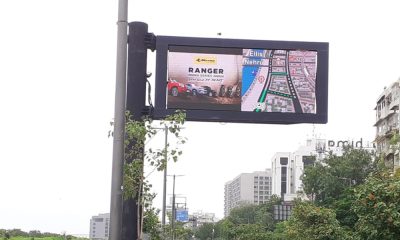

WOW Advertisement adds eight digital OOH screens across Ahmedabad and Surat
The expansion includes seven traffic LED screens across Ahmedabad and a 41 ft × 60 ft curved outdoor LED screen...
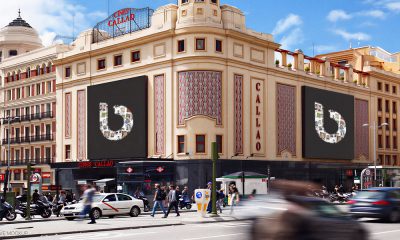

billups celebrates its anniversary by putting its people on billboard
The campaign is participating in fifteen locations across Asia, Europe and North America, including Belgrade, Amsterdam, Brussels, Berlin, Chicago. Portland,...
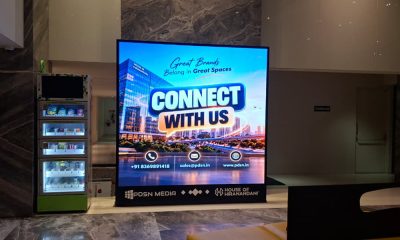

PDSN Media expands corporate DOOH network with new screens at Fulcrum
The new inventory comprises two 8×8 ft digital LED screens installed across Wing A and Wing B of the Mumbai...
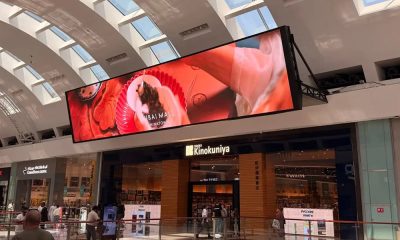

Dubai Mall expands its DOOH network with 1,100 sqm of LED displays
Emaar Properties has reportedly deployed approximately 1,100 sq m of LED displays across indoor and outdoor areas of Dubai Mall,...


Broadsign bags contract with Context Networks for screen network in 14 US states
Through the collaboration, Context Networks is connecting eligible CPMN™ inventory to the Broadsign Platform, the company’s complete, reliable Ad Server...
-
 Talks OOH
Riddhesh Raval, Dy Municipal Commissioner, Ahmedabad, to address Gujarat Talks OOH
-
 Talks OOH
Rohit Chopra of Times OOH joins Gujarat Talks OOH panel on infrastructure-led growth
-
Campaigns
Hocco brings its East India debut to Kolkata streets with a pujo-themed campaign
-
Campaigns
KISNA takes festive gifting nationwide with 300+ billboards featuring Shahid and Mira Kapoor