Insights
‘Wider adoption on supply side key to pDOOH growth’
Anuj Bhandari, Founder and CEO, and Shivalika Anand, Chief Business Officer at DGTOOHL, make the case for programmatic DOOH in India, and explain why the conversation needs to shift from brands to publishers.

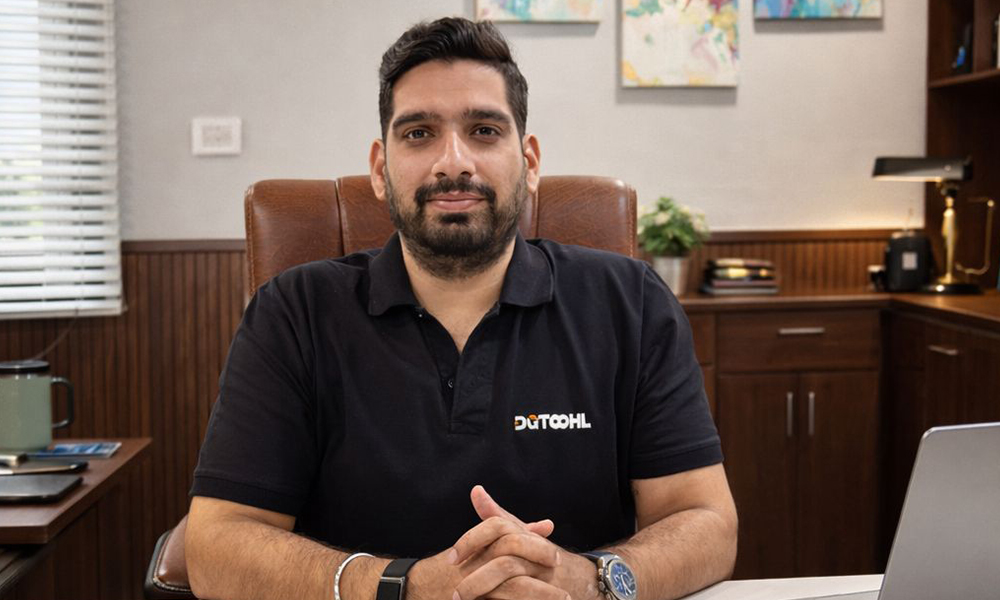
Programmatic DOOH has been part of the Indian OOH conversation for seven years. The adoption is real but uneven, and the gap between what the medium can do and how much of it is actually being used programmatically remains wide. Anuj Bhandari and Shivalika Anand of DGTOOHL sat down with Media4Growth to talk through where things stand, what is driving growth, and what is still in the way. The interaction was centered around the the company’s recent report that points to more brands turning to programmatic Digital Out-of-Home (DOOH) to bring greater precision to their outdoor campaigns.
The global picture is instructive. Programmatic DOOH already accounts for roughly a third of the overall DOOH market worldwide. In India, the share sits at around 10% of DOOH today, with expectations of it reaching 25 to 30%. The brands coming on board include names that never previously considered programmatic DOOH as an option, and that shift, Anuj says, is being driven by one thing above all else: the ability to pay for verified impressions rather than buying inventory on trust. “Why would anybody not want that? Everybody wants measurability and flexibility,” he says.
But the bottleneck is not on the brand side. Anuj is clear that the bigger challenge is getting publishers to make their inventory programmatically available. “Adoption happens majorly at the supply side. The numbers we talk about can only happen when the supply gets programmatically enabled.”
Digital fatigue vs performance fatigue
Shivalika Anand, coming from the digital industry, adds another dimension to the case for the medium, in the context of digital fatigue, that is an emerging reality. “I am already banner blind on digital. But when I am at Cyberhub or at an airport, it’s a 40-foot screen, I will not miss the opportunity of seeing that.” Anuj is equally blunt about where the real fatigue lies: “There is no digital fatigue. There is measurability fatigue. Programmatic DOOH gives you the advantage of never having a viewability problem.”
On budgets, the picture is more reassuring for the traditional OOH industry than many assume, 80% of programmatic DOOH budgets are being pulled from digital pools and not from OOH spends. “It is getting budgets that digital was sitting on,” Anuj says. In fact, he feels that with programmatic, there is opportunity for DOOH/OOH to get a bigger chunk of the pie.
India’s programmatic DOOH market currently stands at around Rs 100 crore, with a target of reaching Rs 250 crore, but that growth depends entirely on more supply becoming available and more publishers understanding that programmatic is not a threat to their rates, but an opportunity to use their inventory more efficiently, points out Anuj.
The AI factor- more hype than real?
On AI as being more of a hype, Anuj minces no words. “A lot of people are using the AI tag just to say they are a technology company. I don’t see any AI tool that has been genuinely useful for out-of-home or programmatic yet.”
Read the full conversation, covering measurement, common currency, and what the road ahead looks like for programmatic DOOH in India, in the April edition of Outdoor Asia Magazine.









Daily Newsletter
Subscribe to receive the latest OOH
industry updates

Third edition of Gujarat Talks OOH coming up on October 30, 2026

Why is India’s digital signage market not looking beyond the screen?

BRND.ME’s perfume brand Villain puts its Gold Revolver on the move across Bengaluru

Chandak Vansham’s swinging Ganpati OOH campaign in Mumbai

Flipkart Minutes serves up Barosi Ghee in a larger-than-life OOH execution

Puma becomes PVMA for PV Sindhu

HOCCO’s Aamchi campaign brings mango tree to Ahmedabad

Blinkit in association with Kinetic India goes all Bollywood

Acclaimed Actor Manoj Joshi to deliver an inspirational address at OAC 2024

Zepto’s Fast 10 Minute Delivery Saves the Day for Game Night in Ahmedabad!

‘Let’s create an empathetic space for women’

‘It won’t just be a man’s world anymore’

‘We’re actively exploring acquisitions and working to increase our inventory’

A habit of success at Prakash Arts

‘OOH is an important channel to connect with corporate audiences’

Video Editor
Job Description: Editing videos of editorial interviews, in-house events, video podcasts, promotional videos and others based on team brief Planning...
Content Editor-Writer
Job Description: Editing daily news copies and magazine articles Writing industry research and interview based articles and client focused content...

Sales Manager (Amritsar, J&K, Chandigarh, Mumbai, Vadodara, Udaipur, U.P.)
Orango has been involved in creating, building, reviving and growing brands. Orango builds powerful connections with their customers & people...

Sales Executive
Established B2B Media and Events Group VJ Media Works is looking for sales executives
Digital Marketing/Social Media Executives
Established B2B Media and Events Group VJ Media Works is looking for the following: Digital Marketing/Social Media Executives Location: Mumbai/Bangalore...

Sales Manager – AdZ (Digital Advertising)
Estontec Group’s fast-growing adtech brand AdZ is hiring a Sales Manager to drive digital media sales and client growth. This...
Onboarding Specialist
Join Estontec Group’s transit media brand BrandonWheelz as an Onboarding Specialist, managing campaign execution, vendor coordination, and media planning across...

Operation Manager
Company Description: BajuGali an Advertisement Company is a leading firm specializing in advertising and marketing services. We provide innovative solutions...
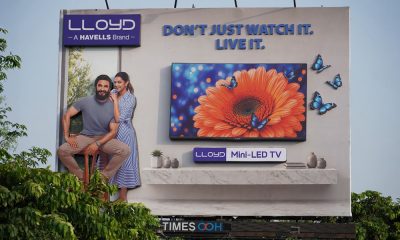

Lloyd puts its TV screen on a billboard in Noida
Posterscope India, along with Sakshi Advertising, has executed this campaign in Noida.
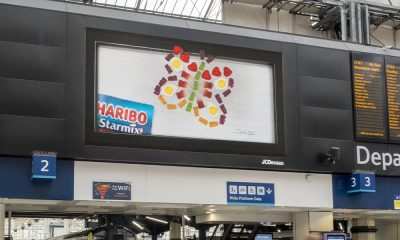

HARIBO gives Starmix a creative OOH makeover
The campaign is created by Quiet Storm and is currently running across the UK and the Republic of Ireland.

Flipkart Minutes stretches aarti lyrics across OOH this Ganpati season
While you were busy singing “Ganpati Bappa Morya”, Flipkart Minutes got a billboard to sing along too, turning a familiar...

Havells adds a 3D festive twist to OOH this Ganpati season
Executed by Posterscope India, the Havells hoarding uses 3D elements to give its Ganpati communication added depth and visual presence...

Ownly brings ‘Mooshak on Wheels’ to Hyderabad this Ganesh Chaturthi
This Ganesh Chaturthi, Ownly took its brand presence beyond the screen and onto the streets of Hyderabad with “Mooshak on...

Landsec and Ocean Outdoor build on the cultural resonance of Piccadilly Lights
Changes to the screen's format come into effect from January 2027, 10 years after Piccadilly Lights relaunched following a nine-month...
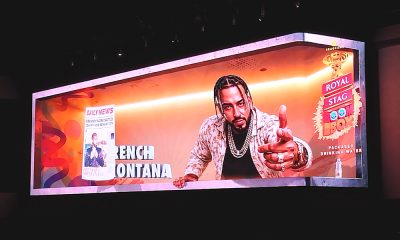

Royal Stag Boombox goes larger-than-life with anamorphic LED in Hyderabad
The campaign is conceptualised and executed by Coral Media
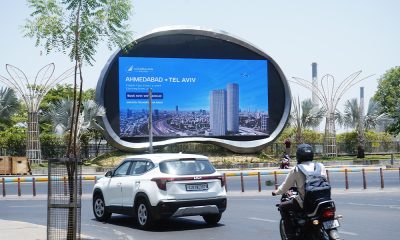

Times OOH Unveils ‘The Riviera’ in Ahmedabad
The screen is located at Sabarmati Riverfront on Ashram Road
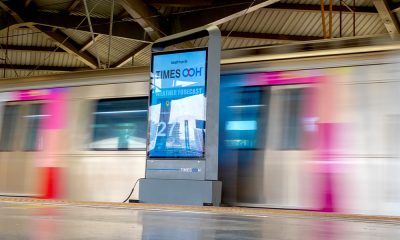

Times OOH upgrades the Media Experience on Mumbai Metro Line 1
The move to 75-inch displays gives brand creatives significantly greater visual impact, while the enhanced brightness ensures vivid, true-to-life imagery...

Broadsign released 2026 programmatic DOOH trends report
Drawing on full-year 2025 and Q1 2026 internal transaction data, the report, surfaces useful signals about what today’s buyers value...