
Insights
If content is king, technology is the kingmaker: Ashish Limaye on how tech is reshaping the OOH experience
Ashish Limaye, CEO & Founder of Craving Digital, speaks about how technology is amplifying OOH’s creative power – and why a shift in mindset is key to unlocking its full potential.

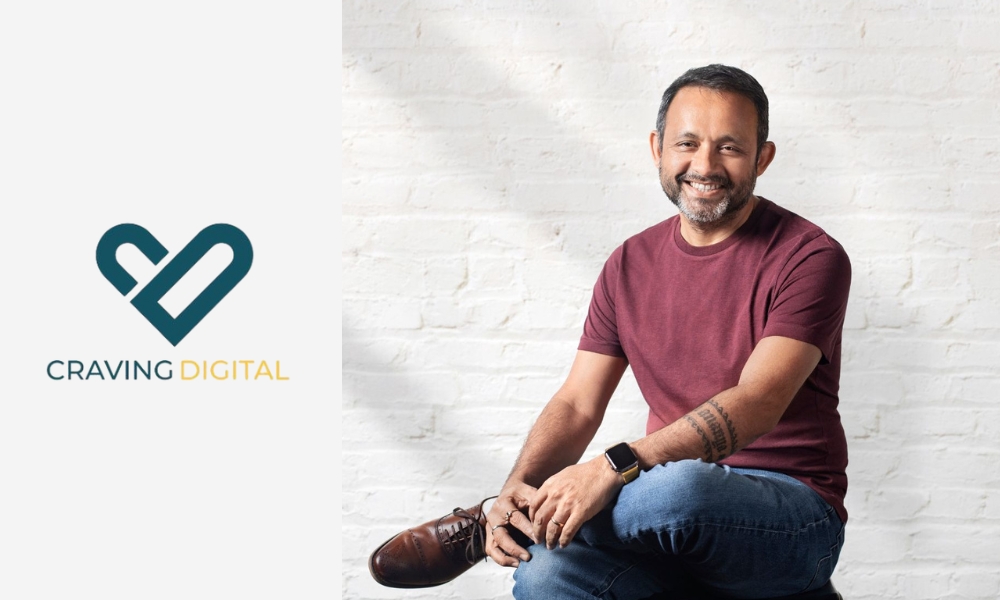
OOH advertising the world’s oldest and most public medium — is undergoing one of its most dramatic transformations yet. With technology redefining how audiences see, experience, and engage with outdoor spaces, OOH is fast closing the gap with new-age digital channels.
“Technology is revolutionizing both scale and experience in Out-of-Home,” says Ashish Limaye, CEO and Founder of Craving Digital, summing up the shift that’s reshaping the medium.
Tech turns the canvas interactive
For decades, OOH’s strength has been its sheer scale and visual dominance — the ability to stand out in public spaces. Now, technology is enhancing that strength by adding a new dimension: interactivity.
“Out-of-Home stands apart because of scale and experience — nothing else rivals its large-format potential or visual impact,” Ashish explains. “But with technology, we’re also introducing interactivity. Curved LED walls, anamorphic displays, and 3D installations allow brands to build deeper engagement, where people don’t just look — they participate.”
From real-time data triggers to audience-responsive screens, OOH is no longer a static medium. It’s a living interface — and the creative possibilities are multiplying.
The multiplier effect: from location to context
Technology, says Ashish, has given OOH what he calls a “multiplier effect.”
“OOH has always been about location and size. But now we can add context — creating content that’s hyper-relevant to audiences in a particular area or at a specific moment,” he explains. “From AR integrations to weather-based content, campaigns can now be both useful and immersive. Viewers can even interact with displays directly through their phones. That’s what transforms OOH from a stand-alone format into an experience-led medium.”
This shift — from viewing to engaging — is what gives technology-powered OOH its future edge.
The mindset roadblock
But even as the tools evolve, adoption remains uneven. Ashish points out that the biggest challenge isn’t access to technology — it’s mindset.
“There’s a perception that OOH doesn’t need the same creative rigour as other media,” he says. “Too often, we see print or digital assets being repurposed for billboards without any adaptation for format, distance, or context. That’s a missed opportunity.”
According to Ashish, this disconnect stems from how agency and marketing structures have evolved. “In the past, integrated agencies adapted creatives across mediums. Now, with teams working in silos, OOH often gets the short end of the stick,” he explains. “And when the understanding of the medium is limited, budgets are the first to get compromised.”
He’s equally candid about challenges within the OOH ecosystem itself. “There’s still a tendency to cut corners — using subpar screens, ignoring upkeep, and competing only on cost. Even local authorities don’t always enforce standards. When quality drops, the entire medium’s reputation suffers.”
Overcoming the ‘penny-wise, pound-foolish’ approach
Ashish believes that the resistance to investing in quality tech and creative adaptation comes from a narrow view of ROI. “There’s a stubborn perception that technology alone will fix advertising challenges,” he says. “But technology is only an enabler — it’s what brands do with it that creates value. Unless the savings from automation or AI are reinvested into better creative and execution, the impact will remain shallow.”
He urges both media owners and advertisers to move beyond the “penny-wise, pound-foolish” mindset. “The goal shouldn’t be to cut costs, but to build better impact. If the industry can shift focus from price to value, we’ll see much stronger outcomes,” he adds.
What great OOH content looks like
Technology can amplify great content — but it can’t replace it. Ashish makes that distinction clear. “Content always matters, but in OOH, it matters more because attention is fleeting. Great OOH content should build a community, drive conversation, and ideally, lead to commerce,” he says.
However, he cautions against the growing culture of creative shortcuts. “We live in an age of instant gratification — fast outputs, recycled ideas, and AI-driven templates. But without genuine insight and creativity, even the best tech will fall flat. Technology should enhance imagination, not replace it.”
The AI factor: faster, smarter, but still human
Artificial Intelligence, he says, is already transforming the creative workflow — particularly in visualization. “AI has democratized the design process. What used to take days — like creating 3D mock-ups — can now be done in minutes,” Ashish explains. “But it still needs human direction, context, and vision. Its true value lies in speeding up prototyping, not replacing creative thinking.”
Looking ahead, Ashish expects AI to mature into enterprise-grade creative tools that generate contextually intelligent campaigns. “As AI evolves, it will push creators and brands to craft more unique and insight-driven work, rather than just following trends,” he says.
The road ahead: tech with a human edge
Ultimately, Ashish believes the future of OOH lies in blending technology with empathy. “The faster technology matures, the more important it becomes to refine human qualities like creativity, understanding, and emotional insight,” he says.
As OOH evolves into a data-driven, dynamic medium, that balance — between innovation and instinct — will define its success.
“In the end, technology may build the tools,” Ashish says, “but it’s human imagination that gives them purpose.”








Daily Newsletter
Subscribe to receive the latest OOH
industry updates

Publicis London secures double Gold in Ocean Outdoor Digital Creative Competition

Krishna Communication (Outdoor) joins Gujarat Talks OOH as Associate Sponsor

billups celebrates its anniversary by putting its people on billboard

DS Group takes ‘Pujoy Pulse’ across West Bengal with outdoor activations

Surat’s OOH market faces a static squeeze, but DOOH opens a new window

Puma becomes PVMA for PV Sindhu

HOCCO’s Aamchi campaign brings mango tree to Ahmedabad

Blinkit in association with Kinetic India goes all Bollywood

Acclaimed Actor Manoj Joshi to deliver an inspirational address at OAC 2024

Zepto’s Fast 10 Minute Delivery Saves the Day for Game Night in Ahmedabad!

‘Let’s create an empathetic space for women’

‘It won’t just be a man’s world anymore’

‘We’re actively exploring acquisitions and working to increase our inventory’

A habit of success at Prakash Arts

‘OOH is an important channel to connect with corporate audiences’

Video Editor
Job Description: Editing videos of editorial interviews, in-house events, video podcasts, promotional videos and others based on team brief Planning...
Content Editor-Writer
Job Description: Editing daily news copies and magazine articles Writing industry research and interview based articles and client focused content...

Sales Manager (Amritsar, J&K, Chandigarh, Mumbai, Vadodara, Udaipur, U.P.)
Orango has been involved in creating, building, reviving and growing brands. Orango builds powerful connections with their customers & people...

Sales Executive
Established B2B Media and Events Group VJ Media Works is looking for sales executives
Digital Marketing/Social Media Executives
Established B2B Media and Events Group VJ Media Works is looking for the following: Digital Marketing/Social Media Executives Location: Mumbai/Bangalore...

Sales Manager – AdZ (Digital Advertising)
Estontec Group’s fast-growing adtech brand AdZ is hiring a Sales Manager to drive digital media sales and client growth. This...
Onboarding Specialist
Join Estontec Group’s transit media brand BrandonWheelz as an Onboarding Specialist, managing campaign execution, vendor coordination, and media planning across...


Operation Manager
Company Description: BajuGali an Advertisement Company is a leading firm specializing in advertising and marketing services. We provide innovative solutions...


Pentonic creates a Durga idol with 13,000 recycled plastic pens
Linc Limited’s Pentonic presents a first-of-its-kind Durga installation by artist Chandra Nath Saha (Tilak), giving recycled plastic an extraordinary new...
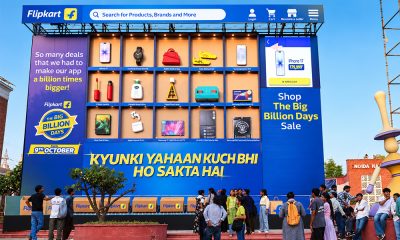

Flipkart brings the Big Billion Days shopping experience on a four-storey interactive structure
The campaign is executed by OAP Mediatech
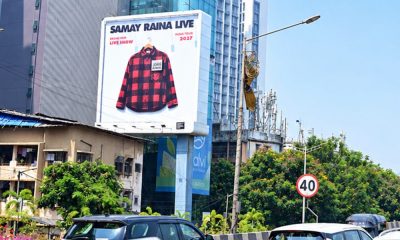

District uses Samay Raina’s signature shirt to announce his live show
The campaign is executed on a billboard owned by Bright Outdoor Media Ltd


AXE turns a Bandra wall into an AI-powered ‘OG Anthem’ experience
AXE’s latest OOH activation in Mumbai’s Bandra uses a neon mural, a QR code and AI to turn five quick...


Disney+ promotes Hulu shows with playful ‘Hu Dis?’ OOH campaign
Disney+ uses a clever split of two familiar brand identities to remind audiences that Hulu content is available on the...
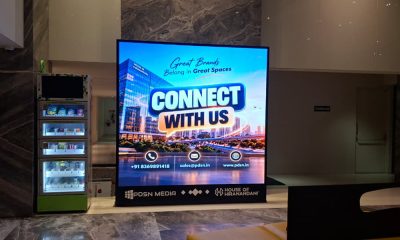

PDSN Media expands corporate DOOH network with new screens at Fulcrum
The new inventory comprises two 8×8 ft digital LED screens installed across Wing A and Wing B of the Mumbai...
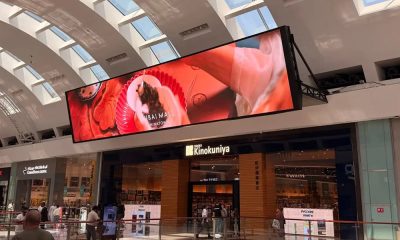

Dubai Mall expands its DOOH network with 1,100 sqm of LED displays
Emaar Properties has reportedly deployed approximately 1,100 sq m of LED displays across indoor and outdoor areas of Dubai Mall,...


Broadsign bags contract with Context Networks for screen network in 14 US states
Through the collaboration, Context Networks is connecting eligible CPMN™ inventory to the Broadsign Platform, the company’s complete, reliable Ad Server...
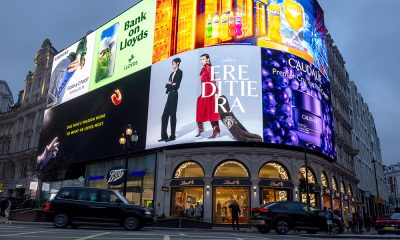

Landsec and Ocean Outdoor build on the cultural resonance of Piccadilly Lights
Changes to the screen's format come into effect from January 2027, 10 years after Piccadilly Lights relaunched following a nine-month...
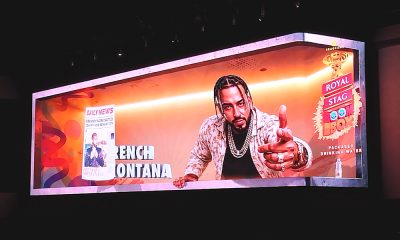

Royal Stag Boombox goes larger-than-life with anamorphic LED in Hyderabad
The campaign is conceptualised and executed by Coral Media
-
Creative Concepts
District uses Samay Raina’s signature shirt to announce his live show
-
Campaigns
Disney+ promotes Hulu shows with playful ‘Hu Dis?’ OOH campaign
-

 Tenders
DMRC floats three tenders for metro advertising and co-branding rights
-

 Tenders
Podhigai Media Group secures exclusive advertising rights for Vadapalani Metro Station, Chennai