Campaigns
Inside the making of Uber’s 4,500+ touchpoint OOH campaign
From audience-led planning and transit-focused media selection to executing 4,500+ sites across 25 cities, Narhari Rao, CBO, Say It Loud Media, takes Media4Growth through the making of Uber’s ‘First Ride Free’ campaign.

Uber has taken its ‘First Ride Free’ campaign to a massive OOH footprint, deploying more than 4,500 media touchpoints across 25 cities. Executed by Say It Loud Media, the campaign combines a strong presence across railway stations and bus stations with city-wide OOH, putting Uber’s offer in front of commuters and urban audiences across key markets.
Rather than simply chasing scale, the campaign has been planned around audience relevance, location and the potential to drive action. Transit hubs form a key part of the strategy, given their relevance to Uber’s mobility proposition and their role in last-mile connectivity. These have been complemented by high-traffic corridors and city-wide formats to build visibility and frequency.
The campaign includes more than 350 bus shelters in Delhi, over 500 in Mumbai and around 550 in Bengaluru, among the various deployments across markets. The result is a high share of voice for the ‘First Ride Free’ messaging, while maintaining a focus on locations and formats that can connect with the intended audience.
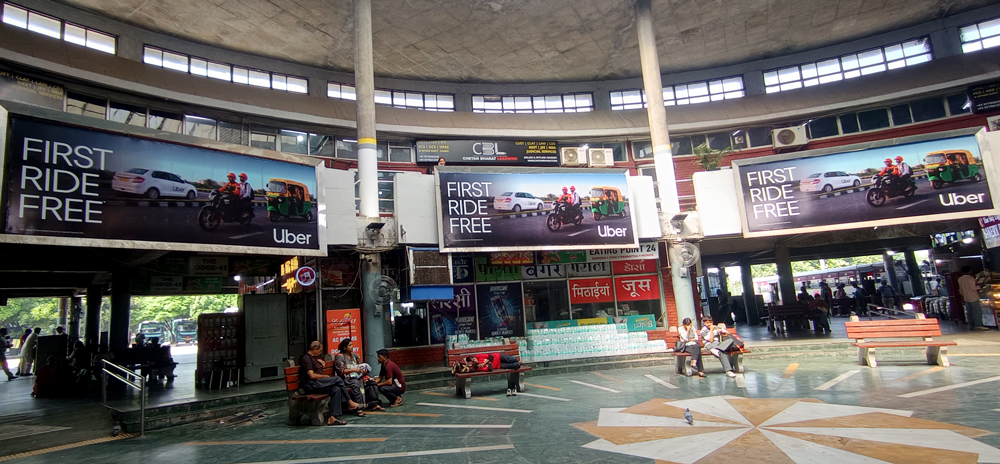
Speaking about the making of the campaign, Narhari Rao, CBO, Say It Loud Media, said the brief from Uber was centred on building strong visibility across multiple markets while ensuring the communication reached the right audience at relevant consumer touchpoints.
“The objective was not just to create awareness, but to ensure the campaign reached the relevant target audience at touchpoints where consumers could actually act on the offer,” Narhari said.
While Uber identified the markets based on its business priorities and expansion plans, Say It Loud Media worked on determining the right media mix within those markets. The campaign began with 16 markets before expanding into additional priority markets.
For the media planning, Narhari said the agency adopted a precision-led approach, using audience behaviour to determine where the campaign would have the greatest impact.
“We mapped transit hubs such as railway stations and bus stations, along with high-traffic corridors, to identify locations that could deliver both visibility and frequency. Railway and bus stations were particularly important because they are highly relevant last-mile connectivity points for Uber,” he said.
The campaign’s target audience comprised Gen Z, early jobbers, urban commuters, mobility users and office-goers. This audience focus also meant that the campaign was not planned as a pure scale exercise.
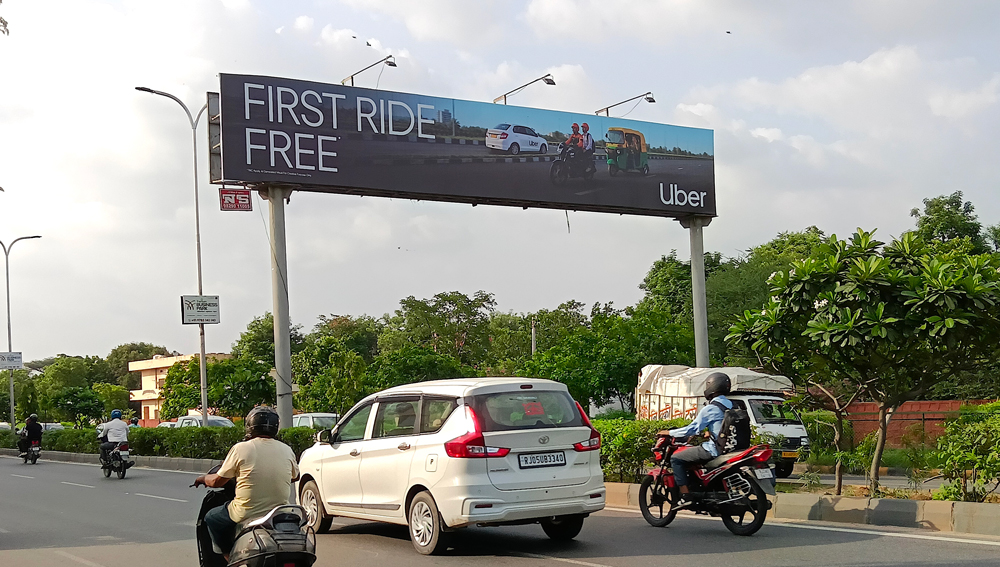
The scale of the campaign also brought considerable executional challenges. More than 4,500 units had to be deployed simultaneously across 25 cities, requiring coordination across media owners, printing, logistics, installation, monitoring and reporting.
According to Narhari, maintaining consistency was particularly important because of Uber’s global brand standards. “The biggest challenge was the sheer scale. Every market has a different ecosystem and different operational challenges, so coordinating media owners, printing, logistics, installation and monitoring across 25 cities required a very high level of consistency,” he said.
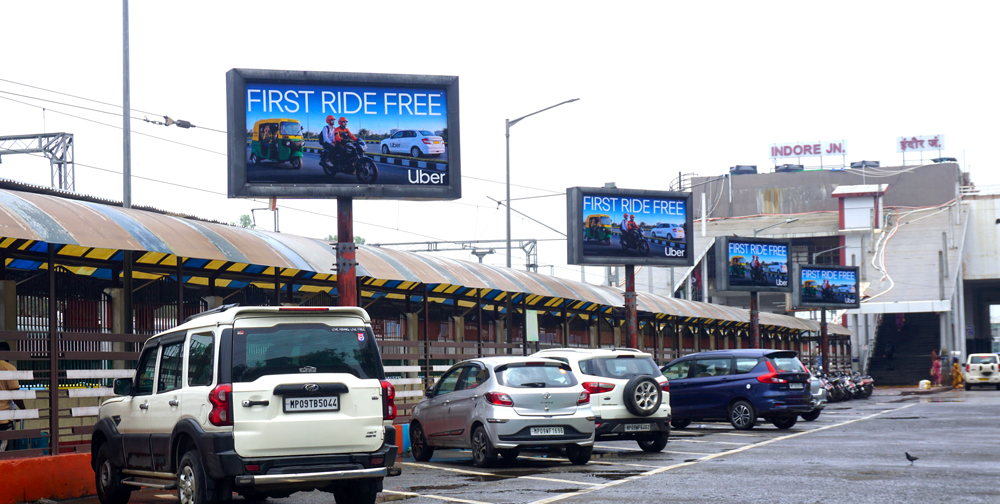
While the campaign is currently running as a month-long deployment, its impact has already begun extending beyond the physical OOH environment. Consumers and commuters have been sharing the ‘First Ride Free’ campaign organically across social media, creating an additional layer of visibility for the campaign.
For Uber, the campaign brings together scale, transit relevance and audience-led planning to make its offer visible across some of the most important commuter touchpoints in 25 cities. For Say It Loud Media, it also represents an exercise in making 4,500-plus individual media units work as one connected campaign, with precision guiding the scale rather than the other way around.