
Brand Insights
‘I see OOH as a primary pillar, not a secondary thought’
Aditya Modak, CFO & CMO at P N Gadgil and Sons explains why outdoor advertising remains a core pillar for the jewellery brand’s cultural relevance and market leadership.

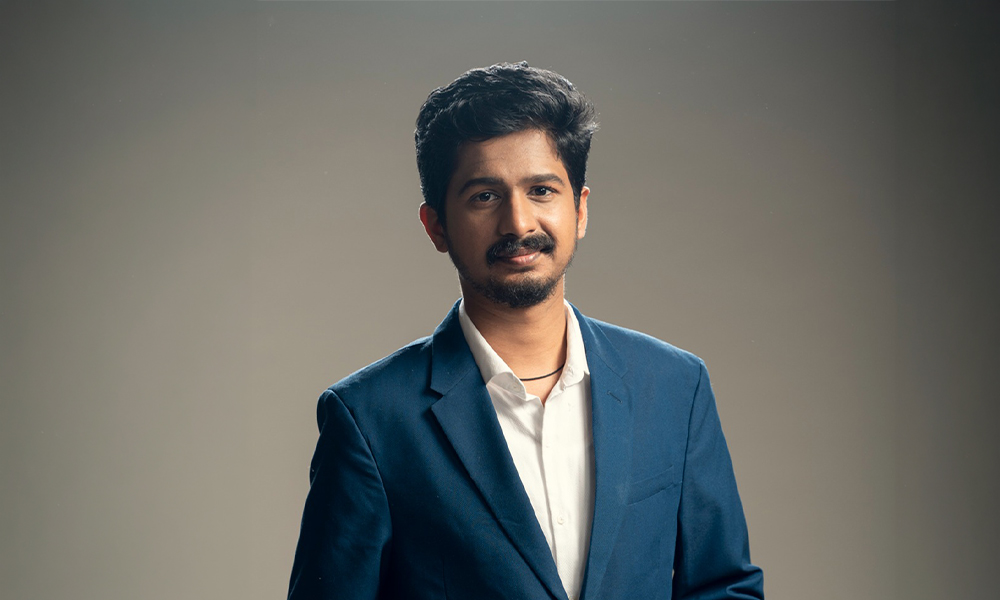
For regional brands with deep cultural roots, outdoor advertising often serves as more than just a visibility tool, it becomes a way to reinforce identity, trust, and community presence. In markets where tradition, heritage, and local relevance shape consumer behaviour, OOH plays a particularly important role in keeping brands visible within the everyday rhythms of the cities they serve.
For P N Gadgil and Sons, one of Maharashtra’s most well-known jewellery brands, outdoor advertising has long been central to its marketing strategy. From landmark hoardings to high-impact city placements, the brand has consistently used the medium to strengthen recall and stay embedded in the local landscape.
Aditya Modak, CFO & CMO at P N Gadgil and Sons, believes that OOH advertising allows the brand to maintain its regional identity while continuing to expand its reach.
OOH as a reflection of local identity
According to Aditya, the brand’s growth has always been rooted in its connection with the communities where it began. “We believe that staying relevant means staying local, honouring the traditions and families that first gave us a home,” Aditya says. “We started our journey on the busy streets of Maharashtra, and no matter how big we get or how far we want to go, we never want to lose that local flavour.”
He explains that outdoor advertising helps translate this identity into a physical presence within the city. “OOH advertising is the physical manifestation of that identity. When we place a massive hoarding at a historic junction or along a busy state highway, we aren’t just running an ad, we’re participating in the local landscape,” Aditya notes.
Unlike digital ads that disappear with a scroll, he believes billboards establish a sense of permanence and belonging. “A billboard stands its ground. It speaks the local language, celebrates regional festivals like Gudi Padwa with the right cultural nuance, and tells people we are right here with you in your neighbourhood,” he adds.
Building brand recall through physical visibility
For P N Gadgil and Sons, outdoor advertising has also been instrumental in building strong brand recall across its core markets.
Aditya describes OOH as the backbone of the brand’s equity. Long before digital marketing became central to brand strategies, the company focused heavily on maintaining strong physical visibility across cities. “OOH has honestly been the backbone of our brand equity since day one,” he says. “Long before we were navigating digital algorithms, we were obsessed with physical visibility.”
The brand treats outdoor media strategically, often positioning hoardings as directional cues for customers approaching its showrooms. “We think of our outdoor sites as ‘lighthouses’ for our stores,” Aditya explains. “By the time a customer reaches our showroom, they should have encountered our brand at least three times during their commute.”
This repetition creates what he describes as a subconscious mental map, positioning the brand as a natural destination for jewellery purchases. The format also allows the brand to highlight product craftsmanship in ways smaller digital formats cannot. “The scale of a billboard lets us showcase the intricate craftsmanship of our jewellery, the way light hits a Karigari piece, in a way a tiny phone screen never could,” he says.
A primary pillar in the marketing mix
For many brands, OOH functions as a supporting medium within a broader marketing mix. At P N Gadgil and Sons, however, the medium plays a far more central role. “I genuinely see OOH as a primary pillar, not a secondary thought,” Aditya states.
In the jewellery category, where purchases are often emotional and aspirational, he believes the scale and presence of outdoor media contribute to building confidence among consumers.
“A campaign doesn’t feel real until it hits the streets,” he says. “When customers see a brand on a large outdoor installation, it signals heritage, institutional strength and prestige.”
That perception, he adds, is particularly important for high-value purchases such as gold and diamond jewellery. “It transforms a standard promotion into a public announcement that demands attention,” Aditya explains.
The advantage of local understanding
Aditya also believes regional brands often have an advantage when it comes to understanding outdoor audiences. While national advertisers increasingly localise campaigns, he says regional players often approach the medium with sharper strategic intent. “Limited budgets force local brands to be more strategic. Every billboard has to count,” Aditya says.
For many regional companies, outdoor advertising serves as a primary brand-building tool rather than simply an additional channel within a larger campaign. “That intimate understanding of the community pulse is something a massive national campaign can’t easily manufacture,” he adds.
Driving store visits and purchase intent
While measuring the exact ROI of outdoor advertising can be difficult, Aditya says the impact is often visible through customer behaviour. “We constantly have customers walking into our showrooms saying they saw a necklace on a hoarding near the station or noticed a festive offer while commuting,” he notes.
These repeated visual cues create a sense of brand omnipresence that keeps the brand top-of-mind during purchase moments. “It closes the gap between brand awareness and the final decision to walk into the store,” Aditya says. “That last push is often what converts a browser into a buyer.”
The shift toward phygital OOH
Looking ahead, Aditya believes outdoor advertising will remain a central medium, but will increasingly evolve with digital capabilities. “The medium isn’t going anywhere, but it’s definitely getting a technological makeover,” he says.
He expects P N Gadgil and Sons to increasingly explore Digital Out-of-Home (DOOH) formats as part of a broader “phygital” approach. “With DOOH, messaging can adapt to the rhythm of the city,” Aditya explains. “You can show lightweight everyday jewellery during the morning rush and shift to bridal collections in the evening.”
For him, the future of outdoor advertising lies in combining the physical scale of traditional hoardings with the flexibility and intelligence of digital formats. “The goal is to retain that larger-than-life physical impact while sharpening it with technology,” Aditya says. “It’s about ensuring the brand speaks at the exact moment the commuter is looking up.”



Daily Newsletter
Subscribe to receive the latest OOH
industry updates

OOH + ROAS: Future Path or Just a Pipe Dream?

Ocean Outdoor partners with Cityz Media in Klépierre’s French shopping centres

Asian Footwears secures naming rights for NDLS platforms

Traya’s ‘Hair Truth Mirror’ shows men what their everyday mirrors don’t

M4G Talkies S2E2: Emanda Vaz of Embassy Group on brands, business & the AI question

Puma becomes PVMA for PV Sindhu

HOCCO’s Aamchi campaign brings mango tree to Ahmedabad

Blinkit in association with Kinetic India goes all Bollywood

Acclaimed Actor Manoj Joshi to deliver an inspirational address at OAC 2024

Zepto’s Fast 10 Minute Delivery Saves the Day for Game Night in Ahmedabad!

‘Let’s create an empathetic space for women’

‘It won’t just be a man’s world anymore’

‘We’re actively exploring acquisitions and working to increase our inventory’

A habit of success at Prakash Arts

‘OOH is an important channel to connect with corporate audiences’

Video Editor
Job Description: Editing videos of editorial interviews, in-house events, video podcasts, promotional videos and others based on team brief Planning...
Content Editor-Writer
Job Description: Editing daily news copies and magazine articles Writing industry research and interview based articles and client focused content...

Sales Manager (Amritsar, J&K, Chandigarh, Mumbai, Vadodara, Udaipur, U.P.)
Orango has been involved in creating, building, reviving and growing brands. Orango builds powerful connections with their customers & people...

Sales Executive
Established B2B Media and Events Group VJ Media Works is looking for sales executives
Digital Marketing/Social Media Executives
Established B2B Media and Events Group VJ Media Works is looking for the following: Digital Marketing/Social Media Executives Location: Mumbai/Bangalore...

Sales Manager – AdZ (Digital Advertising)
Estontec Group’s fast-growing adtech brand AdZ is hiring a Sales Manager to drive digital media sales and client growth. This...
Onboarding Specialist
Join Estontec Group’s transit media brand BrandonWheelz as an Onboarding Specialist, managing campaign execution, vendor coordination, and media planning across...

Operation Manager
Company Description: BajuGali an Advertisement Company is a leading firm specializing in advertising and marketing services. We provide innovative solutions...
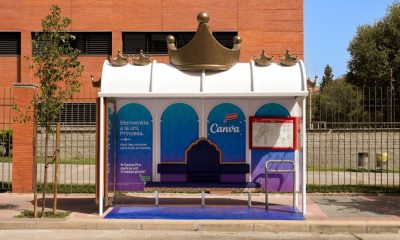

Canva gives Spain’s new students a royal welcome with ‘Welcome Princess’
As Princess Leonor, heir to the Spanish throne and eldest daughter of King Felipe VI and Queen Letizia, begins university,...
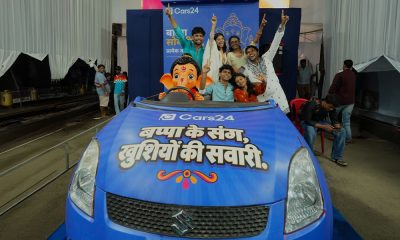

Cars24 drives Bappa Ki Savari into the heart of Ganesh Chaturthi
This Ganesh Chaturthi, Cars24 turned a car into more than a branded installation, bringing Bappa closer to devotees through an...
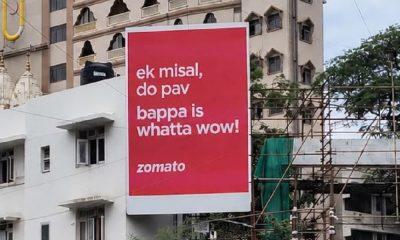

Zomato takes Bappa banter to Mumbai’s streets this Ganesh Chaturthi
This Ganesh Chaturthi, Zomato brings its signature food-led wit to Mumbai’s OOH landscape, turning familiar festive conversations, local food references...
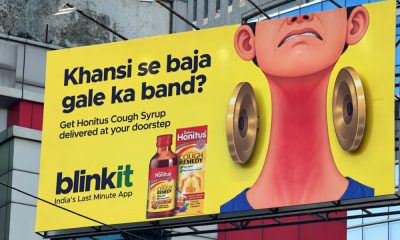

Honitus turns coughs into music across cities, links relief to Blinkit
Spotted across high-traffic locations in Delhi, Gurugram, and Mumbai
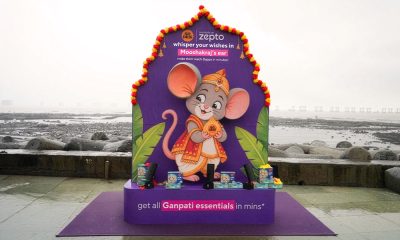

Zepto brings Bappa’s favourite messenger to the seafront
Spotted by the Mumbai seafront this Ganesh Chaturthi.
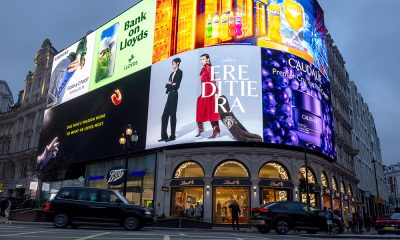

Landsec and Ocean Outdoor build on the cultural resonance of Piccadilly Lights
Changes to the screen's format come into effect from January 2027, 10 years after Piccadilly Lights relaunched following a nine-month...
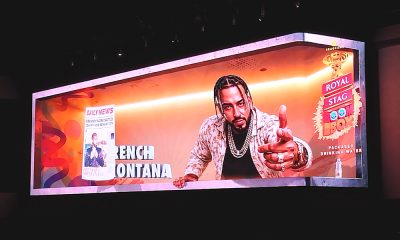

Royal Stag Boombox goes larger-than-life with anamorphic LED in Hyderabad
The campaign is conceptualised and executed by Coral Media
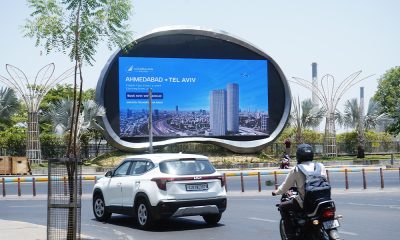

Times OOH Unveils ‘The Riviera’ in Ahmedabad
The screen is located at Sabarmati Riverfront on Ashram Road

Times OOH upgrades the Media Experience on Mumbai Metro Line 1
The move to 75-inch displays gives brand creatives significantly greater visual impact, while the enhanced brightness ensures vivid, true-to-life imagery...

Broadsign released 2026 programmatic DOOH trends report
Drawing on full-year 2025 and Q1 2026 internal transaction data, the report, surfaces useful signals about what today’s buyers value...
-
Campaigns
Honitus turns coughs into music across cities, links relief to Blinkit
-
 Contracts & Investments
Rajouri Garden metro station now goes by Ai+ NOVA
-
Campaigns
Zepto brings Bappa’s favourite messenger to the seafront
-
Creative Concepts
Cars24 drives Bappa Ki Savari into the heart of Ganesh Chaturthi