
Campaigns
When Glasgow’s real women became quiet icons on OOH
This campaign executed across Ocean Outdoor screens in Glasgow, UK, featured works by Scottish contemporary artist Gerard M Burns, who painted 15 women from across Glasgow under an exhibition he called Mother Glasgow.

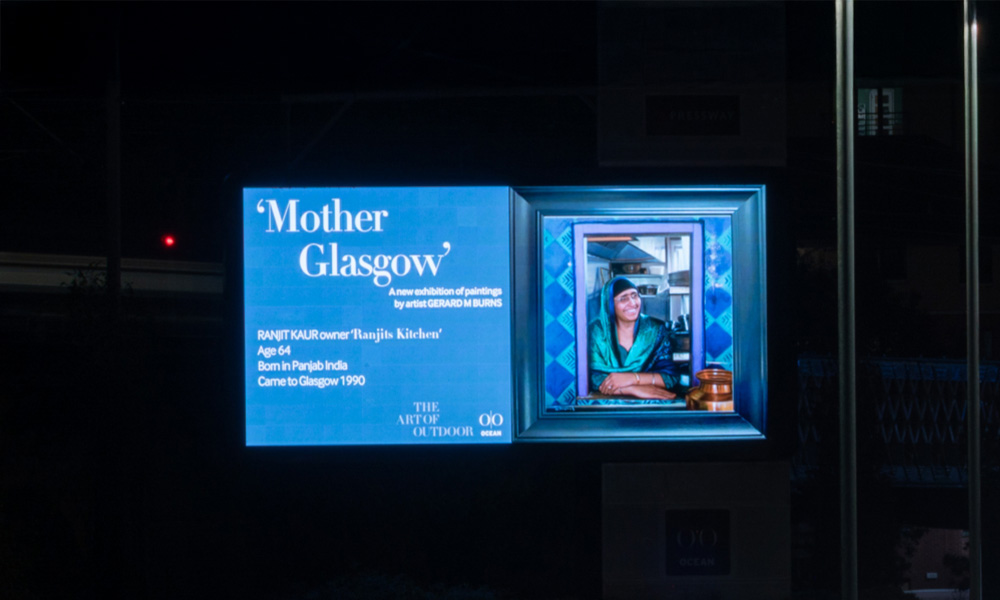
For the past five months, large-format portraits of women have been quietly appearing across Ocean Outdoor’s screens in Glasgow. No brand logo. No campaign tagline. Just striking, photorealistic oil paintings, and if you were walking past one on a Tuesday morning, coffee in hand, half-present, you would have had no idea what you were looking at or why it was there. You might have glanced up, seen a painted portrait staring back at you. Not an ad. Not a product. Just a face. And for a second, stopped.
That was entirely the point.
The works are by Scottish contemporary artist Gerard M Burns, who painted 15 women from across Glasgow under an exhibition he called Mother Glasgow, after the city’s unofficial anthem. Gerard wanted, in his own words, to tell the stories of the women shaping Glasgow today. The women come from all over, a violinist leading the Royal Scottish National Orchestra who moved from Japan, a nurse from Nigeria who arrived three years ago, an Iranian engineer, a Spanish language school owner with over 250 students, a Catholic nun running a hospice in Clydebank, a Chinese trade liaison at Glasgow Chamber of Commerce. Real people, real lives, painted in oils and put up on commercial screens like they belonged there.
And here is the thing they did. Gerard ran these portraits for five months without explaining them. No context, no countdown, no reveal. Just faces appearing across the city, in between the usual stream of ads and promotions, asking nothing of the people walking past. Most campaigns cannot resist telling you what to feel. This one just showed up and waited.
This campaign really stands out because of its simple, disarming act of putting a human face on a commercial screen and daring people to look at it properly. By the time the full gallery exhibition opened at The Glasgow Collective on International Women’s Day on March 8th, Glasgow had already been living with these women without knowing their names. That gap between seeing a face and knowing the story behind it is what made people actually want to show up.
It is a good reminder that sometimes the most interesting thing you can do with a big screen is not the flashiest. No anamorphic effects, no dynamic triggers, no QR codes. Just a painting, and enough faith in the audience to let it sit there and do its work.








Daily Newsletter
Subscribe to receive the latest OOH
industry updates

Rohit Chopra of Times OOH joins Gujarat Talks OOH panel on infrastructure-led growth

Kolonkojoyini uses Maa Durga installation to highlight stigma faced by trafficking survivors

Hocco brings its East India debut to Kolkata streets with a pujo-themed campaign

Mantra Ads joins Gujarat Talks OOH as Associate Sponsor

US study finds OOH delivers $7.97 in marginal profit ROI as DOOH adoption triples

Puma becomes PVMA for PV Sindhu

HOCCO’s Aamchi campaign brings mango tree to Ahmedabad

District uses Samay Raina’s signature shirt to announce his live show

Blinkit in association with Kinetic India goes all Bollywood

Acclaimed Actor Manoj Joshi to deliver an inspirational address at OAC 2024

‘Let’s create an empathetic space for women’

‘It won’t just be a man’s world anymore’

‘We’re actively exploring acquisitions and working to increase our inventory’

A habit of success at Prakash Arts

‘OOH is an important channel to connect with corporate audiences’

Video Editor
Job Description: Editing videos of editorial interviews, in-house events, video podcasts, promotional videos and others based on team brief Planning...
Content Editor-Writer
Job Description: Editing daily news copies and magazine articles Writing industry research and interview based articles and client focused content...


Sales Manager (Amritsar, J&K, Chandigarh, Mumbai, Vadodara, Udaipur, U.P.)
Orango has been involved in creating, building, reviving and growing brands. Orango builds powerful connections with their customers & people...

Sales Executive
Established B2B Media and Events Group VJ Media Works is looking for sales executives
Digital Marketing/Social Media Executives
Established B2B Media and Events Group VJ Media Works is looking for the following: Digital Marketing/Social Media Executives Location: Mumbai/Bangalore...

Sales Manager – AdZ (Digital Advertising)
Estontec Group’s fast-growing adtech brand AdZ is hiring a Sales Manager to drive digital media sales and client growth. This...
Onboarding Specialist
Join Estontec Group’s transit media brand BrandonWheelz as an Onboarding Specialist, managing campaign execution, vendor coordination, and media planning across...


Operation Manager
Company Description: BajuGali an Advertisement Company is a leading firm specializing in advertising and marketing services. We provide innovative solutions...
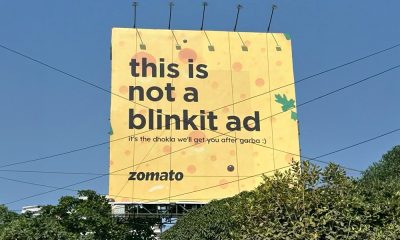

Zomato serves up a Garba-inspired OOH twist with a ‘not a Blinkit ad’ billboard
The billboard plays on Blinkit’s brand identity to promise a familiar Gujarati treat after Garba, using local food culture and...
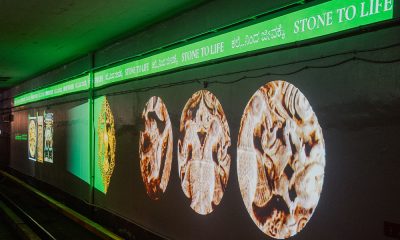

Signpost India turns Bengaluru Metro into a canvas for Karnataka’s cultural heritage
The 16,000 sq. ft. visual experience brings Karnataka’s mythical forms and cultural heritage to life through advanced 8K Japanese projection...


Paramount Pictures takes ‘Street Fighter’ from street signs to larger-than-life OOH stunts
From fight-inspired street signage to a billboard featuring a larger-than-life stunt, Paramount Pictures turns the streets into an extension of...
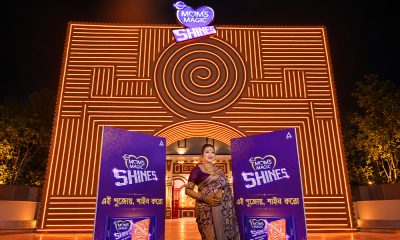

‘Sunfeast Mom’s Magic Shines’ lights up the festivity with ‘Ei Pujo, Shine Koro!
The brand transforms Harish Park into ‘Kolkata’s Shiniest Pujo Pandal’, celebrating the light, creativity and festive spirit of Kolkata’s Durga...
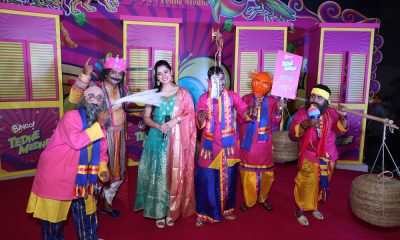

Bingo! Tedhe Medhe brings ‘Abol Tabol’ to life through an immersive Durga Puja experience
At Rajdanga Naba Uday Sangha in Kolkata, the brand blends Bengali literary nostalgia with playful installations, interactive games and digital...
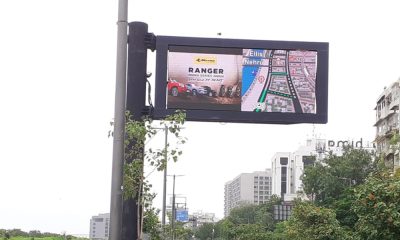

WOW Advertisement adds eight digital OOH screens across Ahmedabad and Surat
The expansion includes seven traffic LED screens across Ahmedabad and a 41 ft × 60 ft curved outdoor LED screen...
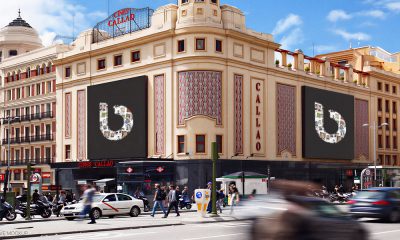

billups celebrates its anniversary by putting its people on billboard
The campaign is participating in fifteen locations across Asia, Europe and North America, including Belgrade, Amsterdam, Brussels, Berlin, Chicago. Portland,...
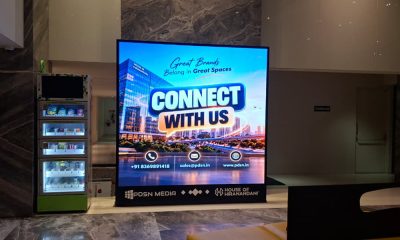

PDSN Media expands corporate DOOH network with new screens at Fulcrum
The new inventory comprises two 8×8 ft digital LED screens installed across Wing A and Wing B of the Mumbai...

Dubai Mall expands its DOOH network with 1,100 sqm of LED displays
Emaar Properties has reportedly deployed approximately 1,100 sq m of LED displays across indoor and outdoor areas of Dubai Mall,...


Broadsign bags contract with Context Networks for screen network in 14 US states
Through the collaboration, Context Networks is connecting eligible CPMN™ inventory to the Broadsign Platform, the company’s complete, reliable Ad Server...
-
Campaigns
Zomato serves up a Garba-inspired OOH twist with a ‘not a Blinkit ad’ billboard
-
Creative Concepts
Signpost India turns Bengaluru Metro into a canvas for Karnataka’s cultural heritage
-

 Contracts & Investments
TVS Motor appoints Dentsu for integrated media mandate
-
 Industry News
US study finds OOH delivers $7.97 in marginal profit ROI as DOOH adoption triples