
Insights
How Testing Matters: Go beyond spec sheet, define quality parameters
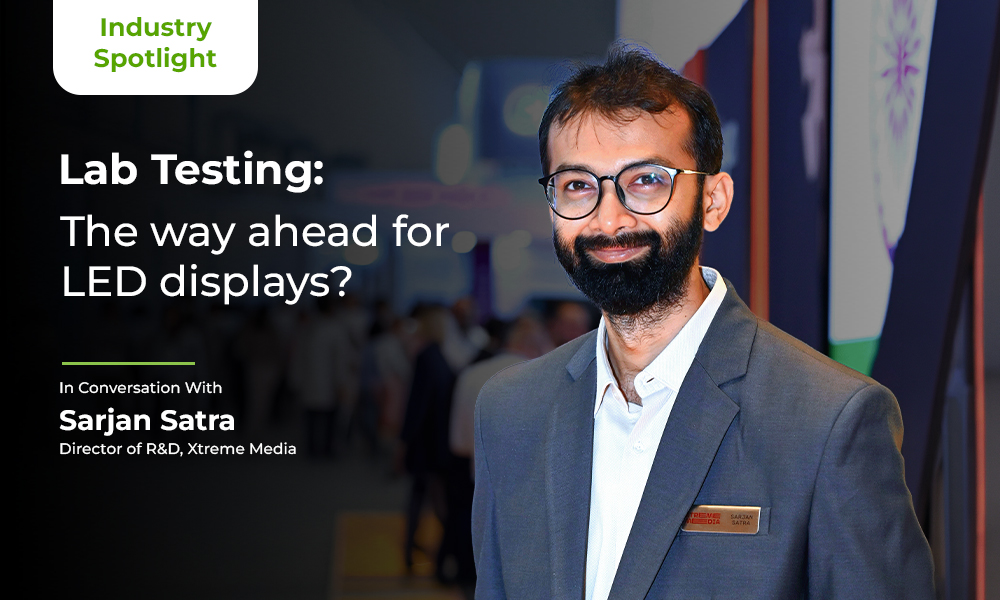
Media4Growth presents a new series ‘Lab Testing: The Way Ahead for LED Displays?’ looking at a simple question: should performance testing be mandatory for DOOH LED screens in India? We start the series by speaking to Sarjan Satra, Director of R&D at Xtreme Media.

Every LED screen sold in India needs to pass basic electrical safety checks, like any other electronic product. Beyond that, there is no requirement to test anything else. There’s no rule saying a screen’s brightness has to match what’s on its spec sheet. No rule saying the screen has to survive Indian heat, humidity or monsoon rain without breaking down. No rule around how much power it should use over its lifetime. This is simply how the category has grown so far, testing beyond safety is optional, and left entirely up to each manufacturer.
So what does “lab testing” actually mean for a DOOH screen? In simple terms, it’s checking a screen against a set of parameters before or during production, brightness, heat tolerance, weatherproofing, power consumption, electrical safety, and how long it lasts, to confirm that what’s promised matches what’s delivered. Some manufacturers do this seriously. Others don’t do it at all. There’s currently no standard forcing anyone either way.
This series is our attempt to understand how the industry itself sees this gap. We are speaking to manufacturers to find out what they test, how they test it, and whether they think India needs a common standard. We start with Sarjan Satra, R&D Head at Xtreme Media, one of the older players in India’s outdoor LED space.
What actually gets tested?
For outdoor screens, three things matter most, according to Sarjan Satra: brightness, how hot the screen gets when running at full output, and its IP rating (how well it’s sealed against dust and water). Alongside this come basic safety checks, short circuit risk, current leakage, and one number with long-term financial impact: power consumption. “Power consumption matters a lot, because it decides what the screen costs to run for years, not just what it costs to buy,” he says.
Two more technical parameters he mentions are power factor and harmonics. In simple terms, these tell you how much of the electricity a screen draws is actually turned into light, and how much is wasted. “It tells you how much of the power going in is actually being used to produce the image, and how much just leaks away,” he explains. None of these numbers usually appear on a typical spec sheet.
Why does testing matter?
“Honestly, most clients aren’t even aware of what quality parameters they should be asking about,” says Sarjan. His reasoning is simple: a spec sheet just doesn’t say enough. “A spec sheet only shares maybe 10% of the data, if that. The details that actually matter never make it onto paper, you only find them in the lab.”
Do buyers actually ask for test reports?
Sarjan estimates that fewer than one in ten clients currently ask for a test report before buying a screen, and that even brightness, the simplest number to check, often goes unverified. “Most clients won’t even test brightness. So it becomes very easy for anyone to claim their screen does 7,000 or 8,000 nits,” he says.
In his view, this is simply a reflection of how new the category still is; most buyers haven’t yet developed the habit of asking for proof, the way they might for other big purchases.
At Xtreme Media, most testing is done in-house, brightness and temperature measurement, power testing, high-voltage and leakage current checks, all inside their own facility. The test reports are given to clients free of cost whenever asked, and the company sometimes helps clients benchmark demo units directly against other suppliers before a purchase decision.
Only the more specialised international certifications, like CE or UL-linked EMC testing, are sent to outside, NABL-accredited labs, Sarjan estimates this is around 10-20% of total testing, with the rest done in-house. Every new product or design change goes through a full round of testing, and once a screen is in regular production, batches of around 500 to 1,000 cabinets are tested before shipping.
Could testing become a trust signal?
Asked if independent certification could help buyers compare screens more confidently, Sarjan says it could, but only if it comes from a genuinely reliable source. “As long as the report comes from an impartial, NABL-certified or genuinely reputed lab, it can absolutely become a quality badge,” he says. He also flags a practical concern: in India, it’s possible for a report to be issued from a smaller lab without proper testing actually taking place, so buyers would need to check the lab’s credibility, not just the report itself.
A quick note on certifications
A few certification names come up often in this conversation, so here’s what they mean in plain terms:
- CE – A mark required to sell electronic products in Europe. It confirms the product meets EU safety and electromagnetic compatibility rules.
- FCC – The US equivalent, confirming a product doesn’t cause harmful electromagnetic interference and meets safety norms there.
- UL / ETL – Independent US safety certifications, widely recognised globally, focused mainly on fire and electrical safety risk.
- BIS – India’s own safety certification body. The relevant standard for electronics here is IS 62368, which covers general electronic product safety.
- NABL – The Indian accreditation body that certifies whether a testing lab itself is competent and trustworthy to issue valid results.
Where these certifications fall short
All of the above certifications are built around one thing: electrical and fire safety, and electromagnetic compatibility (making sure a device doesn’t interfere with other electronics). None of them test or certify how bright a screen is, how efficiently it runs, or how it performs after two years outdoors in the heat. That’s a separate, unregulated space.
Sarjan explains that Xtreme Media designs its screens keeping these international certifications in mind, but says they only cover part of what actually matters for a DOOH screen. “These standards are really built around safety and EMC, electromagnetic compatibility,” he says. “The LED display industry is still young. It hasn’t matured the way something like television has, where the standards are clearly laid out.”
Because performance parameters like brightness, thermal behaviour, and long-term power efficiency aren’t covered by any of these certifications, Sarjan says manufacturers who want to test for them have to build their own internal process to do so. At Xtreme Media, he estimates that roughly half of what they test comes from following these safety-focused international frameworks, while the other half, the performance side, is based on the company’s own experience from years of outdoor installations.
Why doesn’t India have a testing standard yet?
Sarjan puts this down mainly to timing. “LED screens have only really taken off recently. Outdoor hoardings were actually banned in some parts of India not too long ago, you wouldn’t have seen any. It’s all happened very fast since then,” he says. In his view, the industry has simply grown faster than regulation or buyer awareness could keep up with. He expects this to change over time as more people become aware of the difference between good and poor quality screens.
He also feels the first move shouldn’t necessarily come from the government. “The major manufacturers need a common platform where they can agree on a shared standard. Once that exists, compliance gets a lot easier for everyone,” he says.
Should India build its own standard, or follow global ones?
Sarjan sees this as two separate questions. Safety, he says, is already reasonably covered by India’s BIS standard. What’s missing is performance, and that gap exists everywhere, not just in India. His suggestion is that any future Indian standard should go a step further than existing global ones, and include performance benchmarks like image quality, power efficiency and long-term running cost, alongside the usual safety requirements.
What would future standards need to cover?
Sarjan’s list of essentials stays consistent through the conversation: brightness, thermal performance, IP rating, power consumption, power factor, harmonics, and basic electrical safety checks. He imagines a system where larger manufacturers self-certify using their own labs, and smaller manufacturers without that infrastructure rely on accredited third-party labs instead.
On who should enforce this, his view is that it should mostly rest with buyers rather than a regulator. “Compliance should sit with the clients themselves. It’s very hard for any regulatory body to actually enforce something like this, we’re not talking about a law, just good practice that benefits the customer,” he says. His suggestion is that buyers, or their representatives, should be able to see key tests happen in person, especially brightness and power, rather than relying only on paperwork.
Whether that approach works at scale, across a market with hundreds of manufacturers and importers of very different sizes, is a question this series will keep exploring in the instalments ahead.








Daily Newsletter
Subscribe to receive the latest OOH
industry updates

Ahmedabad’s OOH market faces a supply crunch amid rising demand

Bingo! Tedhe Medhe brings ‘Abol Tabol’ to life through an immersive Durga Puja experience

Union Mutual Fund takes investor awareness campaign ‘Tukka Nahi, Tareeka Chahiye’ to Mumbai Metro

Cleartrip takes travel deals to the streets with ‘Chhutti Ka Thela’

M4G Talkies S2E3: Prasanna Rai of Wipro on brand building, consumer insights and the future of marketing

Puma becomes PVMA for PV Sindhu

HOCCO’s Aamchi campaign brings mango tree to Ahmedabad

District uses Samay Raina’s signature shirt to announce his live show

Blinkit in association with Kinetic India goes all Bollywood

Acclaimed Actor Manoj Joshi to deliver an inspirational address at OAC 2024

‘Let’s create an empathetic space for women’

‘It won’t just be a man’s world anymore’

‘We’re actively exploring acquisitions and working to increase our inventory’

A habit of success at Prakash Arts

‘OOH is an important channel to connect with corporate audiences’


Video Editor
Job Description: Editing videos of editorial interviews, in-house events, video podcasts, promotional videos and others based on team brief Planning...
Content Editor-Writer
Job Description: Editing daily news copies and magazine articles Writing industry research and interview based articles and client focused content...

Sales Manager (Amritsar, J&K, Chandigarh, Mumbai, Vadodara, Udaipur, U.P.)
Orango has been involved in creating, building, reviving and growing brands. Orango builds powerful connections with their customers & people...


Sales Executive
Established B2B Media and Events Group VJ Media Works is looking for sales executives
Digital Marketing/Social Media Executives
Established B2B Media and Events Group VJ Media Works is looking for the following: Digital Marketing/Social Media Executives Location: Mumbai/Bangalore...


Sales Manager – AdZ (Digital Advertising)
Estontec Group’s fast-growing adtech brand AdZ is hiring a Sales Manager to drive digital media sales and client growth. This...
Onboarding Specialist
Join Estontec Group’s transit media brand BrandonWheelz as an Onboarding Specialist, managing campaign execution, vendor coordination, and media planning across...


Operation Manager
Company Description: BajuGali an Advertisement Company is a leading firm specializing in advertising and marketing services. We provide innovative solutions...


Nike uses hyper-local OOH messages to motivate runners at the Chicago Marathon
Created with billups, the campaign places motivational messages along the marathon route, turning city billboards into mile-by-mile encouragement for runners.
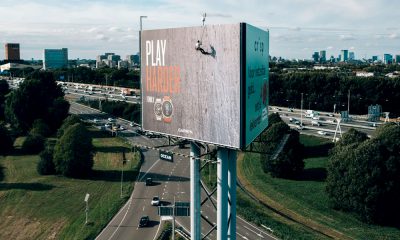

Garmin Nederland turns a billboard into a climbing experience with ‘Play Harder’
The campaign was executed by Capital Sports.
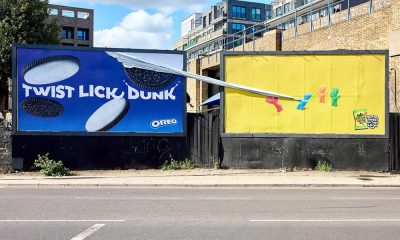

Sour Patch Kids takes a playful swipe at Oreo
The campaign was executed across the UK by global creative agency VCCP.
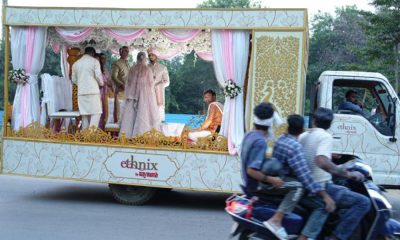

Ethnix by Raymond brings a wedding to Gurgaon’s streets with ‘Mandap on Wheels’
The activation taps into the wedding season, a key occasion for ethnic wear, by placing the brand within a live...
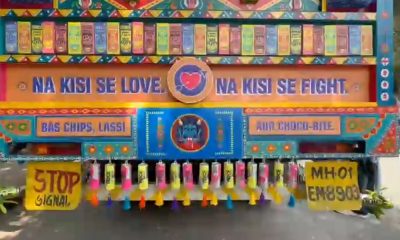

Noice turns a truck into a maximalist moving OOH experience
The campaign is executed by MOMS Outdoor
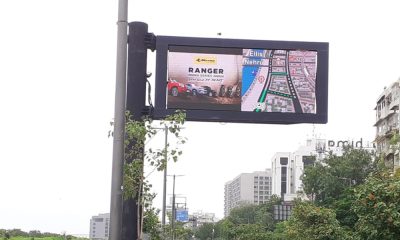

WOW Advertisement adds eight digital OOH screens across Ahmedabad and Surat
The expansion includes seven traffic LED screens across Ahmedabad and a 41 ft × 60 ft curved outdoor LED screen...


billups celebrates its anniversary by putting its people on billboard
The campaign is participating in fifteen locations across Asia, Europe and North America, including Belgrade, Amsterdam, Brussels, Berlin, Chicago. Portland,...
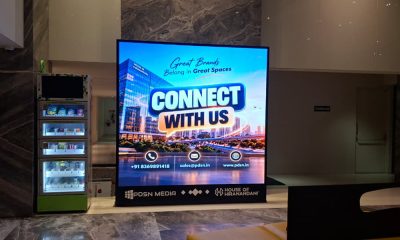

PDSN Media expands corporate DOOH network with new screens at Fulcrum
The new inventory comprises two 8×8 ft digital LED screens installed across Wing A and Wing B of the Mumbai...
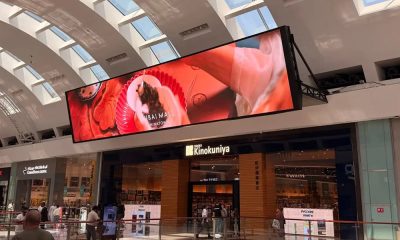

Dubai Mall expands its DOOH network with 1,100 sqm of LED displays
Emaar Properties has reportedly deployed approximately 1,100 sq m of LED displays across indoor and outdoor areas of Dubai Mall,...

Broadsign bags contract with Context Networks for screen network in 14 US states
Through the collaboration, Context Networks is connecting eligible CPMN™ inventory to the Broadsign Platform, the company’s complete, reliable Ad Server...
-
Creative Concepts
Noice turns a truck into a maximalist moving OOH experience
-
Campaigns
Ethnix by Raymond brings a wedding to Gurgaon’s streets with ‘Mandap on Wheels’
-
Digital Network
WOW Advertisement adds eight digital OOH screens across Ahmedabad and Surat
-
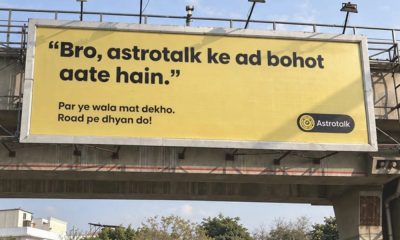
 Campaigns
Astrotalk turns its most common roast into an OOH campaign