
International Events
From Mongolia to the main stage: ADFEST 2026 Days 2 and 3 in review
From a sharp reckoning with award culture to an unlikely pizza story from the Mongolian steppe, the final two days of ADFEST 2026 in Pattaya covered ground that was by turns philosophical, practical, and genuinely surprising.

ADFEST 2026 wrapped up its three-day run at the Pattaya Exhibition and Convention Hall on March 21, having brought together over 770 delegates from 56 cities under the festival’s Human+ theme. The final two days of the festival kept the main stage and breakout spaces busy with sessions that, despite covering wildly different ground, kept circling back to the same underlying tension: in an industry being reshaped by technology at speed, what is the distinctly human contribution that cannot be automated, optimised, or replaced? The answers that came back from the stage were varied, but consistent in their conviction that the work worth making is the work that reaches real people, in real culture, with real feeling.
Day 2
Are we making work for the world, or for ourselves?
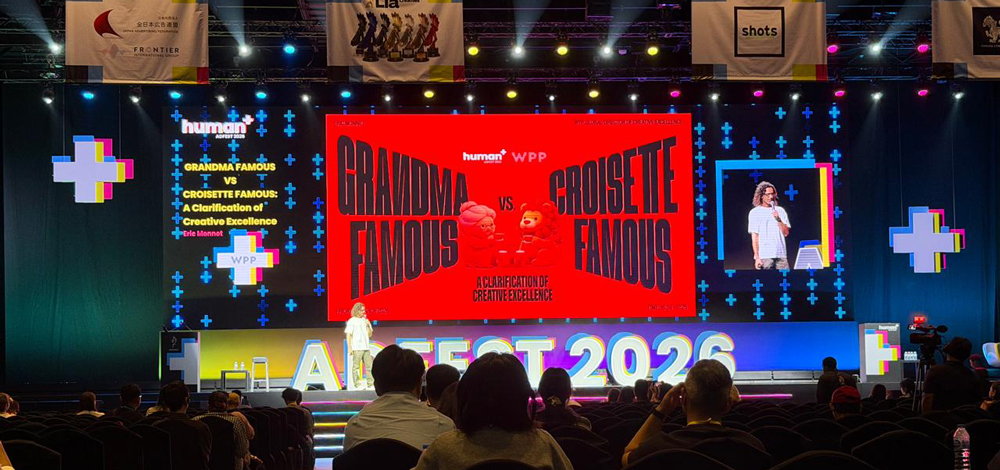
The question that has quietly unsettled the advertising industry for years was brought into full view on Day 2 by Eric Monnet of WPP, whose session “Grandma Famous vs Croisette Famous: A Clarification of Creative Excellence” was perhaps the most direct conversation the main stage had all festival. The premise was simple but uncomfortable: the industry has built a growing and dangerous gap between the work it celebrates and the work that actually matters to real people, and a significant part of the problem is work that is made not for audiences or clients, but purely to win awards. Work that was never truly run. Work that had no real brief, no real budget, and no real impact. Eric’s argument was that when the industry starts rewarding this kind of work, it loses the credibility it cannot afford to lose.
To make his case, he reached for some of the most beloved campaigns in advertising history.
The M&M’s characters, thirty years old, never won a major award until the year Mars tried to retire them. Dove’s Real Beauty, now a $7.5 billion platform that changed how the entire beauty industry speaks, built over twenty years of consistent cultural conviction. Coca-Cola’s Coke Studio India, which used music to bring endangered regional languages back into mainstream conversation, and produced the first non-Hindi, non-English song to top India’s charts. None of these campaigns were made for award shows. All of them won in culture first, and the trophies followed. That, Eric argued, is the correct order of things.
“When you are winning in culture, you are being undeniable,” Eric said. He used the term ‘grandma famous’ to describe work that anyone, a grandmother, a child, a stranger with no knowledge of advertising, would recognise and feel something about. Croisette famous, on the other hand, is work that impresses the jury room and nobody else. The session ended on a note that was less inspirational and more warning. “The people who got fired last year are the people who had to remove work from their portfolio. They didn’t know they were crossing the line until it was too late.” The industry’s credibility, he argued, is a collective responsibility, and the habit of rewarding work that is not real is eroding it from the inside.
Creativity does not happen despite constraints. It happens because of them.
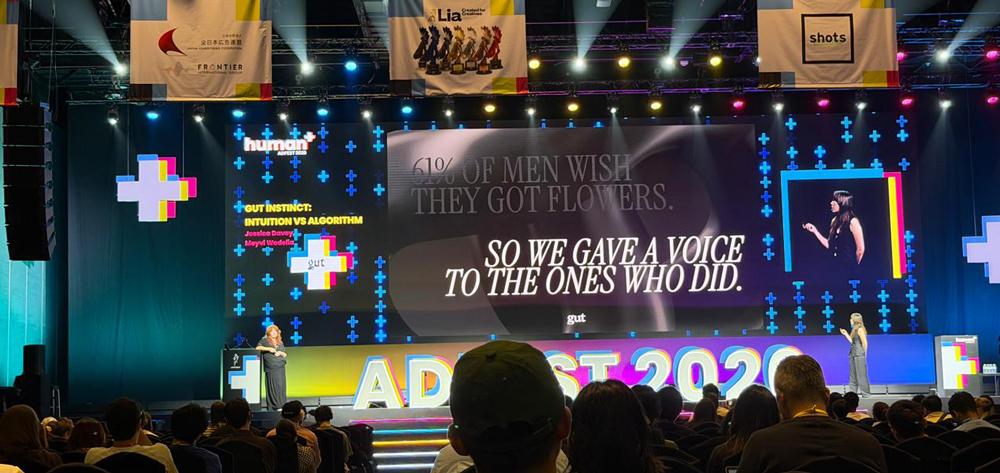
Borders, visible and invisible, were the subject of the session by Jessica Davey, Managing Director Asia, and Meyvi Wedelia, Creative Director of GUT Singapore. Titled “GUT Instinct: Intuition vs Algorithm”, the session was an argument for creative instinct over optimised thinking, drawn from real experience working across cultures, brands, and regulatory realities that do not always make room for the kind of work that wins.
Jessica drew on campaigns for Samsung and the BTS show, staged at Sungnyemun, South Korea’s National Treasure No. 1, as examples of work that found its power not by avoiding constraints but by going deep into them. The insight was one worth sitting with: that the most genuinely creative moments tend to happen precisely where multiple constraints intersect, not where there is unlimited freedom. “Deeply creative happens at the intersection of multiple constraints,” Jessica said.
The session closed on a thought that felt less like a conclusion and more like a personal credo. “We don’t control the borders, but we can control how we respond to them. We are so close to the borders, respecting the product, respecting the audience and the human, and we drive the real business. That’s why we are here.”
Day 3
What a pizza brand in Mongolia can teach the world about cultural patience
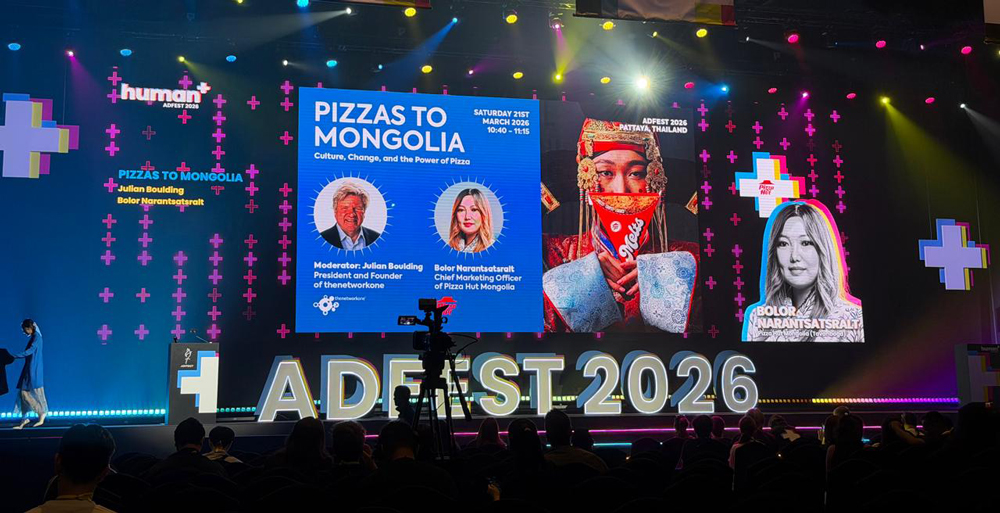
Julian Boulding, Founder of thenetworkone, and Bolor Narantsatsralt, Chief Marketing Officer of Pizza Hut Mongolia (Tavanbogd), took the stage on Day 3 for a session that was ostensibly about a fast food franchise in a landlocked country between China and Russia, and turned out to be one of the more illuminating talks of the entire festival.
Bolor’s story began with context most of the room had never considered. Mongolia, closed to western culture until 1990, had no exposure to pizza until people saw it on television. The first time many Mongolians encountered the concept was through Home Alone, and because pizza is round, they immediately connected it to Gambir, a traditional Mongolian fried dough snack with the same shape. That was the beginning of the relationship. Pizza Hut entered the market in 2014, and today runs 31 stores, holding the top position among global franchises in Mongolia by both market share and brand awareness.
Three campaign stories illustrated how the brand has grown with its audience. A simple colour change, switching a struggling individual meal product to pink, drove a 110% increase in daily sales. A K-pop inspired black dough pizza sold out an entire month ahead of schedule. And a Gen Z communication strategy built entirely around animation drove some of the brand’s highest social engagement. “If you want Gen Z to listen, you must talk with their language,” Bolor said.
Julian used the wider session to make a point about the industry’s direction. As large tech companies control more and more of the screens through which all communication is mediated, he argued, the independent perspective, the one that still asks what a real human being actually feels, becomes more important, not less. “Everything is behind the screen.
What we lack is the feeling of what is a real person, what is a real personality.”
Stop planning. Start shipping.
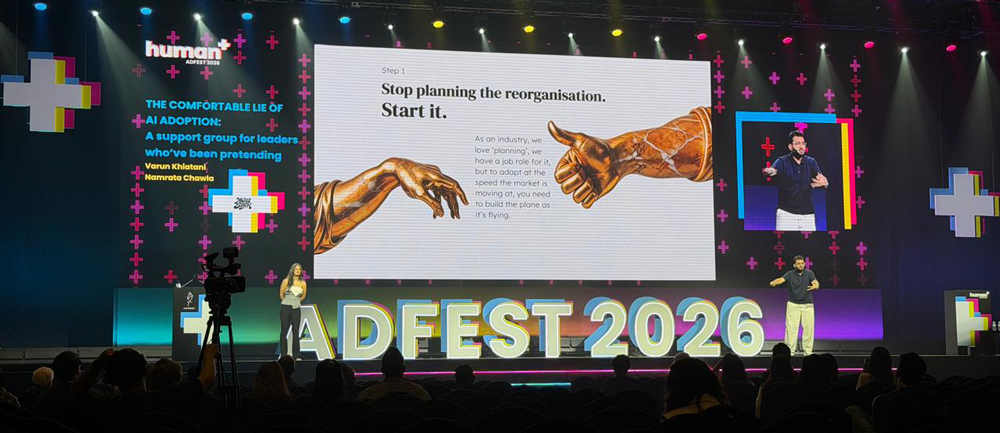
Varun Khiatani, Co-Founder and AI Specialist at mktgstack Bengaluru, and Namrata Chawla, Co-Founder and Content Creator at mktgstack Mumbai, came to Day 3 with a session titled
“The Comfortable Lie of AI Adoption: A Support Group for Leaders Who’ve Been Pretending”, and the title did not oversell the candour of what followed.
The session’s central argument was that most organisations are not actually adopting AI.
They are planning to adopt AI, talking about adopting AI, and building frameworks for eventually adopting AI, while the actual work of building with it is being done quietly, in the background, by a small number of people who nobody is paying attention to. Varun called these people operators, as distinct from advocates, the vocal AI enthusiasts who talk about what the technology could do, but are not necessarily doing anything with it. His advice was to go find the operators, give them a project, and get out of the way.
The structural prescription he laid out was four steps: stop over-planning, find your operators, remove one approval layer, and let AI fluency determine who leads a project, not tenure. The approval layer point was illustrated with a story that was almost comically specific: his own turning point came when someone removed the friction of having to get a one-time password from finance to pay for a software subscription. “Once that layer was gone, I had built two products and shipped.” The room laughed, but the point was serious.
“Your best, fastest employee is only as fast as your slowest approval,” Varun said.
He closed with a reminder of what it felt like to be junior in this industry, the frustration of waiting for permission to execute an idea. “None of us joined this industry in order to wait For approval. For $20 a month, you never have to wait for permission again. You can just build and ship, and if it doesn’t work, you can build and ship again.”
YouTube is not a platform. It is where culture lives.
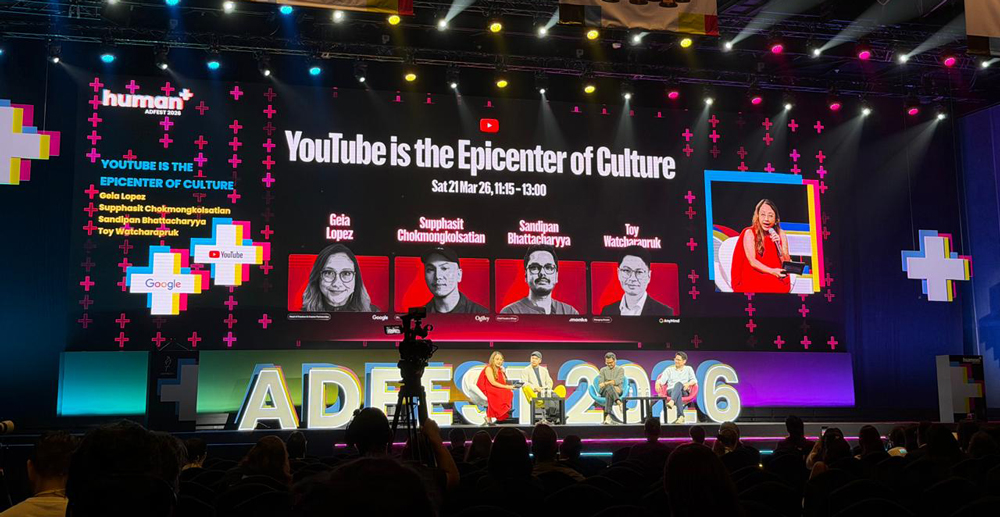
The question of what YouTube actually is, video platform, entertainment network, cultural infrastructure, was the subject of the session by Geia Lopez, Creative and Creator Partnerships Lead at Google Southeast Asia, joined by a panel featuring Supphasit of Ogilvy Thailand, Sandipan Bhattacharyya of Monks, and Toy Watcharapruk of AnyMind Group.
Geia’s framing was clear from the start: YouTube is not where brands go to run ads. It is where culture is made, extended, and owned by audiences. The Dutchie yogurt campaign, which won a Grand Prix at the YouTube Works Awards and became the most watched campaign in the brand’s history, was the session’s central case study. Supphasit walked through how the team found what he called a cultural tension: Gen Z in Thailand had become obsessed with health and beauty routines, spending heavily on supplements and superfoods, but saw the digestive benefit of a yogurt brand as boring and generic. The insight was that all those supplements were worthless if your gut could not absorb them.
The campaign shifted Dutchie’s entire communication from digestive benefit to absorption benefit, delivered through a hilariously entertaining five-minute short film. “You cannot preach to Gen Z, you have to entertain them into learning,” Supphasit said.
Sandipan reached for an unusual analogy to describe what YouTube makes possible creatively. Jean-Luc Godard started the French New Wave because, having never been to film school, he did not know the rules, so he ignored them, introduced handheld shots and jump cuts, and changed cinema forever. “I would call YouTube the Jean-Luc Godard of the modern day,” Sandy said. “Just because something has been done a certain way in a category doesn’t mean we have to follow it.”
The session also gave the stage to Young Lotus participants who had built campaign ideas in 24 hours using AI tools. The standout concept was Watch Like Me, a proposed YouTube feature that would let users temporarily experience someone else’s algorithm, built on the insight that Thai Gen Z is intensely curious about the inner lives of the people they admire.
“From now on, they’re not just going to ask for your Instagram. They’re going to ask: can we watch like you?” the team said.
The canvas has never been wider
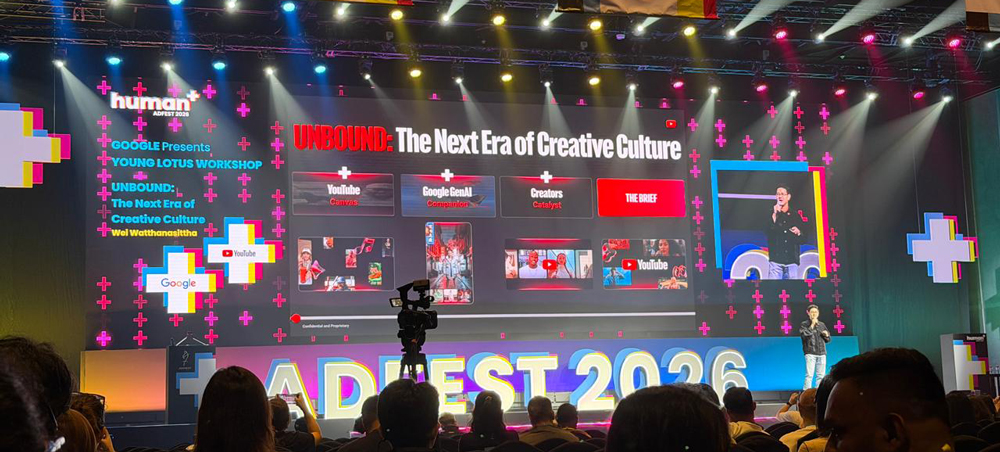
Wei Watthanasittha, Creative Partnership Lead at Google Southeast Asia, brought Day 3 to a close with “UNBOUND: The Next Era of Creative Culture”, a session that looked at what AI tools like VO3 are doing to the creative landscape, and arrived at an optimistic answer. The argument was not that AI replaces creative thinking, but that it dramatically expands who gets to participate in it.
The creator economy, now twenty years into YouTube’s existence, is producing a new class of storytellers who are also employers, studio heads, and cultural forces in their own right. The session framed this not as a disruption to be managed but as an expansion to be embraced, a canvas, as Wei put it, that has never been wider.


Daily Newsletter
Subscribe to receive the latest OOH
industry updates

When OOH starts with the idea, not the inventory

Flipkart Minutes stretches aarti lyrics across OOH this Ganpati season

Havells adds a 3D festive twist to OOH this Ganpati season

Ownly brings ‘Mooshak on Wheels’ to Hyderabad this Ganesh Chaturthi

AAP-GFP takes its electoral message to Goa’s OOH landscape

Puma becomes PVMA for PV Sindhu

HOCCO’s Aamchi campaign brings mango tree to Ahmedabad

Blinkit in association with Kinetic India goes all Bollywood

Acclaimed Actor Manoj Joshi to deliver an inspirational address at OAC 2024

Zepto’s Fast 10 Minute Delivery Saves the Day for Game Night in Ahmedabad!

‘Let’s create an empathetic space for women’

‘It won’t just be a man’s world anymore’

‘We’re actively exploring acquisitions and working to increase our inventory’

A habit of success at Prakash Arts

‘OOH is an important channel to connect with corporate audiences’

Video Editor
Job Description: Editing videos of editorial interviews, in-house events, video podcasts, promotional videos and others based on team brief Planning...
Content Editor-Writer
Job Description: Editing daily news copies and magazine articles Writing industry research and interview based articles and client focused content...


Sales Manager (Amritsar, J&K, Chandigarh, Mumbai, Vadodara, Udaipur, U.P.)
Orango has been involved in creating, building, reviving and growing brands. Orango builds powerful connections with their customers & people...

Sales Executive
Established B2B Media and Events Group VJ Media Works is looking for sales executives
Digital Marketing/Social Media Executives
Established B2B Media and Events Group VJ Media Works is looking for the following: Digital Marketing/Social Media Executives Location: Mumbai/Bangalore...

Sales Manager – AdZ (Digital Advertising)
Estontec Group’s fast-growing adtech brand AdZ is hiring a Sales Manager to drive digital media sales and client growth. This...
Onboarding Specialist
Join Estontec Group’s transit media brand BrandonWheelz as an Onboarding Specialist, managing campaign execution, vendor coordination, and media planning across...


Operation Manager
Company Description: BajuGali an Advertisement Company is a leading firm specializing in advertising and marketing services. We provide innovative solutions...

bigbasket’s Modak Meter gets Mumbai’s volume up for Ganpati Bappa
The activation was conceptualised by Bare Bones Collective and executed by MOMS Outdoor

Traya’s ‘Hair Truth Mirror’ shows men what their everyday mirrors don’t
The activation is live at Inorbit Mall, Malad until 26th September

Canva gives Spain’s new students a royal welcome with ‘Welcome Princess’
As Princess Leonor, heir to the Spanish throne and eldest daughter of King Felipe VI and Queen Letizia, begins university,...

Cars24 drives Bappa Ki Savari into the heart of Ganesh Chaturthi
This Ganesh Chaturthi, Cars24 turned a car into more than a branded installation, bringing Bappa closer to devotees through an...

Zomato takes Bappa banter to Mumbai’s streets this Ganesh Chaturthi
This Ganesh Chaturthi, Zomato brings its signature food-led wit to Mumbai’s OOH landscape, turning familiar festive conversations, local food references...


Landsec and Ocean Outdoor build on the cultural resonance of Piccadilly Lights
Changes to the screen's format come into effect from January 2027, 10 years after Piccadilly Lights relaunched following a nine-month...

Royal Stag Boombox goes larger-than-life with anamorphic LED in Hyderabad
The campaign is conceptualised and executed by Coral Media

Times OOH Unveils ‘The Riviera’ in Ahmedabad
The screen is located at Sabarmati Riverfront on Ashram Road


Times OOH upgrades the Media Experience on Mumbai Metro Line 1
The move to 75-inch displays gives brand creatives significantly greater visual impact, while the enhanced brightness ensures vivid, true-to-life imagery...

Broadsign released 2026 programmatic DOOH trends report
Drawing on full-year 2025 and Q1 2026 internal transaction data, the report, surfaces useful signals about what today’s buyers value...
-

 Campaigns
Honitus turns coughs into music across cities, links relief to Blinkit
-

 Contracts & Investments
Rajouri Garden metro station now goes by Ai+ NOVA
-
Creative Concepts
Cars24 drives Bappa Ki Savari into the heart of Ganesh Chaturthi
-
Campaigns
Canva gives Spain’s new students a royal welcome with ‘Welcome Princess’