
Insights
Why Audience Measurement is the foundation & confidence is the outcome
Introducing OOH Thought Leadership, a new M4G column series bringing sharp perspectives and informed viewpoints from the experts shaping the OOH industry. To open the series, Michael Steinberg, strategic advisor to media owners, agencies and technology companies, examines the next chapter of audience measurement, and why the real value of data lies in the confidence it gives the industry to invest, optimise and grow.


No two out-of-home markets are exactly alike. India, for example, is one of the world’s most transit-centric OOH markets, while markets across Southeast Asia each have their own unique mix of roadside, transit, retail and place-based media. Data availability, measurement methodologies and market maturity also vary from country to country.
Yet despite those differences, every advertiser is ultimately trying to answer the same question: Can I invest in out-of-home with confidence?
That’s why I believe the industry has been asking the wrong question. For years we’ve asked, “How do we measure OOH?” The better question is, “How do we use measurement to build confidence in OOH as an advertising investment?”
Audience measurement is not the objective. It is the foundation. Its purpose isn’t simply to report how many people had the opportunity to see an advertisement; it’s to give marketers, agencies, media owners and technology providers the confidence to act: where to invest and how to improve campaign performance.
The value of audience measurement isn’t found in the numbers it produces. It’s found in the assurance those numbers create and the confidence they provide to make better investment decisions, leading to greater investment in the channel over time.
Moving Beyond the Myths
As the industry works toward common audience measurement standards, several misconceptions continue to slow progress. The first is that a common measurement currency requires every market to adopt the same technology or methodology. It doesn’t.
What matters most isn’t identical technology. It is comparable definitions, transparent methodologies and reporting that advertisers can trust. A common measurement currency isn’t about limiting innovation. It’s about reducing friction, increasing confidence and making OOH easier to buy and easier to justify alongside every other advertising channel.
Another misconception is that markets must wait for perfect measurement before they can demonstrate value. Well, the pursuit of perfection should never delay progress.
Reliable audience measurement can already help advertisers understand campaign delivery, compare inventory and make more confident investment decisions. As additional data sources and measurement capabilities mature, those insights will naturally become even more powerful.
Perhaps the biggest misconception is that audience measurement alone defines campaign success. Audience measurement actually answers an essential question: Who had the opportunity to see the advertising?
It is one part of a broader measurement ecosystem that may eventually include brand lift, visitation, sales impact or other business outcomes as market capabilities evolve. But without trusted audience measurement, those higher-order analyses become significantly more difficult to perform in a way that marketers, agencies and media owners can trust.
From reporting to commercial intelligence
The next evolution for OOH isn’t simply producing more measurement. It’s producing more useful measurement. The industry’s greatest opportunity is to transform audience data from a reporting exercise into commercial intelligence.
Imagine a national advertiser evaluating hundreds of OOH assets across multiple cities. The value of audience measurement isn’t simply understanding how many impressions a campaign is expected to deliver. It’s transforming those audience insights into commercial intelligence by revealing which environments consistently reach the intended audience, which inventory performs most effectively, and where future investment is likely to create the greatest value.
Measurement has now become more than validation. It has become optimization. That’s where measurement begins creating commercial value.
Shared Responsibility
Building greater trust in OOH requires every stakeholder to play a role.
– Brands should use audience measurement to improve future investment decisions, not simply validate past campaigns.
– Agencies create the greatest value when measurement extends beyond planning to campaign optimization and the audience insights that shape future investment decisions.
– Media owners build trust by embracing transparent, independently governed measurement that strengthens confidence across the marketplace.
– Technology providers should be judged less by the volume of data they generate and more by how effectively they transform that data into practical business intelligence.
– Industry bodies, including organizations such as the World Out of Home Organization (WOO) and national or regional associations, should continue bringing stakeholders together around common standards and transparent governance while allowing individual markets to evolve according to their own needs and level of maturity.
Every market will continue to evolve differently. That’s healthy. There is no single path to measurement maturity, but every market should share the same commitment: making audience data more transparent and more actionable.
Ultimately, this isn’t about creating better measurement for its own sake. It’s about making OOH easier to trust, easier to buy and easier to justify alongside every other advertising channel.
The future of audience measurement won’t be defined by how much data we collect. It will be defined by the confidence that data creates: the confidence to invest, to optimize and ultimately to grow.












Daily Newsletter
Subscribe to receive the latest OOH
industry updates

Xtreme Media installs Earth Series LED displays for Ronak Advertising at Vashi toll plaza

Sitemax Media LLP joins Gujarat Talks OOH as Associate Sponsor

WOW Advertisement adds eight digital OOH screens across Ahmedabad and Surat

Garmin Nederland turns a billboard into a climbing experience with ‘Play Harder’

Sour Patch Kids takes a playful swipe at Oreo

Puma becomes PVMA for PV Sindhu

HOCCO’s Aamchi campaign brings mango tree to Ahmedabad

District uses Samay Raina’s signature shirt to announce his live show

Blinkit in association with Kinetic India goes all Bollywood

Acclaimed Actor Manoj Joshi to deliver an inspirational address at OAC 2024

‘Let’s create an empathetic space for women’

‘It won’t just be a man’s world anymore’

‘We’re actively exploring acquisitions and working to increase our inventory’

A habit of success at Prakash Arts

‘OOH is an important channel to connect with corporate audiences’


Video Editor
Job Description: Editing videos of editorial interviews, in-house events, video podcasts, promotional videos and others based on team brief Planning...
Content Editor-Writer
Job Description: Editing daily news copies and magazine articles Writing industry research and interview based articles and client focused content...


Sales Manager (Amritsar, J&K, Chandigarh, Mumbai, Vadodara, Udaipur, U.P.)
Orango has been involved in creating, building, reviving and growing brands. Orango builds powerful connections with their customers & people...


Sales Executive
Established B2B Media and Events Group VJ Media Works is looking for sales executives
Digital Marketing/Social Media Executives
Established B2B Media and Events Group VJ Media Works is looking for the following: Digital Marketing/Social Media Executives Location: Mumbai/Bangalore...


Sales Manager – AdZ (Digital Advertising)
Estontec Group’s fast-growing adtech brand AdZ is hiring a Sales Manager to drive digital media sales and client growth. This...
Onboarding Specialist
Join Estontec Group’s transit media brand BrandonWheelz as an Onboarding Specialist, managing campaign execution, vendor coordination, and media planning across...


Operation Manager
Company Description: BajuGali an Advertisement Company is a leading firm specializing in advertising and marketing services. We provide innovative solutions...
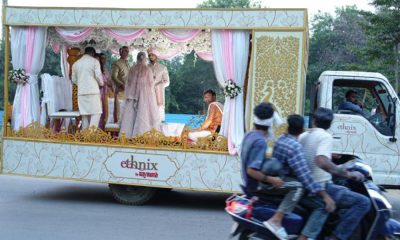

Ethnix by Raymond brings a wedding to Gurgaon’s streets with ‘Mandap on Wheels’
The activation taps into the wedding season, a key occasion for ethnic wear, by placing the brand within a live...


Noice turns a truck into a maximalist moving OOH experience
The campaign is executed by MOMS Outdoor
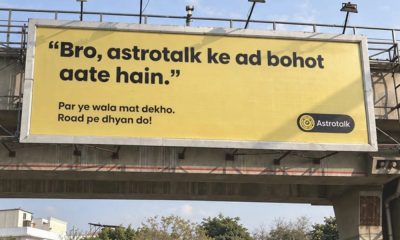

Astrotalk turns its most common roast into an OOH campaign
With a tongue-in-cheek message calling out the frequency of its own advertisements, Astrotalk uses a billboard to turn consumer chatter...


DS Group takes ‘Pujoy Pulse’ across West Bengal with outdoor activations
From branded canters travelling across 22 towns and interactive pandal installations to complimentary pandal-hopping cabs and a 500-drone spectacle over...


Pentonic creates a Durga idol with 13,000 recycled plastic pens
Linc Limited’s Pentonic presents a first-of-its-kind Durga installation by artist Chandra Nath Saha (Tilak), giving recycled plastic an extraordinary new...
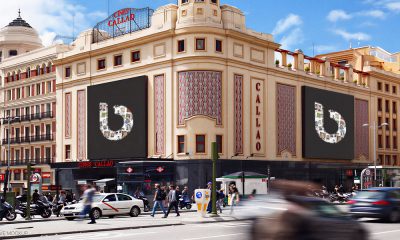

billups celebrates its anniversary by putting its people on billboard
The campaign is participating in fifteen locations across Asia, Europe and North America, including Belgrade, Amsterdam, Brussels, Berlin, Chicago. Portland,...
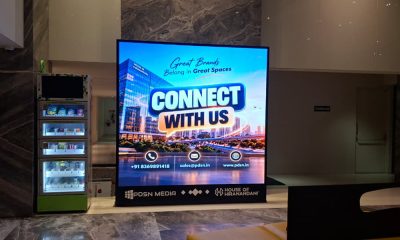

PDSN Media expands corporate DOOH network with new screens at Fulcrum
The new inventory comprises two 8×8 ft digital LED screens installed across Wing A and Wing B of the Mumbai...
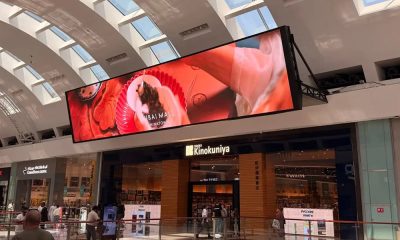

Dubai Mall expands its DOOH network with 1,100 sqm of LED displays
Emaar Properties has reportedly deployed approximately 1,100 sq m of LED displays across indoor and outdoor areas of Dubai Mall,...


Broadsign bags contract with Context Networks for screen network in 14 US states
Through the collaboration, Context Networks is connecting eligible CPMN™ inventory to the Broadsign Platform, the company’s complete, reliable Ad Server...


Landsec and Ocean Outdoor build on the cultural resonance of Piccadilly Lights
Changes to the screen's format come into effect from January 2027, 10 years after Piccadilly Lights relaunched following a nine-month...
-
 International Events
Publicis London secures double Gold in Ocean Outdoor Digital Creative Competition
-
Campaigns
Ethnix by Raymond brings a wedding to Gurgaon’s streets with ‘Mandap on Wheels’
-
Campaigns
billups celebrates its anniversary by putting its people on billboard
-
Campaigns
DS Group takes ‘Pujoy Pulse’ across West Bengal with outdoor activations