
Insights
Are measurement & creativity incompatible?
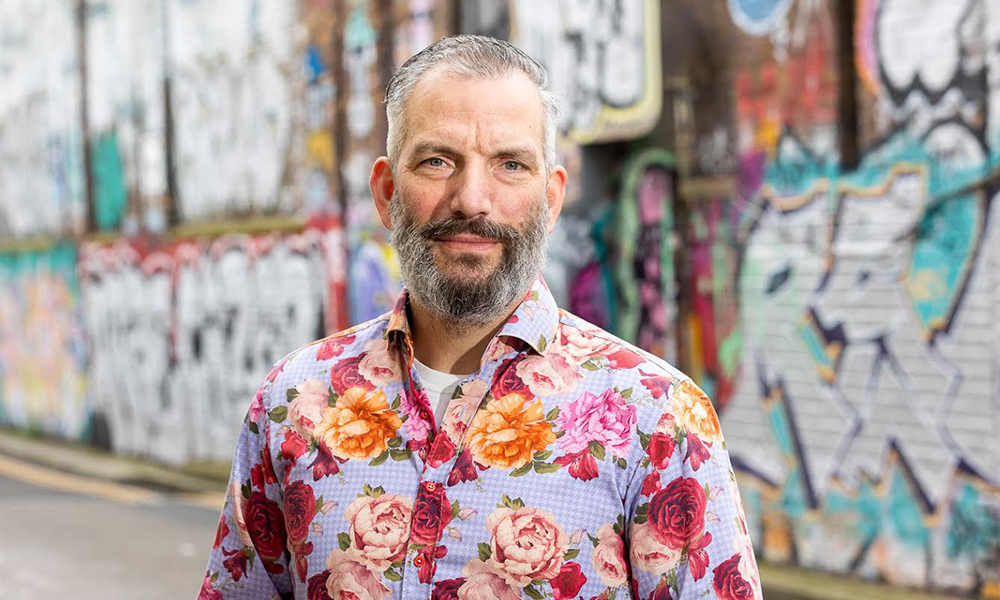
“As a designer and practicing geek, I fully support bringing some science to the subjectivity gunfight,” says Dino Burbidge, Innovation Consultant and Founder, Dinova, as he examines the relationship between measurement and creativity, particularly in the context of a medium like OOH, that carries the legacy of ‘un-measurability’.

The old mantra “What gets measured gets managed” used to be reserved for suited middle managers looking to bring order to chaotic businesses. It’s also used as a warning. A warning that those who focusing on numbers rather than actual improvement can become fixated on data and lose sight of the original goal. It’s known as Goodhart’s Law and ROI is a great example. If you wanted to increase your ROI, just cut stuff. Focus on smaller audience, target specific locations, stick to known strategies and spend efficiently right up to your budget limit. Then calculate your ROI. Even better, compare it to the last campaign. Congratulations, you’ve chased efficiency, not reach. Your client’s brand didn’t reach a tipping point it needed for true fame, but you did increase a number on a spreadsheet.
When measurement became the only game
It’s a worthy warning, but Goodhart’s Law only really becomes possible when an ecosystem is mature enough to be measured in the first place. OOH is a prime example. For the longest time, much of the OOH supply chain wasn’t really measured. The measurements were physical. Did we spend all the budget? How many 6-sheets were posted? Did the media owner say they delivered to the media plan? The actual success metric was less tangible. Sales uplift was, and still is, annoyingly difficulty to attribute to OOH, specifically during an omnimedia campaign. Some ads are better than others, some brands seemed to resonate more, but the beautiful vagueness was accepted. That’s just how it was.
Then came online and the annoying clarity of clicking a banner and directly tracking an affiliate link through to purchase. Suddenly, measuring clickthrough rates was a proxy for success. Suddenly, the measurement game was the only game. Clients wanted proof. Proof made them spend more.
Online measurement and effectiveness definitely has its issues, but OOH, to a greater extent, benefitted from the best bits and side-stepping the worst. We now measure everything from real-time mobile proximity data to programmatic budget burn rate. Again, clients wanted proof. Proof made them spend more. Inevitably, once everything else has been measured, the laser Eye of Sauron has finally turned its gaze towards the role of the creative itself. It previously avoided any form of scientific rigour due to its notorious, well, er, ‘unmeasurabilityness’.
But that’s not as true as some thought (or hoped). Any half-decent designer knows basic use of layout, alignment, colours, contrast, fonts, product placement and call-to-actions, can easily make an ad look interesting, classy, or cheap. It’s not 100% science, but we can detect the presence of elements and infer their relative effectiveness. Bonus points are added for deploying sneaky behavioural tricks. Add a face, emotions, a joke, alliteration, a known logo… even a mistake, and the creative becomes measurably more effective. Unsurprisingly, there are companies devoted to measuring and codifying creative effectiveness. System1 are doing a roaring trade testing creative on real people. Why? So agencies can give clients proof.
Subjectivity is fine, but let’s get some science in
With the fast advance of AI, we can train synthetic users to look at the creative and tell us how to improve it. We can even iterate the design in a feedback loop until it’s optimised for each audience. Meta have taken this a step further, they have created an AI simulation of the brain’s response. Meta Tribe v2 literally simulates a real-time MRI scan. If your creative doesn’t light up the right pleasure receptors, back into the feedback improvement loop it goes.
As a designer and practicing geek, I fully support bringing some science to the subjectivity gunfight. No designer likes that nagging feeling when the creative isn’t as good as it can be. As long as the quest for optimisation doesn’t end up in Goodhart’s Law territory, we’re good. We’ve lost when the quest for perfection means we end up with effective but samey ad-slop. As the proverb goes “In the kingdom of the blind, the one-eyed man is king”. Advertising stands out when it’s different, when it challenges the norm. Measurement and uniqueness (aka creativity) are not incompatible, so let’s measure it. Let’s get that proof, because when clients get proof, we know what happened next…








Daily Newsletter
Subscribe to receive the latest OOH
industry updates

Gujarat’s OOH Market has the scale. Does it have the economics for digital?

DMRC floats three tenders for metro advertising and co-branding rights

Fortune Soya Health brings brand message to life with boat innovation

Krishna Communication Outdoor secures exclusive branding rights across 8,000+ Gujarat buses

Traya Health uses a 7-ft hair-filled cube to start a conversation on hair fall

Puma becomes PVMA for PV Sindhu

HOCCO’s Aamchi campaign brings mango tree to Ahmedabad

Blinkit in association with Kinetic India goes all Bollywood

Acclaimed Actor Manoj Joshi to deliver an inspirational address at OAC 2024

Zepto’s Fast 10 Minute Delivery Saves the Day for Game Night in Ahmedabad!

‘Let’s create an empathetic space for women’

‘It won’t just be a man’s world anymore’

‘We’re actively exploring acquisitions and working to increase our inventory’

A habit of success at Prakash Arts

‘OOH is an important channel to connect with corporate audiences’


Video Editor
Job Description: Editing videos of editorial interviews, in-house events, video podcasts, promotional videos and others based on team brief Planning...
Content Editor-Writer
Job Description: Editing daily news copies and magazine articles Writing industry research and interview based articles and client focused content...


Sales Manager (Amritsar, J&K, Chandigarh, Mumbai, Vadodara, Udaipur, U.P.)
Orango has been involved in creating, building, reviving and growing brands. Orango builds powerful connections with their customers & people...


Sales Executive
Established B2B Media and Events Group VJ Media Works is looking for sales executives
Digital Marketing/Social Media Executives
Established B2B Media and Events Group VJ Media Works is looking for the following: Digital Marketing/Social Media Executives Location: Mumbai/Bangalore...


Sales Manager – AdZ (Digital Advertising)
Estontec Group’s fast-growing adtech brand AdZ is hiring a Sales Manager to drive digital media sales and client growth. This...
Onboarding Specialist
Join Estontec Group’s transit media brand BrandonWheelz as an Onboarding Specialist, managing campaign execution, vendor coordination, and media planning across...


Operation Manager
Company Description: BajuGali an Advertisement Company is a leading firm specializing in advertising and marketing services. We provide innovative solutions...
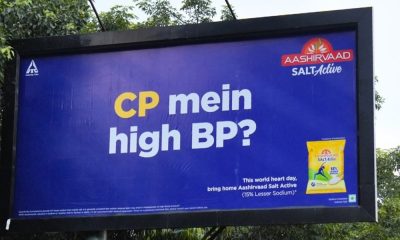

Aashirvaad Salt Active takes heart-health message to Delhi streets
The campaign is live across Connaught Place, Kalkaji, Janakpuri, Shadipur, Defence Colony and Dilshad Garden.
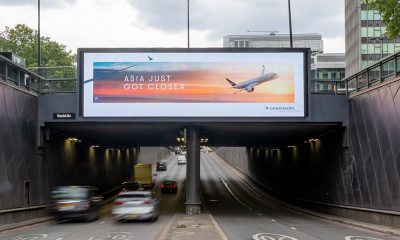

BackLite UK upgrades Landscape Gallery portfolio
The Landscape Gallery is a portfolio of eight high-quality, high-resolution LED technology large-format digital screens positioned in prime London gateways...
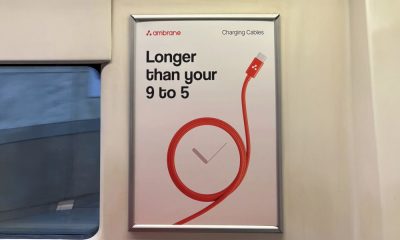

Ambrane brings a playful twist to metro OOH for its charging cables
Ambrane has taken its charging cable campaign inside the metro, using witty, relatable copy to turn everyday commuter moments into...


Flipkart brings Big Billion Days to life at Bengaluru’s Metro
As Big Billion Days 2026 approaches, Flipkart is taking its festive sale into the daily commute with a metro-led OOH...


Digger takes a big swing at LA with larger-than-life 3D OOH
Tom Cruise’s upcoming film Digger turns a conventional billboard into a physical extension of its campaign, with a giant shovel...
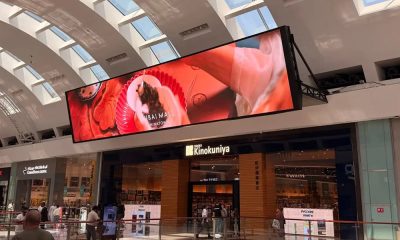

Dubai Mall expands its DOOH network with 1,100 sqm of LED displays
Emaar Properties has reportedly deployed approximately 1,100 sq m of LED displays across indoor and outdoor areas of Dubai Mall,...


Broadsign bags contract with Context Networks for screen network in 14 US states
Through the collaboration, Context Networks is connecting eligible CPMN™ inventory to the Broadsign Platform, the company’s complete, reliable Ad Server...
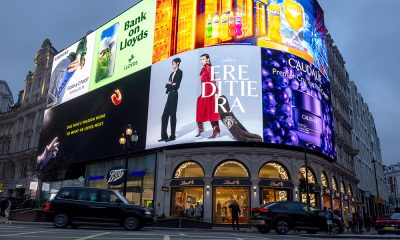

Landsec and Ocean Outdoor build on the cultural resonance of Piccadilly Lights
Changes to the screen's format come into effect from January 2027, 10 years after Piccadilly Lights relaunched following a nine-month...


Royal Stag Boombox goes larger-than-life with anamorphic LED in Hyderabad
The campaign is conceptualised and executed by Coral Media
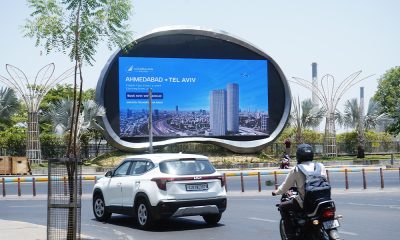

Times OOH Unveils ‘The Riviera’ in Ahmedabad
The screen is located at Sabarmati Riverfront on Ashram Road
-
 People
Sunder Balasubramanian concludes four-year tenure as Myntra CMO
-
 Tenders
DMRC floats three tenders for metro advertising and co-branding rights
-
Campaigns
Aashirvaad Salt Active takes heart-health message to Delhi streets
-
 Campaigns
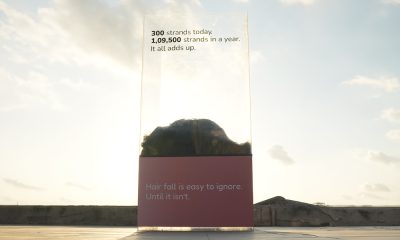
Traya Health uses a 7-ft hair-filled cube to start a conversation on hair fall