Insights
When OOH starts with the idea, not the inventory
For a Simple agency, the opportunity in OOH lies less in buying more sites and more in asking what the medium can add to the brand idea. Chirag Sangai, Founder, a Simple agency, shares insights on how the agency is approaching OOH, from using business data to shape media choices to letting neighbourhoods shape the creative.

For a Simple agency, OOH is increasingly becoming more than an inventory-buying exercise. The agency’s approach is to bring the brand’s business objectives, audience and context into the media and creative conversation, allowing the medium itself to contribute to the idea.
“People haven’t necessarily heard about us as an outdoor agency because we never positioned ourselves as one. We are primarily known for integrated work. But do we keep doing outdoor? Absolutely,” Chirag said.
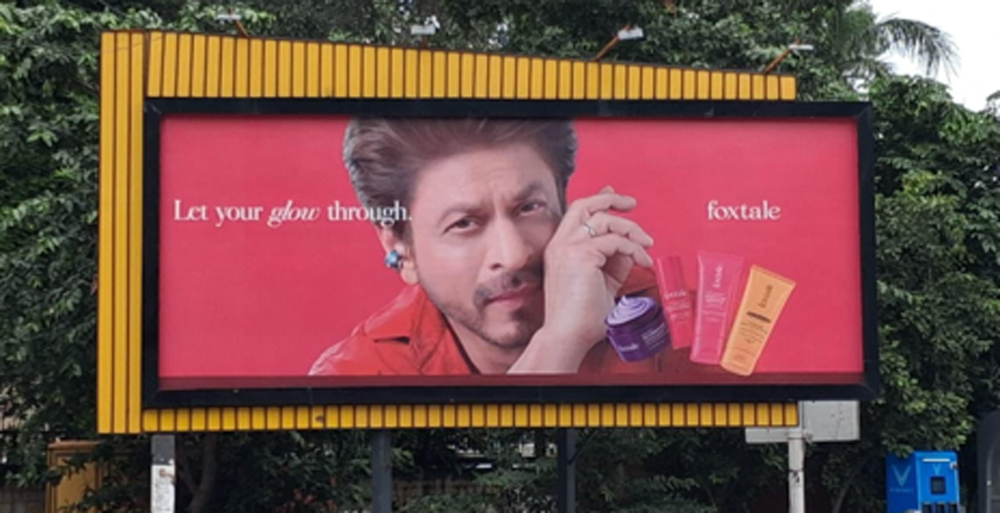
The thinking is evident in two recent campaigns. For Foxtale’s first OOH mandate, the agency asked for the pin codes where the brand’s products were being sold and used these to shape the media footprint. More than 70 sites across Mumbai, Bengaluru and Delhi were then selected, with high-traffic corridors and repeated creative placements helping build a sustained presence.
“For Foxtale, we asked them for the pin codes where their products are sold. That was our strategy,” Chirag said. “If it is not selling there and that is not the target, why would we go there?”
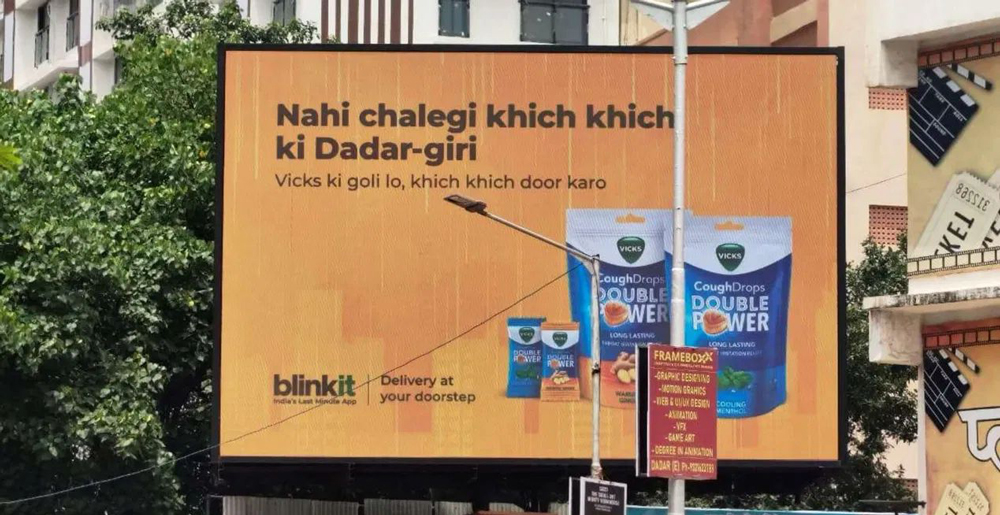
For Vicks Double Power x Blinkit, the approach moved from using geography to determine where OOH appears to allowing geography to determine what it says. Hyperlocal lines such as “Nahi chalegi khich khich ki Dadar-giri”, “Juhu mein uhu uhu?” and “Say Mum-bye to sore throat” made neighbourhood context part of the creative, while Blinkit connected the communication to its delivery proposition.
For Chirag, this is where the role of creative agencies in OOH is evolving. “Outdoor is not working in a silo, just like digital isn’t working in a silo. There is a lot of integration happening now,” he said.
The shift is not necessarily about creating more elaborate formats, but about making the medium work harder — whether through data-led site selection, contextual creative or integration with other brand touchpoints. “Outdoor is much beyond billboards,” Chirag said.
As more integrated and creative agencies enter the OOH space, they are bringing another layer of thinking to the medium — one that starts with the brand problem and asks how the physical environment can help solve it. For a Simple agency, the ambition is to move beyond trading and towards using outdoor as a creative opportunity.
“We don’t want to stop at trading. This is also helping us get our foot in the door and gradually allows us to do more innovation in outdoor,” Chirag said.