Insights
Retail Media: Why measurement must drive incremental revenue
Laetitia Lim, CEO of Quividi, shares some key insights from her long journey with data monetization in in-store retail media and makes a compelling case for unlocking incremental revenue with verified impressions and audience data, while gaining advertiser’s trust.

When Quividi was founded in 2006, our ambition was modest and practical. We believed that anonymous video analytics could help retailers understand how people interacted with digital screens in physical spaces. What followed over the next two decades was not a linear technology story, but a learning journey shaped by close collaboration with retailers, landlords, and media operators. Above all, our customers and partners taught us a fundamental lesson: measurement only matters if it unlocks incremental revenue.
Early Lessons: Trust Is the Gatekeeper of Budgets
In the early days of digital signage and in-store media, retailers had screens and footfall, but struggled to consistently attract advertiser budgets, especially from non-endemic brands that did not sell products in-store. The challenge was not a lack of audience, but a lack of trust.
Advertisers were often asked to buy impressions based on traffic assumptions or proxy metrics. What was missing was proof. We focused on delivering a simple capability: detecting real people in front of screens and measuring actual audiences rather than estimating them. This “ground truth” approach changed the conversation. When advertisers were presented with verified impressions instead of projections, confidence increased, and budgets followed.
7-Eleven Taiwan: A milestone
A defining moment came in 2010, when 7-Eleven Taiwan deployed our technology across more than 7,000 screens. Together, we demonstrated that verified audience data was not just a reporting improvement; it enabled new commercial models. 7-Eleven even introduced a Cost Per View pricing model, charging advertisers based on proven engagement rather than assumed exposure. This shift attracted national, non-endemic advertisers who had never previously considered convenience store media. Over time, these brands accounted for roughly 40 percent of advertising revenue, creating genuinely incremental revenue.
From Measurement to unlocking innovative revenue streams
The journey to unlock innovative revenue streams began with a shift to Guaranteed Impressions.
As in-store media networks matured through the 2010s, reliable audience measurement enabled commitments others could not. This led to a risk-free buying model, exemplified by URW’s Westfield network, where advertisers paid only for audiences actually delivered, translating transparency directly into higher fill rates and stronger revenue performance.
The foundational confidence from guaranteed impressions was essential for Opening the Door to Programmatic and Omnichannel Demand.
By ensuring that in-store audiences were measured using IAB industry-standard digital metrics, Quividi made it possible for this data to be integrated into the digital advertising platforms used for online campaigns. This meant the in-store ad space could be sold automatically in real-time to the agencies and buyers focused on performance, establishing programmatic as a new, incremental revenue layer for retail media operators.
The focus then progressed to Justifying Premium Pricing Through Context and Relevance.
Verified impressions established credibility, but audience understanding was key to justifying premium CPMs. Campaigns supported by Quividi adapted creative delivery in real time based on audience composition, resulting in measurable sales uplifts of up to 20 percent for brands like Aldo and Pandora. Targeting evolved through historical data, allowing campaigns to be scheduled around contexts that consistently delivered the most relevant audiences.
Vodafone campaign across Pearl Dean in-store media network
A clear illustration was the five-week programmatic Vodafone campaign in Ireland across Pearl&Dean, the country’s largest in-store retail media network (fully equipped with Quividi technology), which used attention and dwell time metrics to reallocate delivery weekly, achieving a 37 percent increase in attention time, a 151 percent uplift in web visits, and a 54 percent increase in sales, earning Best Irish DOOH Campaign of 2020.
Measuring creative effectiveness
A later phase of maturity was the transition from Exposure to Attention: Improving Creative Performance.
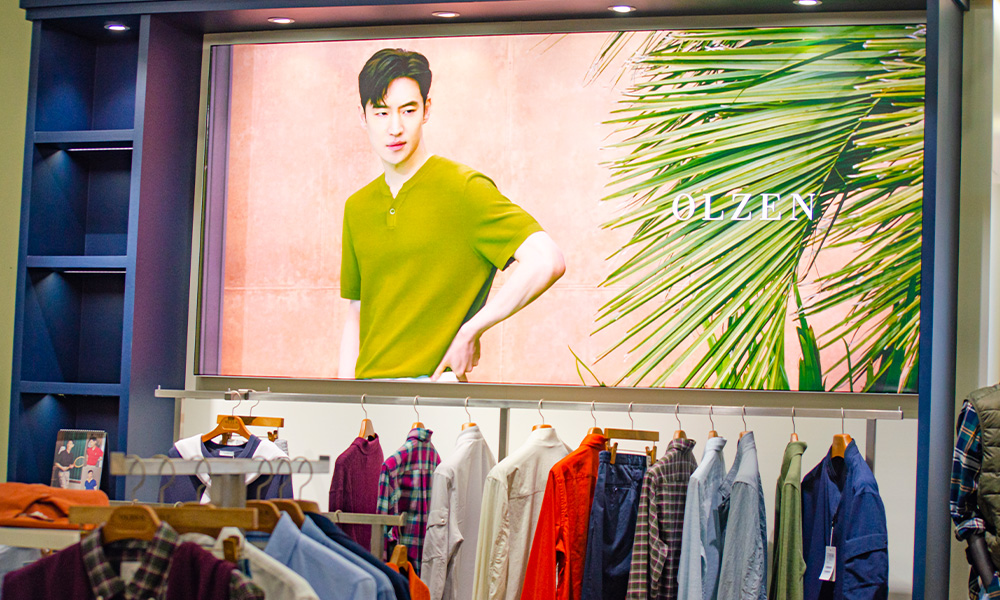
Partners increasingly asked not only who saw an ad, but how people engaged with it. By measuring attention second by second, we provided insight into creative effectiveness that traditional reporting could not offer. Marketers could compare creative variants, identify attention drop-off, and understand how different audiences responded to specific visual elements.
In 2017, working with Dentsu on the United Nations’ Global Goals DOOH campaign, attention analytics were used to adapt creative execution screen by screen in real time. The result was a 21 percent increase in overall attention, showing how campaigns could continuously learn and improve based on real-world response.
The Retail Media Imperative
Today, Retail Media is globally recognized as the biggest media opportunity for the next 10 years, being a source of incremental revenue and, most critically, incremental margin—as demonstrated by players like Walmart. While the opportunity is still mainly online, the in-store sector is rapidly catching up, with 10,000 to 100,000+ screens currently being installed. To tap into In-Store Retail Media potential, media operators must access and monetize their data.
That is why Quividi is committed to building a future-proof solution with all the required tech stack, but we believe it is equally important to accompany our partners step-by-step in their data monetization journey, ensuring our solution is practical, economical, and impactful at every phase.
After nearly 20 years, during which Quividi has grown to measure more than two billion anonymous impressions each month across tens of thousands of screens in over 80 countries, supporting monetization models ranging from OTS-based trading to CPV, programmatic, and attention-led optimization, the takeaway remains simple: sustainable growth in in-store retail media comes from trusted measurement and actionable insights that build advertiser confidence and unlock incremental revenue. The partners who embraced these principles early continue to capture a premium share of the market, and we remain grateful to keep learning alongside them.