Insights
OOH for art’s sake: How this Belgian company is converting billboards into art canvases
Belgian entrepreneur Mathieu France, Founder & CEO of Artcrush, turned a burned billboard into a global art movement with 25,000 digital screens that showcase artists’ works.

When one of Mathieu France’s billboards was set on fire in Belgium in 2019, most people would have called it vandalism. Mathieu looked at it as a mirror that reflected a reality. The content wasn’t great, he admits. Somewhere, he understood why it was burned. That uncomfortable honesty became the founding logic of Artcrush.
With 23 years in the OOH industry, including building Mediafield.com, which manages billboard concessions at Brussels Expo and invented the Skyboard format, and a hand-painted murals business sold to Global Street Art UK, Mathieu understood the medium’s challenges from the inside: permits, landlords, the expensive pivot from static to digital. Artcrush channelled all of that experience into a single, radical idea.
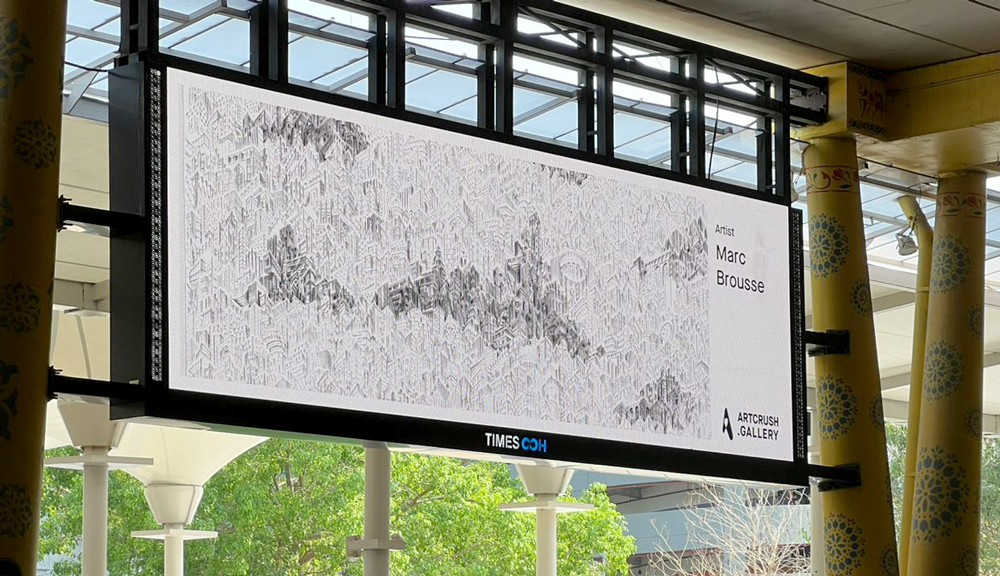
The model is elegantly simple. Digital billboards always carry unsold slots between advertisements. Artcrush fills those gaps with real art from real artists, no stock images, no filler. Billboard companies give Artcrush dead time; artists get global exposure; cities get culture in their public spaces. No money changes hands at the core of the exchange. What changes instead is the perception of the billboard itself.
“For the first time in history, instead of people going to an art museum, which is 10% of the population, we get the art where the people already are,” said Mathieu
In India, Artcrush partnered with Times OOH and their 4,000 airport digital screens, the largest single deployment in the company’s portfolio at the time. With this platform, Beyond the partnership, a question from the Times OOH team changed how Mathieu saw the whole model: do you consider Indian fashion as art? And if so, will you showcase it on billboards around the world? The answer was yes, and with it, Artcrush became not just an art platform but a vehicle for cultural export.
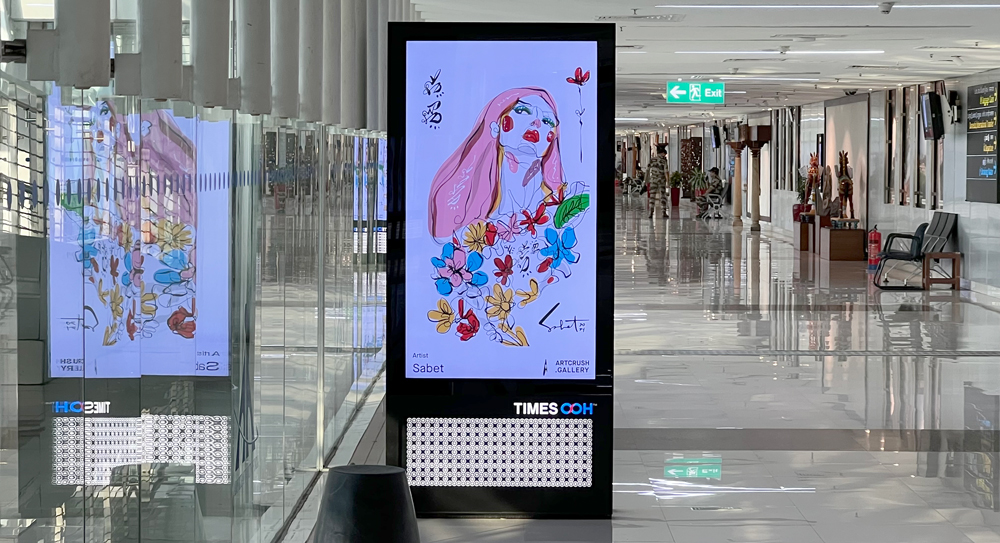
For brands, the opportunity is equally compelling. Mathieu describes a world where Nike runs a competition through Artcrush’s 43,000-artist community, a winner’s design becomes a limited edition shoe, and the artwork is plastered across thousands of screens worldwide. AI companies like Google AI, BIC, the Coca-Cola group, Forbes are already the platform’s most active brand sponsors, commissioning artists to prove what their tools can create in the real world and / or associate their brand with culture.
“The soul talks to the art and the art talks to the soul. The billboard is just the structure between them,” adds Mathieu.
Artcrush also functions as a bridge or an enabler for media owners navigating regulatory and civic hurdles. When a billboard company wants to convince a city to permit a new digital screen, a cultural argument lands far harder than an economic one. Artcrush gives media owners that argument, along with the artists, the content, and the global network to back it up.
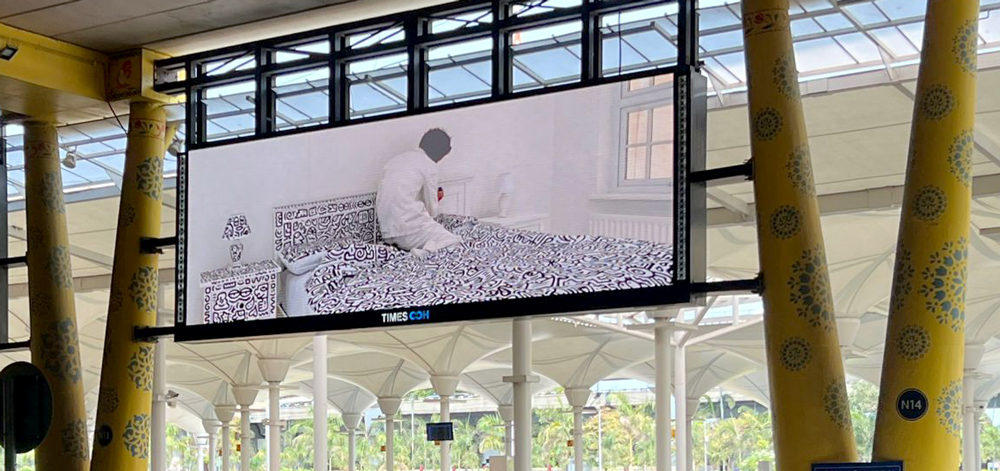
The revenue model reflects the same long-term thinking. Select artists sign multi-year, multi-country partnerships and donate works to the Artcrush collection. As those artists grow in stature, the collection grows in value. It is, in essence, an art fund built on the back of the world’s most democratic medium.
Two challenges remain for Artcrush, according to Mathieu: getting in front of the brands that still don’t know this model exists, and levelling up the artist roster to include the leading artists of the world. Both, Mathieu says, are problems of communication.
Read the full article in the June edition of Outdoor Asia Magazine.