
Insights
Indian OOH & the Measurability Journey: From OTS to business outcomes
In his column for the August 2026 edition of Outdoor Asia, Abhijit Sengupta, CEO of OAP Mediatech writes on how measurement cannot become a competitive weapon owned by one stakeholder; it must become a common infrastructure that benefits advertisers, agencies and media owners alike.


The biggest threat to Indian Out-of-Home advertising is not digital media. It is irrelevance. And irrelevance begins when we stop answering the questions our clients are asking.
For years, OOH has argued that it is a 24×7 medium, reaching people during long periods on the road. More recently, agencies have focused on how many people could have seen a campaign. But tomorrow’s marketers will ask a sharper question: What happened because they saw it? That question will redefine our industry.
Every industry reaches a moment when the way it measures success changes. Manufacturing moved from production volumes to quality standards. Digital advertising evolved from page views to conversions and return on ad spend. OOH now stands at a similar inflection point.
The 2026 World Out of Home Congress in London made one thing clear: measurement is no longer a support function. It is becoming the foundation on which the future of OOH will be built. WOO’s Audience Measurement Guidelines 2.0 signal that the global industry is aligning around a common objective: making OOH as accountable, comparable and investable as every other major advertising medium.
For India, this is not merely a challenge. It is an extraordinary opportunity.
The Five Ages of OOH Measurement
The evolution of OOH measurement can be viewed in five stages.
The first age was measuring exposure. For decades, the industry relied on traffic counts, impressions and opportunity-to-see. These metrics were a useful starting point because every campaign begins with exposure. But exposure is only the beginning.
The second age is measuring audiences. The focus shifts from locations to people: who is travelling, what demographic they belong to, when are they present and how often are they exposed. Audience measurement recognises that identical locations can deliver very different audiences. This is why WOO has worked to harmonise standards across markets, including Indian Roadstar. Global advertisers increasingly expect consistency across geographies.
The third age is measuring attention. Not every impression is equal. A commuter waiting at a traffic signal experiences a billboard differently from someone travelling at speed on an expressway. A digital screen with contextually relevant creative also commands a different level of attention than repeated static messaging. The next frontier is not just counting impressions but understanding their quality: how long the message was visible, whether the audience was likely to notice it and whether the environment helped or hindered attention.
The fourth age is measuring influence. Reach explains exposure and attention explains engagement, but influence explains behavioural change. Did people visit the store? Did website traffic increase? Did app installs rise? Did retail footfall improve? Did online searches increase? This is the domain of attribution. Location intelligence, mobility data, anonymised device movement and AI-driven analytics now allow OOH to connect exposure with outcomes more effectively than ever.
The fifth age is measuring business outcomes. Advertisers do not ultimately invest in impressions. They invest in sales, market share, brand equity and customer acquisition. The future boardroom discussion will not be about how many people travelled past a site, but what commercial value that exposure created. OOH must aspire to become not just measurable, but accountable.
Why Programmatic Changes the Conversation
Nothing demonstrates the importance of measurement more than the rise of Programmatic DOOH. This year, WOO released the world’s first independently verified estimate of global pDOOH expenditure: approximately US$1.4 billion, or around 7% of global DOOH spend. The significance goes beyond the number.
Programmatic buying cannot function without trusted measurement. Algorithms do not buy “good locations”. They buy audiences, optimise impressions, evaluate probability and compare outcomes. For programmatic ecosystems, audience measurement is not an add-on; it is the operating system. As adoption grows, measurement standards will determine which inventories are discoverable, comparable and investable.
India’s Opportunity
India is still in the second age and yet has advantages many mature markets do not: rapidly digitising OOH inventory, one of the world’s largest mobile ecosystems, growing AI capabilities, expanding location intelligence and a vibrant technology sector.
Instead of replicating what others have achieved, India can help define the next generation of OOH measurement. We should aspire to build one of the world’s most sophisticated frameworks for measuring attention, attribution and business outcomes.
That requires industry-wide collaboration. Measurement cannot become a competitive weapon owned by one stakeholder. It must become common infrastructure that benefits advertisers, agencies and media owners alike.
For years, our sales narrative has been built around visibility. It is time to adopt a new vocabulary.
Not just reach, but quality reach.
Not just impressions, but attentive impressions.
Not just exposure, but influence.
Not just visibility, but business impact.
This is not about abandoning the metrics that built our industry. It is about adding the metrics that will define its future.
OOH has always excelled at creating memorable public experiences. Its next challenge is to measure those experiences with the sophistication marketers now expect from every medium, and to answer the question: what did my campaign achieve?
That journey has already begun. India has every opportunity to help lead it.











Daily Newsletter
Subscribe to receive the latest OOH
industry updates

Jio marks 10 years with ‘Jio maine banaya’ outdoor campaign

Deepa Gupta, SVP at MOMS Outdoor, to moderate panel at Gujarat Talks OOH

HOCCO’s Sr Brand Manager joins Gujarat Talks OOH panel on OOH budgets & market potential

ALO brings its brand spectacle to Hong Kong with a larger-than-life outdoor execution

Alberta Cancer Foundation turns movie spoilers into a life-saving OOH campaign

Puma becomes PVMA for PV Sindhu

HOCCO’s Aamchi campaign brings mango tree to Ahmedabad

District uses Samay Raina’s signature shirt to announce his live show

Blinkit in association with Kinetic India goes all Bollywood

Acclaimed Actor Manoj Joshi to deliver an inspirational address at OAC 2024

‘Let’s create an empathetic space for women’

‘It won’t just be a man’s world anymore’

‘We’re actively exploring acquisitions and working to increase our inventory’

A habit of success at Prakash Arts

‘OOH is an important channel to connect with corporate audiences’


Video Editor
Job Description: Editing videos of editorial interviews, in-house events, video podcasts, promotional videos and others based on team brief Planning...
Content Editor-Writer
Job Description: Editing daily news copies and magazine articles Writing industry research and interview based articles and client focused content...


Sales Manager (Amritsar, J&K, Chandigarh, Mumbai, Vadodara, Udaipur, U.P.)
Orango has been involved in creating, building, reviving and growing brands. Orango builds powerful connections with their customers & people...


Sales Executive
Established B2B Media and Events Group VJ Media Works is looking for sales executives
Digital Marketing/Social Media Executives
Established B2B Media and Events Group VJ Media Works is looking for the following: Digital Marketing/Social Media Executives Location: Mumbai/Bangalore...


Sales Manager – AdZ (Digital Advertising)
Estontec Group’s fast-growing adtech brand AdZ is hiring a Sales Manager to drive digital media sales and client growth. This...
Onboarding Specialist
Join Estontec Group’s transit media brand BrandonWheelz as an Onboarding Specialist, managing campaign execution, vendor coordination, and media planning across...


Operation Manager
Company Description: BajuGali an Advertisement Company is a leading firm specializing in advertising and marketing services. We provide innovative solutions...
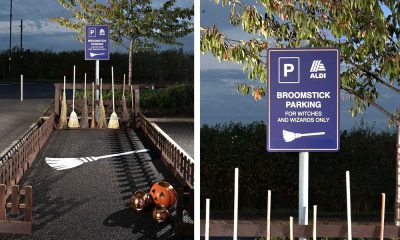

Aldi creates a ‘broomstick parking’ bay for witches and wizards ahead of Halloween
The supermarket chain adds a playful outdoor touch to Halloween shopping with a dedicated parking space for witches and wizards...
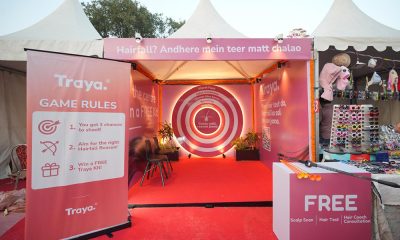

Traya marks Dussehra with ‘Andhere Mein Teer Mat Chalao’ activation
Traya's on-ground initiative in Dwarka encouraged women to move beyond guesswork and understand the factors contributing to their hair fall.
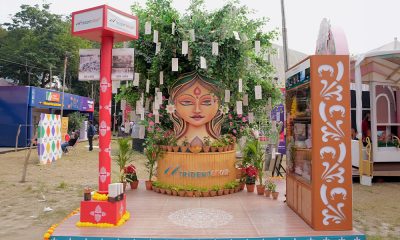

Trident Group brings ‘Tree of Strength’ to Durga Puja with a sustainability-led activation in Kolkata
Produced by Sakshi Advertising, the activation at Maddox Square invites visitors to plant their wishes while connecting the spirit of...


KISNA takes festive gifting nationwide with 300+ billboards featuring Shahid and Mira Kapoor
Projected to generate 5+ million OOH impressions, the #GiftHappiness campaign highlights exclusive jewellery offers, exchange benefits and a Grand Festive...


Kolonkojoyini uses Maa Durga installation to highlight stigma faced by trafficking survivors
The installation was conceptualised and brought to life by Tribes in collaboration with Sanlaap.
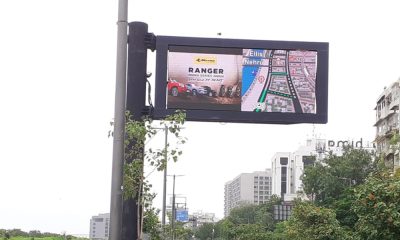

WOW Advertisement adds eight digital OOH screens across Ahmedabad and Surat
The expansion includes seven traffic LED screens across Ahmedabad and a 41 ft × 60 ft curved outdoor LED screen...


billups celebrates its anniversary by putting its people on billboard
The campaign is participating in fifteen locations across Asia, Europe and North America, including Belgrade, Amsterdam, Brussels, Berlin, Chicago. Portland,...
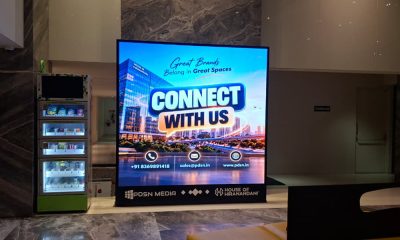

PDSN Media expands corporate DOOH network with new screens at Fulcrum
The new inventory comprises two 8×8 ft digital LED screens installed across Wing A and Wing B of the Mumbai...
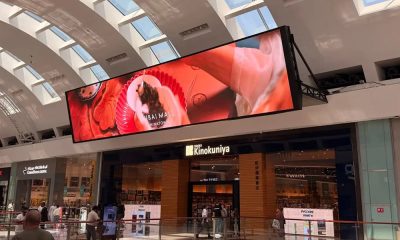

Dubai Mall expands its DOOH network with 1,100 sqm of LED displays
Emaar Properties has reportedly deployed approximately 1,100 sq m of LED displays across indoor and outdoor areas of Dubai Mall,...


Broadsign bags contract with Context Networks for screen network in 14 US states
Through the collaboration, Context Networks is connecting eligible CPMN™ inventory to the Broadsign Platform, the company’s complete, reliable Ad Server...
-
 Talks OOH
Riddhesh Raval, Dy Municipal Commissioner, Ahmedabad, to address Gujarat Talks OOH
-
Campaigns
KISNA takes festive gifting nationwide with 300+ billboards featuring Shahid and Mira Kapoor
-

 Tenders
Maharashtra Maritime Board floats 19 advertising tenders across Mumbai’s waterfront, jetties and bridges
-
Campaigns
Trident Group brings ‘Tree of Strength’ to Durga Puja with a sustainability-led activation in Kolkata