Insights
Top OOH campaigns of 2025: Jayesh Yagnik’s picks
Jayesh Yagnik, CEO, MOMS Outdoor, shares the top three campaigns that stuck with him in 2025. Here is a look at the picks that defined the year for him and why they cut through the noise.

Shaadi.com – Pushing the envelope
Shaadi.com’s OOH work really pushed the envelope this year, both in terms of cultural relevance and creative bravery. Campaigns like “Sakht Launda,” “Lovers Point,” and “Azzadi Kite” tapped into everyday relationship conversations and social media slang, making the brand feel instantly relatable on the street. The collaborations with fashion labels such as Ethnix by Raymond further elevated the imagery and craft quality, proving that matrimonial advertising can be aspirational, contemporary and highly shareable in the OOH space.
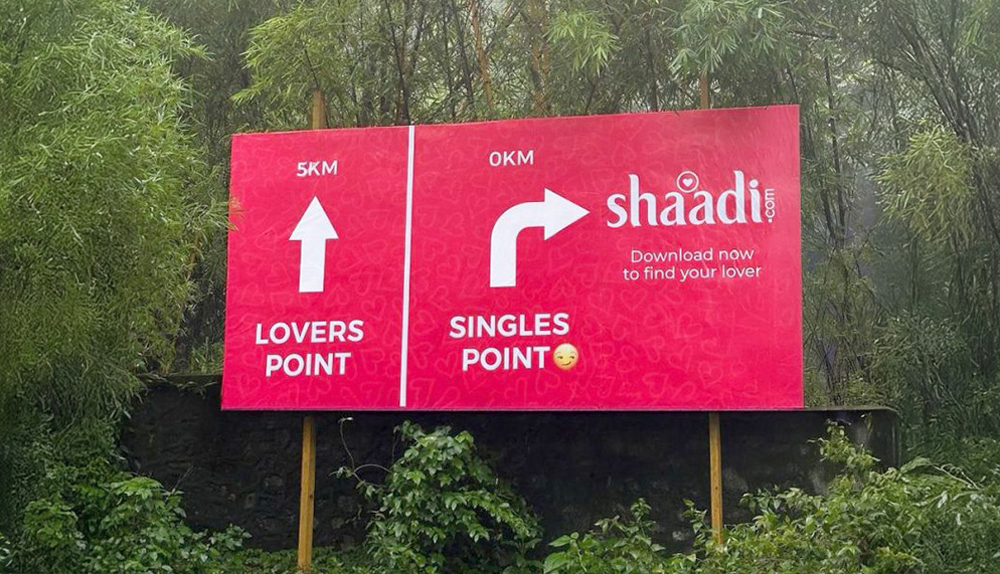
Essentially, the brand reimagined the matrimony narrative with a fresh, youth-centric lens. Instead of the usual serious, family-led pitch, the brand leaned into cultural stereotypes like “Sakht Launda” with humour and local flavour, making the messaging feel instantly relatable and disarmingly bold on the streets.
The campaigns used OOH formats smartly across urban environments – large formats, street furniture and city touchpoints – to create social buzz, particularly among younger, urban audiences who respond to irreverence and authenticity. Each creative reinforced Shaadi.com’s core promise of freedom, choice and modern attitudes, turning every site into a clear brand statement rather than just another media placement.
Swiggy – Hyperlocal story telling
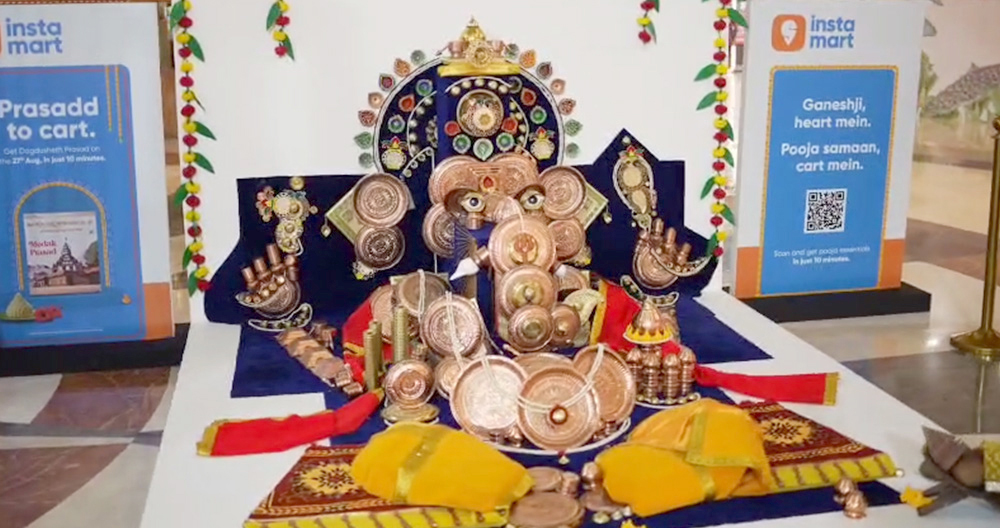
Swiggy stood out for the way it used outdoor as a hyper-local storytelling canvas rather than just a reach medium. A series of culturally tuned activations – from “Adda” and “Rat Race” to “Ganesh Illusion,” the “Pill Campaign,” and “Katt Gayi?” – were all sharply rooted in local idioms, festivals and daily commuter life. Each idea felt designed for a specific neighbourhood, moment or mindset, turning OOH into a live conversation with the city and demonstrating how contextual creativity can drive both talkability and brand love.
Across the year, the brand showed real creative agility – shifting themes from quirky humour to festival-led activations – so the work stayed fresh, topical and highly talkable. By combining large-format visibility with sharply chosen micro-locations near eateries, colleges and residential clusters, Swiggy managed to deliver both mass reach and contextual relevance, driving immediacy and action.
Rado: Consistency + Strategy
Rado impressed through sheer consistency of premium execution and media strategy. The brand’s presence across key arterial roads, airports and top malls ensured it was seen in high-attention, high-intent environments that match its luxury positioning. The use of celebrity integration and strong, minimal, high-impact imagery reinforced Rado’s aspirational worldview, showing how a well-curated OOH footprint can build stature and desire without shouting.
The brand stood out for how precisely its media strategy mirrored its luxury positioning. It focused on high-footfall, high-visibility environments – airports, premium malls and key arterial roads – ensuring that every exposure felt aspirational and in line with its premium halo.
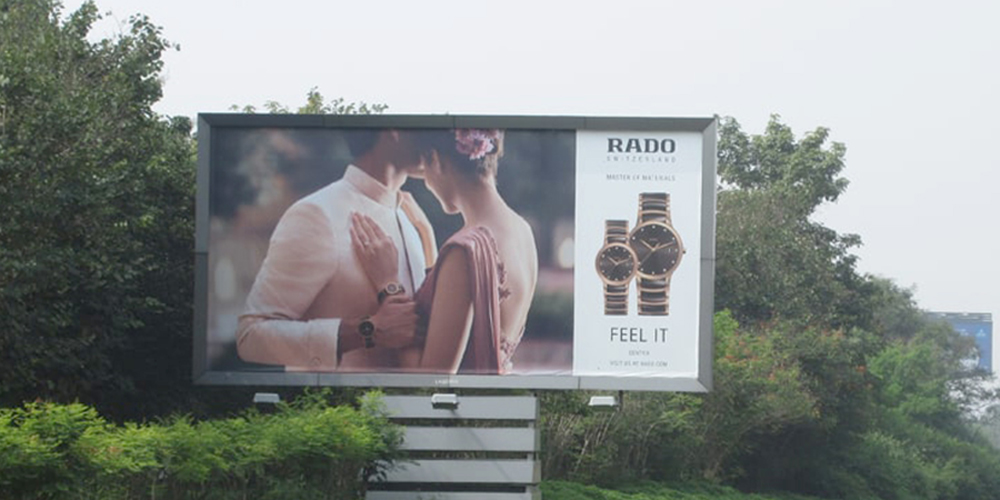
The use of a celebrity face, coupled with clean, larger‑than‑life visuals, elevated the watch from product to lifestyle symbol. Strong craft, sophisticated design and carefully curated locations meant each creative worked hard for both impact and recall, consistently reinforcing Rado’s stature in the luxury timepiece category.
Each of the three campaigns broke away from cookie-cutter OOH norms: Shaadi.com by reinterpreting cultural messaging with wit, Swiggy by localizing and rotating themes dynamically, Rado by lifting OOH into luxury format territory with 3D-style presence.
Collectively, these three brands showcased how OOH can be used not just for scale, but for sharp positioning, cultural relevance and differentiated storytelling—making them, in my view, the most effective and original examples of OOH this year.
When brands treat OOH not as a filler medium but as a platform for culturally tuned storytelling, social conversation, and brand-positioned impact, the return isn’t just in views, it’s in recall, identity and long-term brand equity.