Insights
OOH in Silicon City – Do official announcements & policy changes mean anything at all?
A recent media report that the Bangalore Metropolitan Transport Corporation (BMTC) has decided to discontinue full-body advertisement wraps on its buses has raised questions and resulted in the same sentiment that has followed most official announcements with regard to the city’s OOH advertising space in recent times – apathy or scepticism.

Close on the heels of the news regarding the passing of the Karnataka Municipalities and Certain Other Laws (Amendment) Bill, 2026, aimed at regulating outdoor advertisements, came the news that the Bangalore Metropolitan Transport Corporation (BMTC) had decided to discontinue full-body advertisement wraps on its fleet of buses. The reported reason behind the move to discontinue the ads on buses was their negative impact on bus appearance. and their inconvenience to caused to commuters.
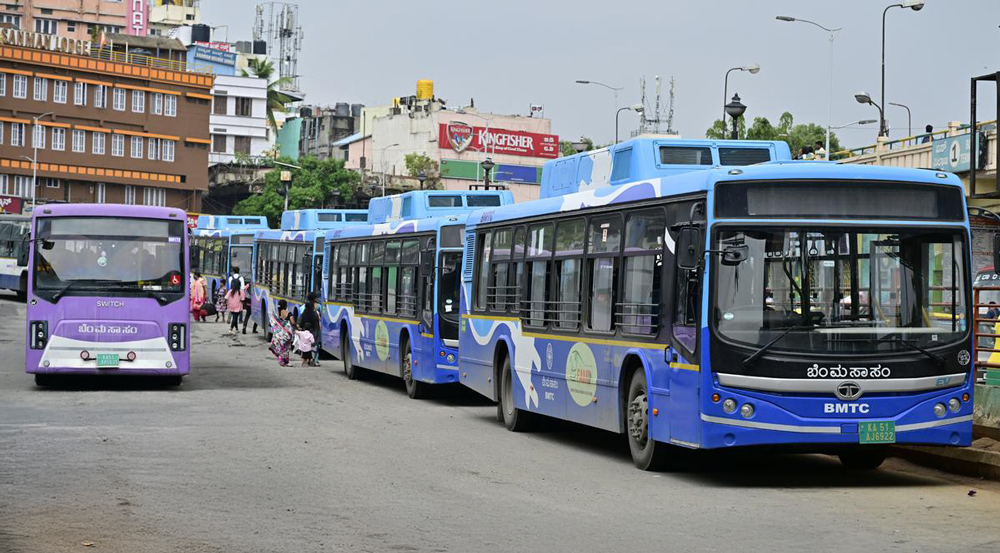
The report also quotes BMTC officials and the transport minister saying that the restrictions on full body ads stemmed from complaints regarding their impact on bus aesthetics and the inconvenience caused to commuters. They also admitted, as quoted in the report, that the move would impact revenue generated from bus advertising. Reportedly, the BMTC earned ₹25.15 crore in 2024-25 from advertisements displayed on its fleet of 6,199 buses. According to a report by The Hindu in December 2025, the BMTC had strengthened its non-fare revenue base with bus advertisements generating ₹4.79 crore every month, with an annual income of ₹57.54 crore.
Well, irrespective of the stated reasons for the reported decision to discontinue full body advertisement, the move has obviously left everyone puzzled. It also raises many questions. For one, has there been an official order from the BMTC conveying the removal of full-body advertisements on the buses? Two, what about contracts already awarded to agencies for BMTC bus branding rights? Will this sudden shift in the stance of BMTC impact the contract? Well, according to industry sources, if the contract with the agency has been fixed for a certain tenure, then the decision will not impact until the term of the contract is completed. So one still wonders why the decision to discontinue the ads was announced. The issue in question also highlights the need for clarity with respect to official announcements across departments, at least the ones that have a bearing on the city’s overall OOH space. What should industry players take into account, as they chart their business plans or look to tap new opportunities? The issue also points to the need for consistency, clarity and continuity, especially when it comes to official decisions and policy announcements, in order to drive meaningful changes in the city’s OOH space.
For example, with respect to the recent passing of the Karnataka Municipalities and Certain Other Laws (Amendment) Bill, 2026, aimed at regulating outdoor advertisements, the Bill has in fact had a checkered history with long periods of impasse and multiple changes in policy drafts.
The revised policy issued in November last year was preceded by a policy draft in August last year, which was met with much criticism by the OOH industry players who argued that the proposed framework was unrealistic and could create monopolistic situations. Essentially, the new policy has been in discussion and contention since 2018. Quite understandably the recent passing of the Bill has not elicited much response from the OOH industry. As one industry player shared, “Bengaluru has had multiple byelaws in the last three years with no change in ground because the system remains the same. Don’t expect any changes this time too in real time.”
Well, with decisions and policy announcements having little or no bearing on ground reality, irrespective of the formats and the concerned departments, one wonders if anything will ever change in the OOH space of a city that for very obvious reasons is an important market for brand marketers and advertisers across categories. According to a report, Bengaluru and Hyderabad are powering more than half of India’s urban growth. These tech hubs are reshaping jobs, consumption, and city futures, it says. These cities, the report adds, account for over 50 percent of new office space added in cities. Also, according to the report, Bengaluru and Hyderabad have contributed nearly 50 per cent of new domestic flight movements among India’s top eight cities in just the last two years and that in 2024-25, one in every four new companies formed across India’s major cities was registered in either Bengaluru or Hyderabad. With so much potential, all stakeholders in the eco-system could well be benefited consistent, clear, fair and transparent policies and decisions in place, ones that would also drive meaningful change for the city aesthetics and its public space utility.